On the night of November 22, 1987, someone wearing a Max Headroom mask broke into the signals of two Chicago television stations within about two hours. The first intrusion cut into the sports segment of the WGN-TV nine o’clock news, and the second took over a WTTW broadcast of Doctor Who for about 90 seconds. Federal investigators were called in within hours, but the people behind the mask have never been identified and no one has ever been charged.
The basic facts come from reports filed the next day and from later reconstructions. According to a United Press International dispatch of November 23, 1987, the WGN break-in lasted about 25 seconds and the WTTW interruption, which began at 11:10 p.m., lasted about 90 seconds. WTTW’s own 2017 retrospective put the WGN intrusion at 30 seconds. A 2013 investigation by Chris Knittel for Vice’s Motherboard drew on an FBI report obtained under the Freedom of Information Act and on interviews with Michael Marcus, the Federal Communications Commission engineer who led the inquiry.
What Did Chicago Viewers See on November 22, 1987?
At about 9:14 p.m., WGN sportscaster Dan Roan was narrating highlights of the Chicago Bears’ win over the Detroit Lions when the picture went dark, Vice reported. A figure in a rubbery Max Headroom mask and sunglasses appeared in its place, bouncing in front of a spinning sheet of corrugated metal. There was no intelligible sound, and engineers in the WGN control room switched the uplink frequencies, and Roan reappeared at his desk, as baffled as his viewers.
The mask was a deliberate choice, because Max Headroom was a sarcastic, stuttering television host who first appeared on British television in 1985, played by the comedian Matt Frewer under heavy prosthetic makeup, and he had fronted advertisements for New Coke. His American drama series debuted on March 31, 1987, and had been canceled that fall, a few weeks before the intrusion. In the series, Vice noted, Max was a digital alter ego who periodically hacked into a television network’s feed.
About two hours later the figure returned on Channel 11. WTTW, the city’s public television station, was showing the Doctor Who serial Horror of Fang Rock when the picture was replaced. This time there was sound, garbled and only partly audible, and the clip ran far longer, as Vice timed it at one minute and twenty-two seconds. The masked man mocked the WGN Radio sportscaster Chuck Swirsky, shouted the New Coke slogan “Catch the wave!” and hummed the theme from the old cartoon Clutch Cargo. “I just made a giant masterpiece for all the greatest world newspaper nerds,” he said, a dig at WGN, whose call letters stood for the Chicago Tribune slogan World’s Greatest Newspaper.
The broadcast ended crudely when the figure bent over with his trousers down while a second person, apparently a woman, spanked him with a flyswatter, and then the signal vanished and Doctor Who resumed. “As it went on it got stranger and stranger,” the viewer Gary Zielinski told WTTW in 2017. Another viewer, Jerry Malady, gave UPI a description the day after. “There was a caricature of Max Headroom that appeared on the screen and it was like a puppet,” he said.
Inside WTTW there was nothing the staff could do. Paul Rizzo, the station’s air director that night, told WTTW News that the crew grew more anxious as the clip went on. “And as the content got weirder we got increasingly stressed out about our inability to do anything about it,” he said. After 90 seconds the pirate signal disappeared on its own, and Doctor Who returned to the screen. “Our transmitter was overridden,” Ann Palmer, a security guard at the station, told UPI. “Someone had something much stronger than we had.”
How Could Anyone Hijack a TV Station’s Signal?
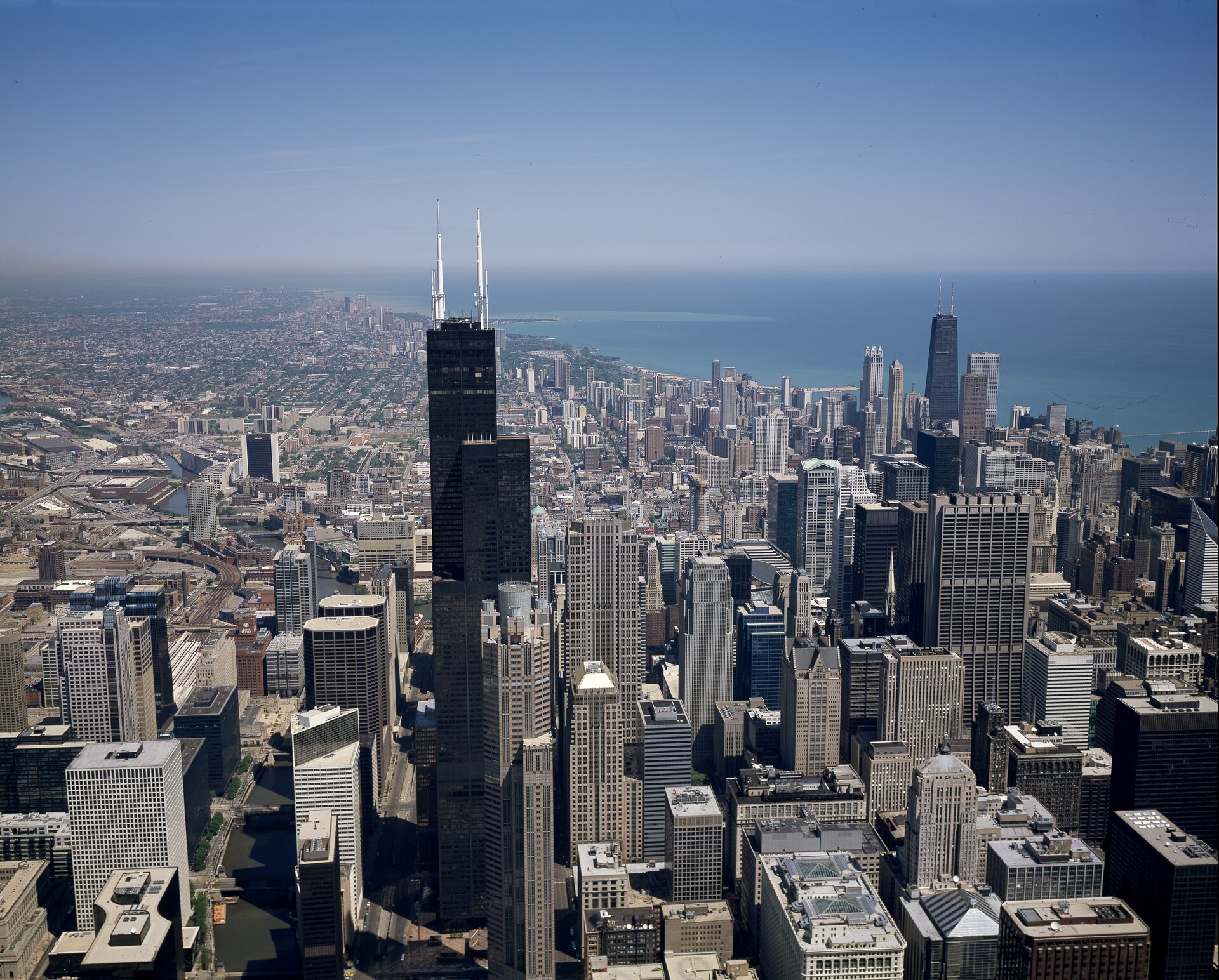
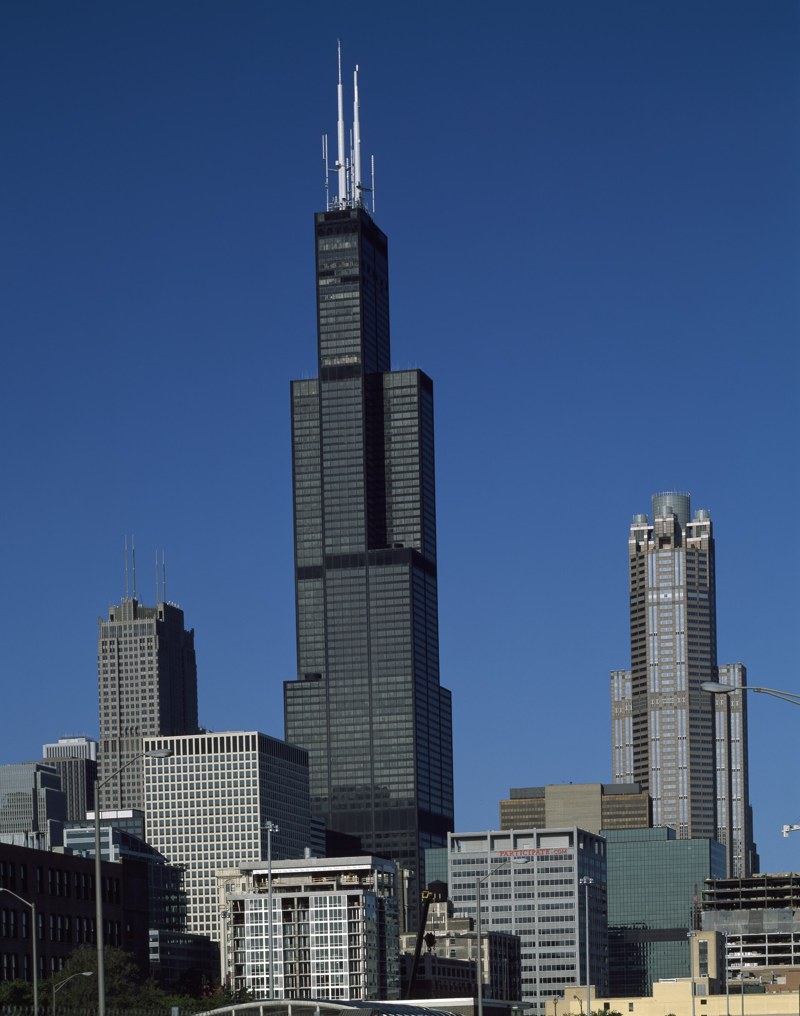
The likely method was worked out quickly, since local stations sent their programs from the studio by microwave to transmitters at the top of tall buildings, a connection known as the studio transmitter link. Vice reported that WGN’s signal traveled from its studio on Bradley Place to an antenna on the 100-story John Hancock Center about seven miles away. The theory set out by Marcus was that the intruders aimed a stronger microwave signal at the receivers on the Hancock and Sears towers from somewhere between the studios and downtown.
“I think the bad guy got close to the receiving end and just transmitted a signal that was received with a stronger strength than the more distant, intended signal,” Marcus told Vice. He thought the likeliest launch point was a high-rise apartment or a rooftop on the North or Northwest Side. He also doubted that the job needed costly gear. “New, the gear might have cost around ten thousand dollars, but would have been available, used, on the amateur radio market,” he said, adding that a dish the size of a home satellite antenna might have been enough if the intruders got close to the receiver.
Engineers at WTTW reached a similar view about the skills involved. Al Skierkiewicz, a WTTW broadcast engineer, told the station’s news team that the culprit had to have sophisticated technical knowledge. “It had to be a broadcast engineer, a satellite engineer, or a ham radio operator,” he said. “And probably a combination of at least two of those in order to pull this off.”
Why Did the FCC and FBI Never Catch the Max Headroom Pirate?
The government responded firmly at first, and the FCC said it had been notified and was investigating, UPI reported, and Vice recorded that agents from the FBI’s Chicago field office joined the case. Phil Bradford, an FCC spokesman, warned the culprits publicly the following day. “I would like to inform anybody involved in this kinda thing, that there’s a maximum penalty of $100,000, one-year in jail, or both,” he said.
There was reason for confidence, because a year and a half earlier, on April 27, 1986, a satellite technician calling himself Captain Midnight had overridden an HBO broadcast to protest the network’s plan to scramble its signal. The FCC traced him within days to a satellite uplink company in Ocala, Florida, according to Vice, and UPI reported that John R. MacDougall agreed to pay a $5,000 fine and was placed on a year’s probation. Vice added that the FBI had also identified the technician who hijacked Playboy TV with religious messages in September 1987.
The Chicago case offered far less to work with. The FBI made six still prints from a broadcast quality copy of the WTTW tape and tried to enhance the corner of the frame where the second figure appeared, Vice reported from the bureau’s technical report. Marcus regarded the tape as the best clue, because it was the only evidence investigators had. “The background looked to be about eight-feet wide, industrial type metal, maybe a roll-down warehouse door,” he told Vice. One tip pointed to a person linked to a company with a warehouse space in the city, but the investigators had no probable cause and no warrant.
According to Marcus, the follow-up stalled on resources and nerve. He was based at headquarters in Washington, and he said the FCC’s man in Chicago was reluctant to do door to door inquiries. “Our man in Chicago didn’t want to start knocking on doors,” he said. The case also ranked low on any list of federal threats in 1987, as Marcus explained. “Max Headroom wasn’t a danger to public safety, or to a multimillion piece of equipment,” Marcus said. “So the resources were a lot less.” He called the culprit “the one that got away.”
Who Was Behind the Max Headroom Mask?
More than 38 years later, no one has been named by any authority. Theories began on Chicago’s dial-up bulletin boards, Vice found, and have since multiplied online. Some point to individuals by name, but none has been backed by physical evidence, and Vice’s reporting found that the best known suggestions were either denied by people who knew the person concerned or rested on one man’s memories from childhood. Because the people named are unproven suspects, and some may be living, they are not repeated here.
The content of the broadcast itself has shaped the most cautious theory. Rick Klein, founder of the Museum of Classic Chicago Television, told Vice that the target was clear from the references to Swirsky, the Tribune and Clutch Cargo, a cartoon that once aired on WGN. “It’s important to keep in mind that this whole prank was designed for and against WGN,” he said. He wondered whether the culprit was a former WGN employee, a rejected job applicant or an engineer with the right equipment, and he remained hopeful. “I honestly believe that this mystery can still be solved,” Klein said.
Even if the culprits came forward now, they would face little legal risk. The Justice Department declined to comment on the case to Vice, but the magazine quoted its cybercrime manual, which states “In the absence of a specific statute of limitations, the default federal limitations period of five years applies.” WTTW put the outcome plainly in its 2017 retrospective, saying that the FCC investigated but never did figure out who was behind the incident.
Read next: Vrillon Message on Southern Television
What can be shown is narrow but solid. Two stations had their signals seized on one Sunday night, the intruders knew enough about microwave links to beat a major broadcaster for half a minute and a public station for a minute and a half, and the only evidence left behind was a videotape of a man in a mask. The Max Headroom incident remains less a case that investigators failed to crack than one that never had enough evidence, or enough priority, to be cracked at all.
Established: On the night of November 22, 1987, an unidentified intruder in a Max Headroom mask broke into the WGN-TV nine o’clock news for about 25 to 30 seconds and into a WTTW broadcast of Doctor Who for about 90 seconds. The FCC investigated with FBI help, and no one has been identified or charged.
Unverified: The intruders overpowered the stations’ studio to transmitter microwave links by beaming a stronger signal at the downtown receivers from a high point on Chicago’s North or Northwest Side, as FCC engineer Michael Marcus reconstructed it.
Unverified: The culprits were broadcast insiders with a grudge against WGN, or members of Chicago’s bulletin board hacking scene, as later theories propose. No suspect named online has been supported by evidence.
By Historic Mystery
Sources
- A video pirate struck two Chicago television stations, briefly, UPI Archives, November 23, 1987. upi.com
- Jay Shefsky, 30 Years Later, Notorious ‘Max Headroom Incident’ Remains a Mystery, WTTW News, November 21, 2017. news.wttw.com
- Chris Knittel, The Mystery of the Creepiest Television Hack, Vice (Motherboard), November 25, 2013. vice.com
