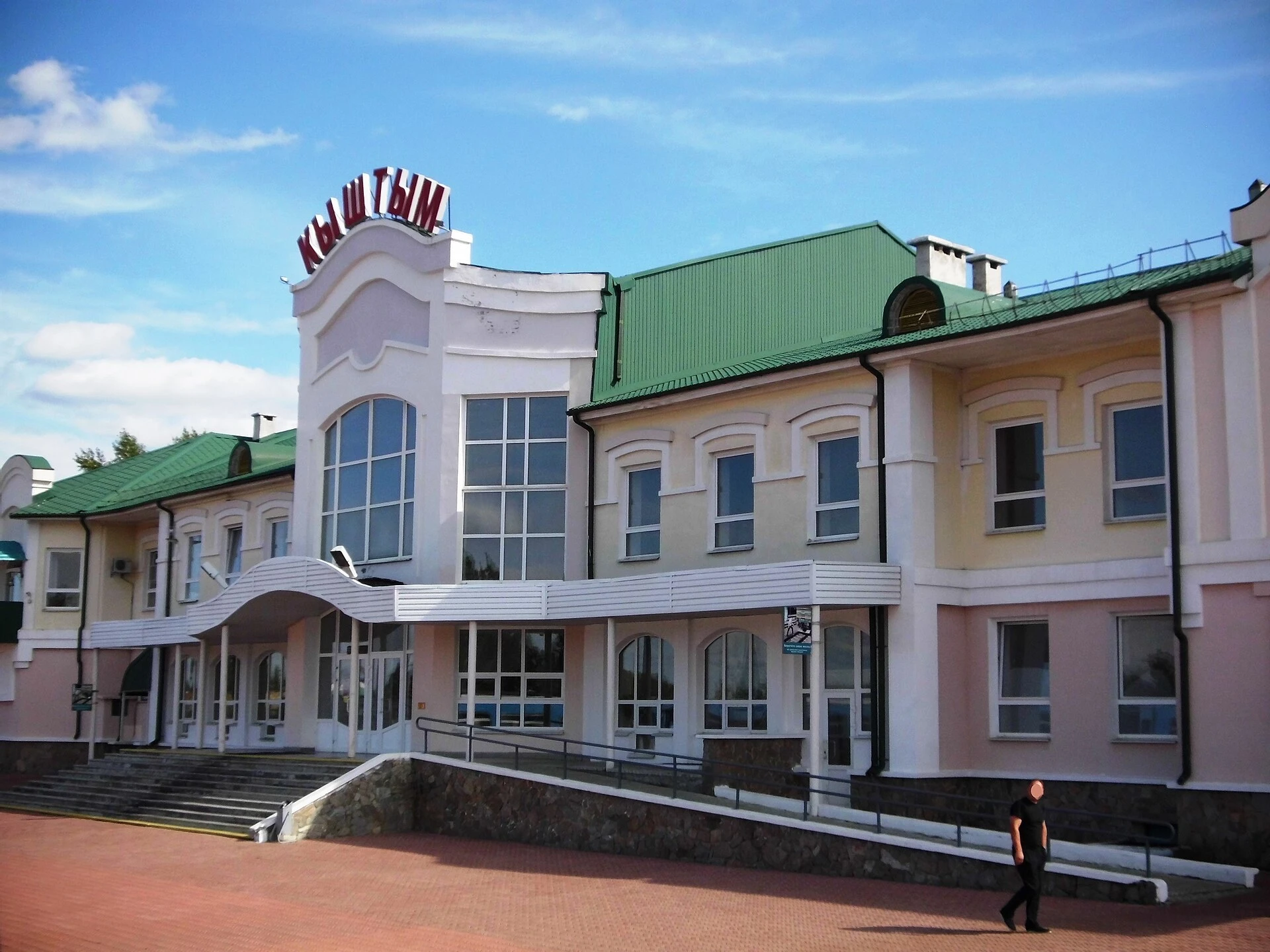

In the spring of 1996, an elderly woman in Kaolinovy, a village outside the town of Kyshtym in Russia’s Chelyabinsk region, brought home something very small wrapped in a headscarf. She began to care for it as if it were a baby and called it Alyoshenka, a tender form of the name Alexei. The tiny dried body that police later recovered would become known far beyond Russia as the Kyshtym dwarf, and to some as an alien.
Thirty years later, the body itself has vanished and the people who saw it disagree about what they were looking at, although doctors, a police investigator, ufologists and geneticists have all given their answers. The question of what Alyoshenka really was has never been settled in a way that satisfies everyone, partly because there is nothing left to examine.
Who Found Alyoshenka?
The woman at the center of the story was Tamara Prosvirina, a pensioner who lived alone in Kaolinovy, a village about 100 kilometers from Chelyabinsk that grew up around a kaolin clay quarry. Her former neighbors told the regional edition of Komsomolskaya Pravda in 2016 that she had once worked as a dressmaker and was an intelligent woman they enjoyed talking to. She also lived with a mental illness, and neighbors said her health had worsened after a family member was sent to prison.
Accounts of what happened in May 1996 vary, and Prosvirina herself told the story in more than one way. In the version her daughter-in-law later gave to police, she had gone to a forest well to fetch water and heard squealing sounds. Under a large pine tree she found a tiny living creature, which she wrapped up and carried home. Witnesses told the investigator that she believed the little being was her own child, sent in answer to her prayers, and that she fed it and looked after it for several weeks.
Neighbors who saw her carrying a small bundle grew worried about her, and after about three weeks they called for medical help. Prosvirina was taken to a psychiatric hospital. According to the witnesses quoted in later Russian reports, the creature was left alone in the house and died there without anyone to feed it.
How Did the Police Become Involved?
The case reached the police almost by accident. In the summer of 1996, a colleague of Vladimir Bendlin, an investigator with the Kyshtym police, was looking into a petty theft. He found that the suspect, a local man, had the small mummified body in his possession. Bendlin told the Yekaterinburg news site E1 in 2024 that the man had taken it from Prosvirina’s home and hoped to sell it.
Bendlin seized the body, kept it in the refrigerator at his own home, and summoned the villagers who had seen Alyoshenka alive to the police station, where he had their accounts filmed. He told E1 that his chief refused him the official video camera and ordered him to drop the matter, so he carried on in his own time. In his view the case could have involved an infanticide or an illegal abortion and should have been formally registered, a step his superiors blocked.
He then took the body to doctors. Gynecologists at the local hospital told him it was a miscarried fetus, according to his account. However, a pathologist and a forensic expert who looked at it told him it did not appear to be human at all. The forensic expert, Lyubov Romanova, later told Komsomolskaya Pravda that she had been completely certain it was not a child. Without a formal police order, she explained, she could not carry out the laboratory tests that might have settled the matter.

The descriptions recorded at the time agree on only a few points. The body was roughly 25 centimeters long, with a large, unusually shaped skull and big eye sockets. Even its color is disputed, since E1 describes a gray body while a neighbor who said she saw it alive told Komsomolskaya Pravda that it was brown.
Where Did the Body Go?
With no official investigation open, Bendlin looked for someone else to study the body. He told E1 that he saw a newspaper notice placed by a ufology group from Kamensk-Uralsky, a town in the neighboring Sverdlovsk region, and invited its members to examine Alyoshenka. People in suits arrived, asked for all of the paperwork and took the body and the documents away with them.
It was the last time Bendlin saw Alyoshenka. According to his account, the group later stopped answering him. Its members told local police that officials carrying identity papers had taken the body, while telling journalists that a flying saucer had taken it on the way. E1 and Komsomolskaya Pravda later described the group as a sect. Russian reports have since linked it to a wider movement run by a former oceanographer, Boris Zolotov.
Several explanations for the disappearance have circulated since then. E1 summarized them in 2024: some believe the body was simply mislaid, some think it was sold into a private collection, and supporters of conspiracy theories claim it was taken by American intelligence agencies. In 2018, according to the Russian news site 360.ru, journalists traced the woman from the group who had collected the body. She told them there had been no flying saucer and that the remains had been handed to doctors. None of these versions has been independently confirmed.
Prosvirina returned home after her stay in hospital. According to 360.ru, she was struck and killed by a truck one evening in August 1999. The person who knew most about where Alyoshenka came from was never able to give a full account.
What Did the 2004 DNA Test Show?
By the early 2000s, the only physical trace left was a piece of the cloth in which Alyoshenka had been wrapped. Vadim Chernobrov, coordinator of the Russian research group Kosmopoisk, obtained the fabric in Kyshtym and passed it to the Institute of General Genetics of the Russian Academy of Sciences in Moscow for analysis.
On April 15, 2004, according to the English edition of Pravda, a scientist at the institute announced the result: “The analysis of the blood spots on the fabric detected DNA of a human being. We proved that Kyshtym creature was a prematurely born female baby with many deviations.” A month later, the institute’s radiation genetics laboratory told the newspaper Argumenty i Fakty that only female X chromosomes had been found, so the infant was a girl. Three earlier attempts at genetic testing had failed to find human genes.
However, the test had been carried out on blood stains on a piece of cloth, and Chernobrov told Argumenty i Fakty that he did not consider the case closed. He pointed to the reported differences in the body’s structure, which had led the local pathologist to call it an unknown creature. He also asked how a premature baby could have survived for several weeks, as the witnesses claimed.
Could Radiation From Mayak Explain It?
Kyshtym lies close to Ozersk, home of the Mayak nuclear plant, where a tank of radioactive waste exploded on September 29, 1957, in what became known as the Kyshtym disaster. Komsomolskaya Pravda reported that the accident happened about 11 kilometers from Kyshtym, and one version repeated in Russian coverage holds that pollution from the accident caused the infant’s unusual development.
Some scientists rejected the radiation theory when Pravda asked them about it in 2004. Academician Yury Zakharov accepted that “There have been some mutations of animals and plants in the region.” He went on to argue that “radiation cannot influence human organism this much to cause mutation.” Professor Shevtchenko, head of the radiation genetics laboratory that studied the cloth, offered another view: “But as a rule, inherited anomalies arise spontaneously and unexpectedly.”
Alien or Premature Infant?
The idea that Alyoshenka came from another world rests largely on witness accounts that the creature moved, made sounds and took food for weeks. It also draws on the impressions of the pathologist and forensic expert who saw the body in 1996. No physical evidence for an extraterrestrial origin has ever been produced, and the group that took the body never published any findings.
Bendlin has always insisted that the villagers he questioned were simple people telling the truth as they understood it. However, the medical explanation has gained support over time, as doctors shown photographs of the body have described it as a premature human birth with severe congenital deformities, according to 360.ru.
A comparable case from Chile was finally resolved in 2018. A tiny mummified body known as Ata, found in the Atacama Desert, had also been promoted as a possible alien. Then a team publishing in Genome Research sequenced its genome and found that “Ata is a female of human origin, likely of Chilean descent,” with mutations in genes linked to skeletal disorders. Russian commentators have pointed to Ata as a sign of what testing Alyoshenka’s body might have shown.
Why Does Alyoshenka Still Draw a Crowd?
In Yekaterinburg, ufologists, people who say they have witnessed UFOs and fans of the story gather every year for an evening in Alyoshenka’s memory. Bendlin, now retired from the police, spoke at the 2024 event, and E1 reported that he no longer considers himself a skeptic after seeing what he describes as a UFO himself.
Read next: Inhuman Monsters of the Deep: The Swimmers of Lake Baikal
What remains of Alyoshenka today is a set of police videos, some photographs, a laboratory result from a piece of cloth and the memories of a few villagers. The most likely answer, supported by the local hospital doctors and the 2004 test, is that this was a very premature baby girl born with serious deformities. She was found and loved for a few weeks by a woman who believed she had been given a child. Whether that answer is the whole story may never be known without the body that disappeared on the road to Kamensk-Uralsky.
Established: In May 1996 Tamara Prosvirina of Kaolinovy, near Kyshtym, found and cared for a tiny being she called Alyoshenka, and that summer police investigator Vladimir Bendlin recovered a small mummified body, filmed witness accounts and showed it to doctors before handing it to a ufology group, after which it disappeared.
Unverified: That Alyoshenka was a premature human girl with congenital deformities, as gynecologists said in 1996 and as the Institute of General Genetics reported in 2004 from DNA in blood stains on the wrapping cloth, since the body itself was never tested.
Unverified: That radiation from the 1957 Mayak accident caused the deformities, or that the body was sold to a collector or taken by intelligence agencies.
Fringe: That Alyoshenka was an extraterrestrial being, or that aliens removed the body.
By Historic Mystery
Sources
- E1.ru, interview with former investigator Vladimir Bendlin, March 7, 2024 (in Russian). e1.ru
- E1.ru, Who Is Alyoshenka: Why the Riddle of the Kyshtym Dwarf Is Still Unsolved After 28 Years, March 14, 2024 (in Russian). e1.ru
- Komsomolskaya Pravda Ural, Where the Alien Alyoshenka Found in the Urals Disappeared 20 Years Ago, 2016 (in Russian). ural.kp.ru
- Argumenty i Fakty, The Alyoshenka Case Is Not Closed, May 19, 2004 (in Russian). archive.aif.ru
- Pravda.ru (English edition), Who Extraterrestrial Visitor in Russian Province Really Was, 2004. english.pravda.ru
- 360.ru, Thirty Years Later: The Full Story of the Kyshtym Dwarf Alyoshenka (in Russian). 360.ru
- Sanchita Bhattacharya and others, Whole-genome sequencing of Atacama skeleton shows novel mutations linked with dysplasia, Genome Research 28 (2018): 423 to 431. PMC5880234
