

In early 2003 a story spread around the world about a Wall Street trader named Andrew Carlssin who had turned $800 into more than $350 million in two weeks and then told federal investigators he was a time traveler from the year 2256. The story was a hoax. No record of any such trader, arrest or confession has been found outside the tabloid that invented him. It began as a made up piece in the Weekly World News, an American supermarket tabloid whose stories were largely invented, and it reached mainstream publications and radio stations because outlets repeated it, sometimes almost word for word, as if it were real news.
The paper trail is short and well documented. The fact checking site Snopes traced the story to a Weekly World News article by Chad Kultgen dated February 25, 2003, and to a reprint on Yahoo dated March 19. On April 4, 2003, Sandra Dick of the Edinburgh Evening News, now archived by The Scotsman, followed the tale from Florida to newsrooms in Britain and called the federal agencies named in it. Their answers settled the question within a few weeks of the first article.
What Did the Andrew Carlssin Story Claim?
The original article was written in the deadpan style of a wire report. According to the text reproduced by Snopes, sources at the Securities and Exchange Commission confirmed that a 44-year-old trader named Andrew Carlssin had been led away in handcuffs on January 28. An unnamed SEC insider supplied the numbers that made the story famous. “But the fact is, with an initial investment of only $800, in two weeks’ time he had a portfolio valued at over $350 million,” the insider said. “Every trade he made capitalized on unexpected business developments, which simply can’t be pure luck.”
The details grew as the story was retold. The Edinburgh Evening News summarized the version circulating by April, in which FBI agents investigating insider dealing arrested the trader and then sat through a four-hour videotaped confession. Carlssin was said to have explained that he came from more than two centuries in the future and had simply known which companies would rise. He was quoted as saying, “It was just too tempting to resist.” He went on, “I had planned to make it look natural, you know, lose a little here and there so it doesn’t look too perfect. But I just got caught in the moment.”
The tale also had a hook for anyone hoping to verify it. Initial inquiries, the story claimed, showed no records of Carlssin before December 2002, which suited a man who had only just arrived from the 23rd century. In return for leniency and a chance to return to the future in his time craft, he supposedly offered investigators a list of historical facts, including where Osama bin Laden was hiding and a cure for AIDS. The Weekly World News account added that he would sit in a jail cell on Rikers Island until he gave up his sources.
Where Did the Story Come From?
The Weekly World News was never a newspaper in the usual sense. James Doran, writing in The Observer when the paper’s print edition closed in 2007, explained that it first appeared in 1979, when its owner’s flagship title, the National Enquirer, switched to color printing and the company needed something to run on its old black and white presses. In Doran’s words, the publisher “needed something to print on its old mono presses.” The paper called itself “The World’s Only Reliable Newspaper,” Reuters reported. One of its regular features was Bat Boy, a half bat, half human child supposedly found in a cave.
In its original home, the Carlssin item sat beside headlines that left little room for doubt. The Edinburgh Evening News listed a few of its neighbors from the same period, including “Ten Ways to Tell if Your Co-Worker is an Extra-Terrestrial!” and “Iraqi Submarine Prowling Lake Michigan!” However, the paper did not openly admit that its stories were largely invented. Doran noted that it began running a disclaimer only in 2004, a year after Carlssin, suggesting readers should “suspend disbelief for the sake of enjoyment.”
How Did a Tabloid Joke Reach Mainstream News?
The decisive step was a reprint on the Yahoo news portal. The Edinburgh Evening News noted that the story appeared in Yahoo’s entertainment news and gossip section, with Weekly World News clearly attributed as the source. Snopes observed that the heading did not convey a strong “bogus” warning to readers who failed to notice the source or did not know what the Weekly World News was. From there, Snopes reported, the item showed up in magazines and newspapers reprinted verbatim as a “real” news item.
From there the story moved quickly. The Edinburgh Evening News reported that it ran in Accountancy Age, The Mirror and the financial site eFinancialNews.com almost word for word, and that news outlets from Japan to Germany and Australia to Britain picked it up. Search engines reported a surge of queries for Carlssin, and one claimed an average of a hit every 11 seconds just after the story broke. Some readers wanted to find him, and the paper quoted a chatroom user called Amanda who asked, “I’d like to get in touch with Andrew Carlssin. Do you know where he can be reached?”

James Harding, editor of the magazine Computer Active, gave the newspaper a simple explanation for the speed. “So many people have computers and internet access, that once something appears on a website somewhere it doesn’t take very long for it to be picked up and e-mailed around the world,” he said. Harding added that false claims could be posted with no consequences, and that many readers were easily fooled by them. The Edinburgh Evening News described the story clogging up email inboxes and sparking arguments in pubs and offices around the world.
What Did the SEC and the FBI Say?
The agencies named in the story were contacted by reporters and answered plainly. At FBI headquarters in Washington, spokesman Bill Carter told the Edinburgh Evening News that he had already fielded calls about it, including one from Britain. “I doubt very much the veracity of the story,” he said. “I am not aware of any individual who has made 350 million on the stock market with an 800 stake.” He allowed that the bureau arrested hundreds of people each week, then added, “But the notion that there may be a time traveller out there has not reached the attention of FBI headquarters.”
The SEC was blunter still. Its spokesman in Washington, who was not named in the article, dismissed the report outright. “This story is pure fantasy. There is no truth in it at all,” he said. Snopes reported that the FBI and the SEC were flooded with inquiries from journalists, and the SEC spokesman confirmed that the agency had checked the claim before rejecting it. “Of course, we had to look into it, but as far as we know, it’s just not true,” he said. Snopes, which rated the claim False, concluded that the story had been covered nowhere except the Weekly World News before others copied it.
Some publications treated the item as the joke it was. The Guardian, quoted in the Edinburgh Evening News, observed that “Even a non-time traveller could have told him that profiting from 126 consecutive high-risk trades over two weeks was sure to get him noticed.” Other commentators, the Edinburgh Evening News reported, pointed out that a sensible time traveler would hardly choose 2003, when the stock market was in free fall and any big winner would draw immediate attention.
What Happened to Andrew Carlssin Next?
The Weekly World News kept its character alive after the real world had disowned him. Snopes reported that the paper’s April 29, 2003 issue ran a follow-up claiming that an unidentified benefactor had posted $1 million in bail, and that Carlssin had then skipped an April 3 court hearing and disappeared without a trace. For believers, the ending was perfect, since a man who could not be found had presumably returned to his own century. For skeptics, it was the natural way to close a story that had no real court case behind it.
That missing court case is the central point. None of the reporting gathered by Snopes or the Edinburgh Evening News found any record beyond the tabloid’s own pages. The SEC called the story pure fantasy, and the FBI said it knew of no one who had made such a fortune. The supposed absence of records before December 2002 was presented as a clue to time travel, but it is exactly what one would expect for a character invented by a tabloid.
Why Does the Carlssin Story Still Circulate?
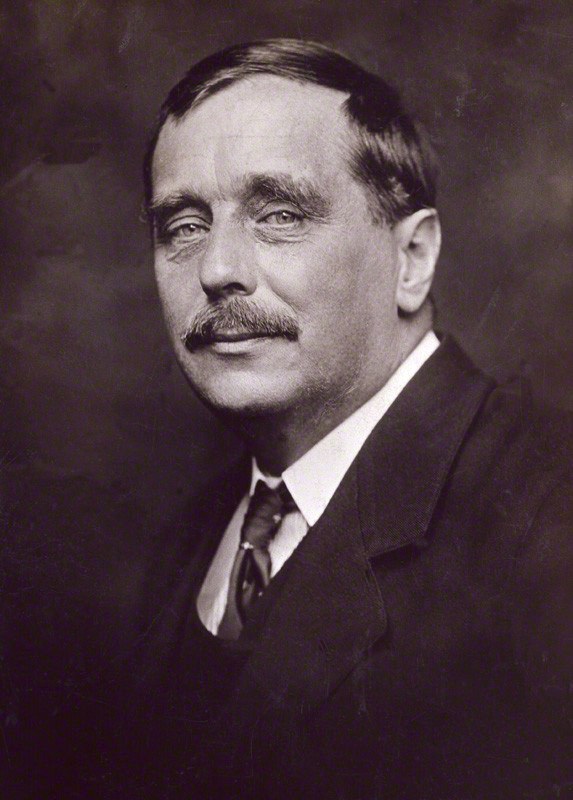
The appeal of the tale lies in its logic, because a time traveler who uses knowledge of the future to get rich on the stock market is a familiar fantasy, and the story gave it a believable bureaucratic setting with the SEC, the FBI and Rikers Island. The Edinburgh Evening News opened its 2003 analysis with H.G. Wells and closed with real physics, noting that Joe Hafele and Richard Keating flew atomic clocks around the world in 1971 and found them 59 nanoseconds slow compared with identical clocks on the ground, as Einstein’s theory predicted.
Read next: Rudolph Fentz: A 1950s New York Time Traveler? | Charlie Chaplin Time Traveler Claim | Sergei Ponomarenko, the Man who Slipped Through Time
The Weekly World News itself closed its print edition with the August 27, 2007 issue, according to Reuters, after sales fell to 83,000 copies in 2006. Its time traveling trader has outlasted the presses that printed him. The story of Andrew Carlssin remains a case study in how a joke can lose its label on the way across the internet, and how a single reprint without context can turn satire into something that many readers took for fact.
Established: The Andrew Carlssin story is a hoax. It originated in a Weekly World News article in February 2003 and was reprinted by Yahoo in March 2003. The SEC called it “pure fantasy,” the FBI said it knew of no such case, and no court record of any Andrew Carlssin has been reported.
Fringe: The idea that Andrew Carlssin was a real time traveler from the year 2256 comes only from the Weekly World News story itself. No evidence supports it, and no such person is known to have existed.
By Historic Mystery
Sources
- David Mikkelson, ‘Time-Traveler’ Busted for Insider Trading?, Snopes, March 27, 2003. snopes.com
- Sandra Dick, Anyone Can Be Fooler of the World, Edinburgh Evening News, April 4, 2003, archived at The Scotsman. scotsman.com
- Chad Kultgen, ‘Time-Traveler’ Busted for Insider Trading, Weekly World News, February 25, 2003 (issue on Google Books). books.google.com
- James Doran, Giant Black Hole Swallows Florida Newspaper, The Observer, August 12, 2007. theguardian.com
- Reuters, ‘Bat Boy’ Tabloid Weekly World News Shutting Down, July 26, 2007, via Fox News. foxnews.com
