The Valentich Disappearance is one of the most famous aviation riddles in Australian history, and it has been argued over for almost half a century. On the evening of October 21, 1978, a 20-year-old pilot named Frederick Valentich flew a rented Cessna out over Bass Strait, the stretch of sea between mainland Australia and Tasmania, and began describing a strange craft with bright lights to a controller in Melbourne.
His last words to the ground were that the thing above him was “not an aircraft.” The radio then carried 17 seconds of noise, and neither the pilot nor his plane was ever seen again. Skeptics such as the investigator Joe Nickell, the pilot and astronomer James McGaha and the writer Brian Dunning have argued that an inexperienced flyer became disoriented in the dusk and crashed into the sea. But did Valentich really see something the official inquiry could not explain?
A Night Flight to King Island
Valentich was a keen young aviator with big ambitions. He held a private pilot license, had about 150 hours of flying time and was studying part time for a commercial license, though according to the Skeptical Inquirer he had failed the exams more than once. He had also been rejected twice by the Royal Australian Air Force, and he had been warned or cited over three flying incidents, including a stray into restricted airspace.
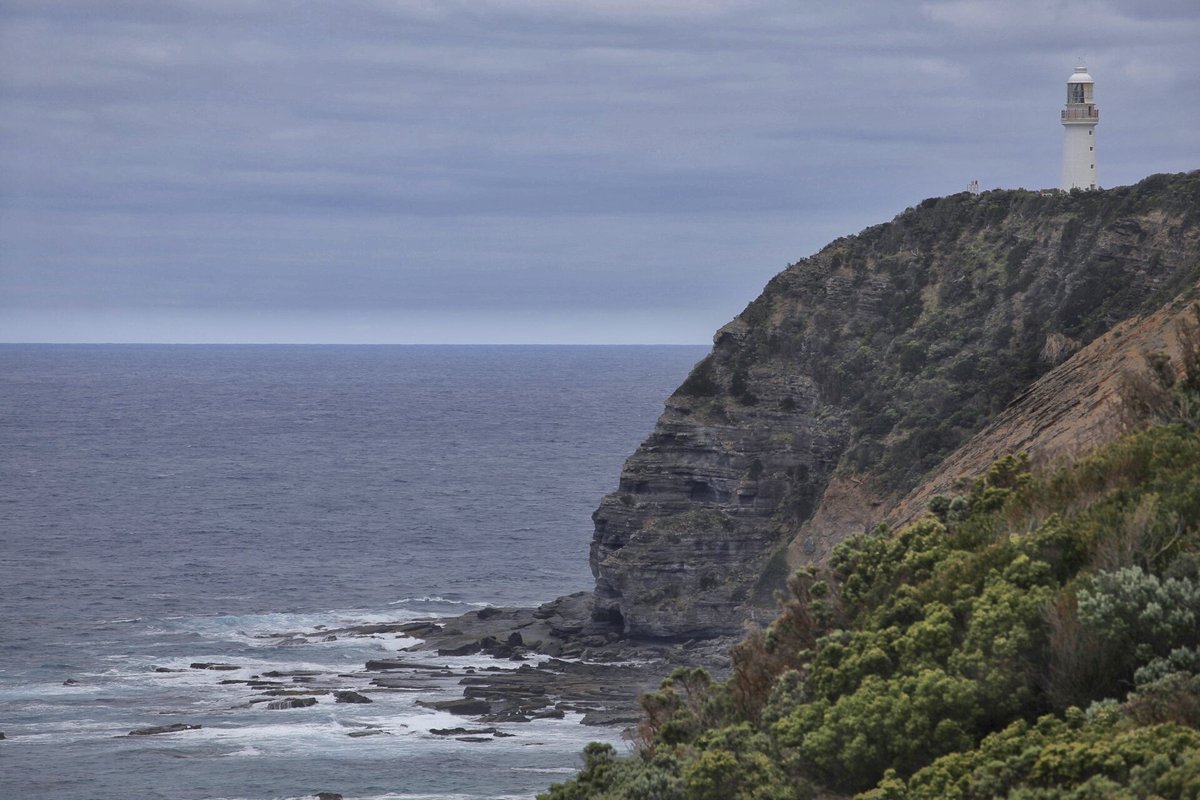
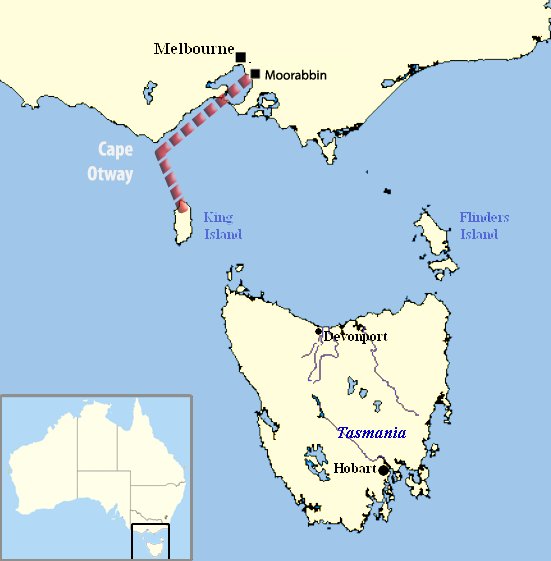
At 6:19 that evening he took off alone from Moorabbin Airport, south of Melbourne, in a single-engine Cessna 182L registered VH-DSJ. The plan was to follow the coast southwest to Cape Otway and then cross about 48 miles (77 km) of open water to King Island. He told the briefing officer he was going to collect passengers, while the people close to him believed he was going to bring back crayfish. Investigators later found no passengers waiting and no crayfish to collect.
The weather that evening was kind, and the official summary report described clear skies near Cape Otway with “excellent visibility and light winds,” and it noted that “The end of daylight at Cape Otway was at 1918 hours.” At about seven o’clock Valentich reported his position over the cape and headed out to sea at 4,500 feet (1,370 m), bound for an island whose flight service unit had already closed for the night.
Seventeen Seconds of Open Microphone
Six minutes after reaching the cape, Valentich called Melbourne Flight Service and asked the controller, Steve Robey, whether there was “any known traffic below five thousand” feet. Robey told him there was none. Valentich then reported what seemed to be a large aircraft with four bright lights that looked to him “like landing lights,” and said it had just passed at least 1,000 feet (300 m) above him.
Over the next few minutes his descriptions grew more peculiar. He said the craft was approaching from due east and told Robey, “It seems to me that he’s playing some sort of game.” When the controller asked him to confirm that he could not identify it, the young pilot said, “It’s not an aircraft.” Asked to describe it, he answered, “As it’s flying past, it’s a long shape.”
Valentich then reported that he was circling and that the object was circling on top of him. “It’s got a green light and sort of metallic,” he said, and moments later, “It’s just vanished.” Seconds later he asked whether it might be a military aircraft. But it didn’t end there. The object was back, he said, now approaching from the southwest, and then came the first sign of trouble: “The engine is, is rough idling.”
When Robey asked about his intentions, Valentich replied that he still meant to go to King Island and then said, “Melbourne, that strange aircraft is hovering on top of me again.” After a pause of two seconds came the last words anyone heard from him:
“It is hovering, and it’s not an aircraft.”
At 7:12 and 28 seconds he gave his call sign one final time. The microphone stayed open for 17 seconds, and the transcript printed by the Skeptical Inquirer records “audible, unidentified staccato noise” before the channel went silent. The Distress Phase was declared at 7:33 that evening, when the Cessna failed to reach King Island. “An intensive air, sea and land search was continued until 25 October 1978, but no trace of the aircraft was found,” the report said.
The Department of Transport summary report, approved for publication on April 27, 1982, gave its opinion as to the cause in a single sentence: “The reason for the disappearance of the aircraft has not been determined.” The pilot’s injuries were listed as “Presumed Fatal.”
Planets, Twilight and a Graveyard Spiral
The transcript soon set off a storm of UFO talk, with claims of alien attack and reports of other lights seen that night. Many of those reports arrived late. “It’s funny all these people ringing up with UFO reports well after Valentich’s disappearance,” said Ken Williams, a spokesman for the Department of Transport, in 1978.

In 2013 Nickell and McGaha offered what they called the missing piece in the Skeptical Inquirer. A computer search of the sky for that time and place, they wrote, showed four bright points of light: “Venus (which was at its very brightest), Mars, Mercury, and the bright star Antares.” The group formed a tall diamond that a viewer could read as one “long shape,” and they suggested the green light may have been the Cessna’s own right wingtip navigation light.
Their bigger point, however, concerned the plane rather than the lights. If the lights were planets, the pilot was circling while the so-called object stayed put. In fading twilight a horizon that is bright on one side and dark on the other can appear tilted, and a pilot leveling against it can slide into a tightening descent known as a “graveyard spiral.” Rising G-forces could also explain the rough engine, they argued, because the Cessna’s fuel system was gravity fed.
Dunning, writing for Skeptoid, also pointed to disorientation, noting that this was Valentich’s first night flight over water. He floated a more speculative idea as well, that the pilot may have been acting out the air traffic control scene from Close Encounters of the Third Kind, released less than a year earlier. “There’s no way to know how wrong or right this hypothesis might be,” wrote Dunning.
The skeptical case also rests on the man himself. Valentich was believed to be deeply interested in UFOs, and the writer Robert Sheaffer suggested he was “probably inclined to assume anything is a ‘UFO’ if he could not immediately identify it.” Other theories, such as a staged disappearance, have circulated for decades, but as Nickell and McGaha put it, “none seemed to explain both the disappearance and the lights.”
Witnesses, Wreckage and an Open File
However, not everyone accepts the spiral, and in 2000 the UFO researchers Richard Haines and Paul Norman, who called the case one of the best publicized aviation puzzles since Amelia Earhart’s last flight, published testimony from three witnesses near Apollo Bay. A man they gave the pseudonym Ken Hansen and his two nieces said they saw a small plane descending steeply with a much larger green light just above it.
Haines and Norman concluded that the Cessna probably crashed into the sea southeast of Cape Marengo, between 3 and 12 miles (5 and 19 km) offshore. However, they did not claim to know what the light was, and in the Journal of Scientific Exploration they wrote:
“The nature of the large object with green lights that accompanied the airplane during its steep descent remains to be identified.”
The testimony has weak points, because Hansen came forward years after the event, and even his interviewers conceded that his “recollection of the angular size of the airplane’s lights is too large by perhaps several orders of magnitude.” Nickell and McGaha added that a banking Cessna could easily hold its green wingtip light above the body of the plane, which is roughly what the witnesses described.
The physical evidence is remarkably thin, resting largely on an engine cowl flap that washed ashore in 1983 at Parry’s Bay on Flinders Island, far to the east. A Department of Transport letter stated that “The part has been identified as having come from a Cessna 182 aircraft between a certain range of serial numbers.” VH-DSJ fell inside that range, and a Royal Australian Navy scientist judged that a storm had stirred up unusual currents that could have carried such a part toward Flinders Island.
According to Dunning, the navy laboratory could find no other aircraft loss that fitted the part. However, it was never tied to VH-DSJ directly, and no other trace of the plane has been identified. Forty-eight years on, the people caught up in that night still “continue to wrestle with what happened,” as an ABC radio documentary put it. Whether Valentich chased a cluster of planets, a film scene or something else into the dark, what he saw over Bass Strait still remains a mystery.
Established: Frederick Valentich, 20, left Moorabbin at 6:19 in the evening on October 21, 1978, reported an unidentified craft to Melbourne Flight Service and stopped transmitting at 7:12. No trace of the aircraft was found in the search, and the official report did not determine a cause.
Disputed: That the cowl flap found on Flinders Island in 1983 came from VH-DSJ. It fell within a matching serial range, but no direct link was proven.
Unverified: That Valentich saw Venus, Mars, Mercury and Antares and crashed after spatial disorientation. This is the leading skeptical explanation, but without wreckage it cannot be confirmed.
Unverified: The Apollo Bay accounts of a large green light above a descending plane, which were first recorded years after the event.
Unverified: That he staged his own disappearance, or that he was acting out a scene from Close Encounters of the Third Kind.
Fringe: That Valentich was attacked or abducted by an alien craft.
By Joanna Gillan
Sources
- Commonwealth of Australia Department of Transport, Aircraft Accident Investigation Summary Report V116/783/1047 and investigation file, National Archives of Australia B1497 (1978 to 1983), Internet Archive copy
- National Archives of Australia, DSJ Cape Otway to King Island 21 October 1978 Aircraft Missing (Valentich), item 10491375
- Joe Nickell and James McGaha, The Valentich Disappearance, Skeptical Inquirer 37, no. 6 (2013)
- Brian Dunning, The Valentich Disappearance, Skeptoid episode 385 (2013)
- Richard F. Haines and Paul Norman, Valentich Disappearance: New Evidence and a New Conclusion, Journal of Scientific Exploration 14, no. 1 (2000): 19 to 33
- Patrick Stokes, Last Light, The History Listen, ABC Radio National
- Wikimedia Commons, Cape Otway lighthouse, photo by Steve Bittinger
- Wikimedia Commons, Valentich disappearance route map, by TVJunkie after Ulfl
- Wikimedia Commons, Cessna 182L Skylane Airman EC-BNV, photo by Magic Aviation


