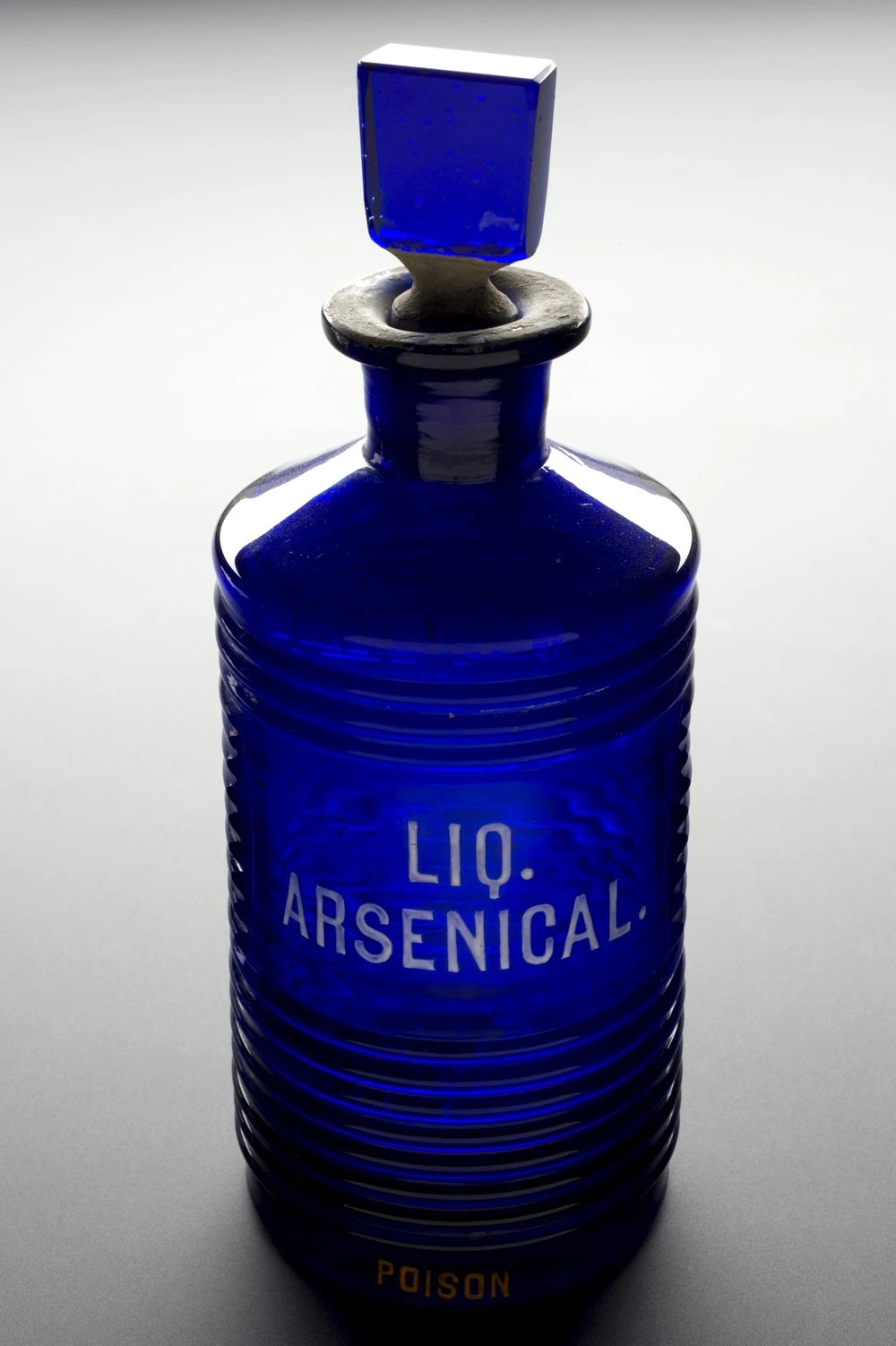

Between April 1928 and March 1929, arsenic crept through one well-off family in the London suburb of Croydon and killed three of its members in under a year. Exhumations later found the poison in all three bodies, two inquest juries spoke of murder, and Scotland Yard spent months on the case. So how did a triple poisoning inside one family end without a single charge?
According to the National Archives catalog, the Metropolitan Police file on the case, MEPO 3/861, is headed “Wilful murder by poisoning by person(s) unknown” and names three victims. They were Edmund Creighton Duff on April 23, 1928, Vera Sidney on February 14 to 15, 1929, and Violet Emelia Sidney on March 5, 1929, “all at Croydon.”
The case gripped British readers in the summer of 1929, and American wire services followed nearly every turn of it. As reported by the Associated Press on July 30, 1929, the standing of the family and the “apparent lack of motive for the triple killing” gave the story its unusual pull on both sides of the Atlantic.
The surviving record is thinner than the fame of the case suggests. Croydon Archives holds coroners’ files for all three deaths, yet its catalog warns that “The files are not complete,” and that the Duff file “contains only a few pages from witness statements, and the Coroners notes for his summing up.” Much of what can be said now rests on press reports and later books.
Who Were the Three Croydon Victims?
Edmund Duff died first, in April 1928, the day after an evening meal. United Press later described him as “a former high commissioner in Nigeria.” The National Archives also holds a Treasury Solicitor file on an “application by the Attorney General for quashing of original inquest verdict and Order for a fresh inquest.”
That legal step mattered because a first inquest had already returned a verdict on his death, and it had to be set aside. Vera Sidney, who was 40 according to United Press, died on February 15, 1929, less than a year after Duff. Her mother, Violet Sidney, aged 69 by the same account, died less than three weeks later on March 5, 1929.
Three deaths in one family in under a year finally drew the attention of the authorities. All three bodies were exhumed, and the coroners’ files held in Croydon show inquests into Violet and Vera running from March into the summer, with the second Duff inquest following between June and August 1929.
The Associated Press summarized the evidence at the inquests in stark terms. Violet had received poison “administered in a medicine which she alone of the family took,” while Duff was thought to have swallowed his dose in a glass of beer. “He was the only member of the family who drank beer,” the agency added, a detail that narrowed the method without narrowing the list of suspects.
United Press reported that some of England’s most skilled medical minds were called to the Duff inquest. According to United Press, Sir Bernard Spilsbury, whom the agency called the government’s post-mortem expert, testified that “the poison had been taken either in the beer or food Duff had eaten at dinner the evening before he died.” That testimony fixed a window of time but pointed at no one in particular.
What Did the Inquest Juries Actually Decide?
The verdicts were less tidy than many later retellings suggest. On July 29, 1929, a Croydon jury found that Vera Sidney had been murdered, probably with poison in her soup, as reported by the Associated Press. The coroner, Dr. Jackson, and his wife then received “letters threatening them for his investigation of the death of Vera Sidney,” and police placed a guard on their home.
The inquest into Violet Sidney took a different turn on July 31, 1929. According to the AP, the jury first returned a verdict of willful poisoning and then “shifted its position deciding there was not sufficient evidence to show this.” United Press put it more plainly, saying the jurors “had no evidence whether she died by her own hand” or had been murdered.
The coroner himself, the agency reported, “emphasized the lack of evidence in any way giving a clue to the person who administered the poison.” Outside, “Great crowds thronged the neighborhood of the hospital in Croydon where the case was heard,” a sign of how far the story had spread beyond the family and the courtroom.
Duff’s second inquest closed in August 1929 with a finding that he, like Vera, had been murdered by a person or persons unknown. United Press reported that arsenic had been “willfully administered by some person” in two of the cases, and that police were working in search of “a clue on which to base an arrest.” The same dispatch added bluntly, “So far they have failed.”
Why Did No One Face Charges?
On August 29, 1929, the Associated Press reported that “because of lack of evidence authorities had decided not to bring charges against any one in the so-called Croydon poisoning cases.” The same dispatch admitted that “Efforts to evoke a workable criminal theory from the web of circumstances seem to have proved futile.”
Motive was the gap that ran through every report on the case. “The suspected murders seem to have been as deliberate as they were lacking in motive,” the AP wrote, and a family that shared meals, drink and medicine gave several people the chance to reach the poison. Opportunity of that kind, without a witness or a purchase traced to one person, is indicative rather than conclusive.
Contemporary critics also blamed the coroners’ process itself. Writing for United Press in November 1929, Arch Rodgers reported complaints that some coroners “constitute themselves both Judge and prosecuting counsel,” and he cited the Croydon hearings as a case where, in the end, “the coroner had to admit that there was no evidence singling out any one” individual.
Some commentators floated more radical shortcuts to a confession. A United Press report from September 1929 described calls to question witnesses under the drug known as “twilight sleep” in cases like Croydon, but a former chief constable, Wensley, was skeptical. “Surely it would be difficult to get a jury to convict on evidence produced in this way,” he said.
Why Did Suspicion Fall on Grace Duff?
Grace Duff, the widow of Edmund and the sister and daughter of the two other victims, was treated with sympathy at the time. United Press reported in August 1929 that she and her two children were “all placed above suspicion,” and the AP reported that she said the verdict on her sister was just but offered no further opinion on the case.
Suspicion against her hardened only decades later. The crime writer Richard Whittington-Egan revisited the case in his book The Riddle of Birdhurst Rise, and Publishers Weekly, reviewing a later Penguin edition, said he interviewed witnesses “nearly all of whom believed in Grace’s guilt.” The same review noted that clues had pointed to “one of two heirs, Grace Sidney Duff or Tom Sidney.”
No court ever tested any of that suspicion, and Grace Duff was never charged with any crime in connection with the deaths. Publishers Weekly stated the limit plainly, writing that “the argument against Grace, now deceased, continues to depend on circumstantial evidence and educated guesses.” Her brother Tom, named in the same review as the other heir, was never charged either.
The review also recorded that “the unsolved case was officially closed in 1929,” a judgment that nothing in the surviving files has overturned. Later accounts have leaned toward Grace as the culprit, yet the evidence that survives supports suspicion of her and nothing stronger, and that distinction is the whole difference between a theory and a verdict.
Nearly a century on, the police file survives at Kew and the coroners’ papers sit, incomplete, in Croydon. Three people died of arsenic, two juries returned murder verdicts, and a third could not say whether the death was murder at all. The Croydon poisonings remain less a puzzle waiting for its final piece than a record of how far suspicion can travel without proof.
By Historic Mystery
Sources
- The National Archives, Kew, MEPO 3/861, Wilful murder by poisoning by person(s) unknown of Edmund Creighton Duff, Vera Sidney and Violet Emelia Sidney, all at Croydon, 1929. discovery.nationalarchives.gov.uk
- The National Archives, Kew, TS 27/332, Edmund Creighton Duff, deceased: application by the Attorney General for quashing of original inquest verdict and order for a fresh inquest, 1929. discovery.nationalarchives.gov.uk
- Croydon Archives, coroners’ records COR/1/6, inquest files for Violet E. Sidney, Vera Sidney and Edmund C. Duff, March to August 1929. croydon.gov.uk
- Associated Press, Croydon coroner guarded after threat letters, Evening Star (Washington, DC) and Bismarck Tribune, July 30, 1929, and New Britain Herald, July 30 and 31, 1929. Library of Congress, Chronicling America. Evening Star, Bismarck Tribune, New Britain Herald
- Associated Press, Violet Sidney inquest report, Brownsville Herald, July 31, 1929. Chronicling America
- United Press, Scotland Yard and the Croydon cases, Washington Daily News and New Britain Herald, August 22, 1929, and South Bend News-Times, August 24, 1929. Washington Daily News, South Bend News-Times
- Associated Press, no charges in Croydon poisoning cases, Evening Star (Washington, DC), August 29, 1929. Chronicling America
- United Press, twilight sleep and criminal evidence, South Bend News-Times, September 22, 1929. Chronicling America
- Arch Rodgers, United Press, criticism of British coroners, South Bend News-Times, November 5, 1929. Chronicling America
- Publishers Weekly, review of The Riddle of Birdhurst Rise by Richard Whittington-Egan (Penguin, ISBN 978-0-14-011078-4). publishersweekly.com
