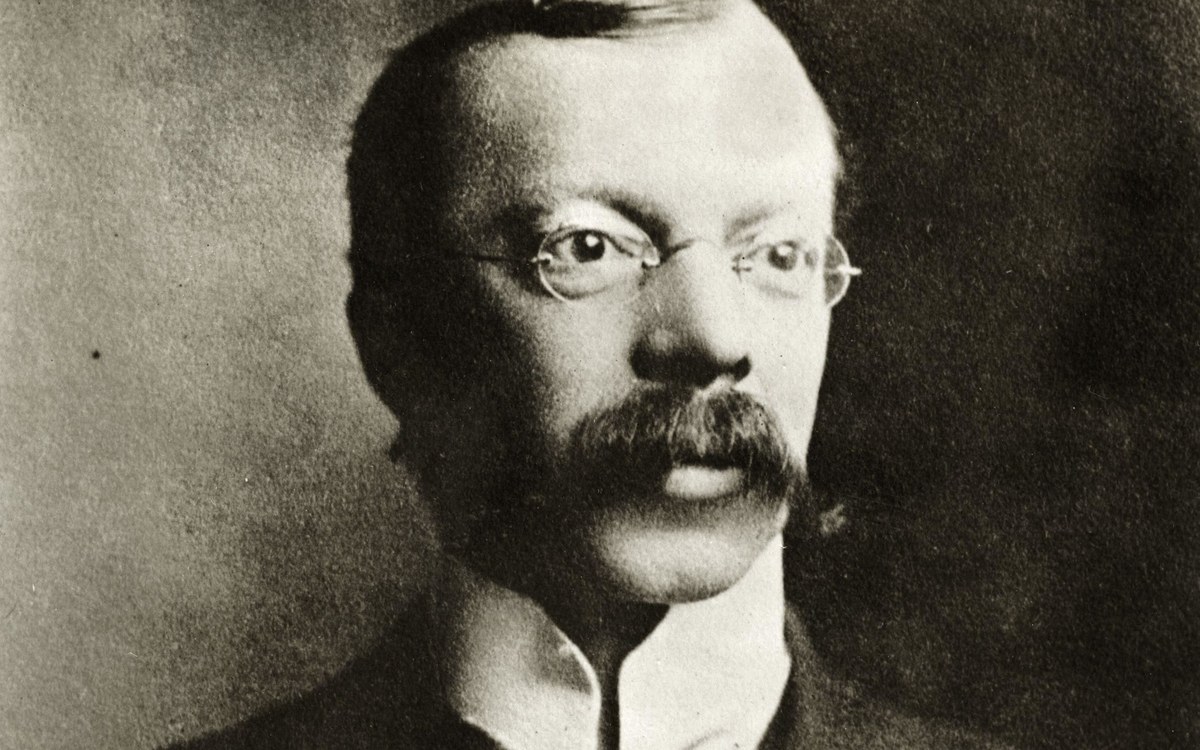

Few names in British criminal history carry as much weight as Crippen’s. The quiet American doctor who fled across the Atlantic with his young lover, only to be caught by a wireless message sent from the ship, became a byword for the cold-blooded domestic murderer. On the morning of November 23, 1910, he was executed at Pentonville, still insisting that he had not killed his wife.
According to the trial record edited by Filson Young for the Notable British Trials series in 1920, the case against him rested on two pillars. Human remains found under the cellar floor of his home were said to be Cora Crippen’s, identified in part by a scar on a piece of skin, and those remains contained a poison that Crippen had bought only weeks before his wife vanished. In 2007, a team at Michigan State University announced that DNA from a microscope slide of that skin did not match Cora’s family.
The Disappearance at Hilldrop Crescent
Cora Crippen, who performed on the music hall stage as Belle Elmore, lived with her husband at 39 Hilldrop Crescent in north London. The chronology printed in the trial volume records that on January 1, 1910, Crippen ordered 5 grains of the drug hyoscin from the chemists Lewis and Burrows, and that he collected it on January 19. On January 31 the couple’s friends, Mr. and Mrs. Martinetti, came to dinner. It was the last time Cora was seen by her friends.
Over the following weeks Crippen offered a series of explanations. A letter resigning Cora’s post with the Music Hall Ladies’ Guild arrived on February 2. On March 12, Ethel Le Neve gave up her job and moved into the house, and on March 24 Crippen sent a telegram announcing that his wife had died. Her friends grew suspicious of these shifting stories, and on June 30 a Mr. Nash went to Scotland Yard.
Inspector Dew and Sergeant Mitchell visited Crippen on July 8. According to Filson Young’s introduction to the trial volume, Crippen then admitted that the story of his wife’s death was untrue and said she had left him, he knew not with whom. The next day Crippen and Le Neve left London, and when police searched the house again they found human remains buried beneath the cellar floor on July 13, 1910.
Caught at Sea
By then the couple were on their way to Canada. The trial volume records that the steamship Montrose sailed from Antwerp on July 20 with Crippen and Le Neve aboard, traveling disguised as father and son. Her captain, Kendall, grew suspicious and sent a wireless message on July 22, and Dew set off after them on the faster Laurentic. On July 31, Crippen and Le Neve were arrested at sea off Father Point, as the trial chronology records.
The trial opened at the Old Bailey on October 18, 1910, before the Lord Chief Justice, Lord Alverstone. The Crown called the young pathologist Bernard Spilsbury, who identified a mark on a piece of skin from the cellar as an old surgical scar matching an operation Cora had undergone in the 1890s. The Home Office analyst William Willcox told the court he had found hyoscin in the remains.
The defense fought hardest on the question of the scar, and its own pathologist, Dr. Turnbull, director of the Pathological Institute at the London Hospital, told the court that his microscope work showed hair follicles and glands in the tissue, and that “It enables me to say that it cannot possibly be a scar.” The jury was not persuaded by that evidence, and according to the transcript it retired at 2.15 in the afternoon on October 22 and returned at 2.42 with a verdict of guilty. Asked if he had anything to say, Crippen replied: “I am innocent.” His appeal was dismissed on November 5, while Ethel Le Neve, as Foran noted in The Scientist, was released.
A Slide in a Hospital Museum
The case seemed closed for nearly a century, and the new challenge began with John Trestrail, a toxicologist from Michigan, who was troubled by the treatment of the body. “In my database of 1,100 poisoning cases, this is the only one which involves dismemberment,” he told The Guardian in 2007.
Trestrail asked the genealogist Beth Wills to trace Cora’s living relatives. Writing in The Scientist in 2007, David Foran, director of the forensic science program at Michigan State, explained that Cora had no children, but her maternal half-sister did. Wills traced three of that line’s descendants, two grand-nieces and a great-grand-niece, and their mitochondrial DNA, which passes down the female line, matched one another.
The next step was finding tissue from the cellar that could still be tested, and Foran told PBS that the Royal London Hospital Archives agreed to lend him one of Spilsbury’s original slides, still marked in Spilsbury’s hand with “Crippen” and “Scar in skin,” according to his essay in The Scientist. The tissue had been fixed in formaldehyde and sealed under a cover slip with what Foran believed was pine resin, so recovering DNA took time and careful controls.
In October 2007 the team announced its first result, which was that the mitochondrial DNA from the slide did not match Cora’s relatives. “That body cannot be Cora Crippen, we’re certain of that,” Foran told The Guardian. Later tests looked at nuclear DNA and found markers from a Y chromosome. The peer-reviewed paper, published in the Journal of Forensic Sciences in 2011, concluded that “the tissue on the pathology slide used to convict Dr. Crippen was not that of Cora Crippen” and that “that tissue was male in origin.”
The Critics and the Questions
The findings did not settle the matter for everyone who had studied the case. In 2010, before the paper appeared, the BBC reported that the San Diego genealogist and writer Jonathan Menges disputed the genealogy linking the living relatives to Cora. He argued that no birth certificate for her existed, which in his view made the mitochondrial comparison irrelevant, and he criticized the team for revealing the sex result on a television documentary before peer review. “There is no doubt that Crippen is guilty,” he told the BBC.
The novelist John Boyne, who wrote a book about the case, pointed to Crippen’s conduct, including his flight and the decision to disguise Le Neve as a boy. “I think Crippen probably did kill his wife,” he said. Foran replied that he was fully satisfied by the genealogy and that the remains were indisputably male. “What I care about is being right,” he told the BBC.
Doubt about the scar was not new, since Turnbull had disputed it in court in 1910, and Foran wrote in 2007 that later experts who examined Spilsbury’s slides “said they could not be certain they showed scar tissue.” The DNA results add a different line of evidence to that old argument, but they depend on two links in the chain. The first is that the living women really descend from Cora’s mother, and the second is that the slide in the museum carries tissue from the cellar remains.
What the Tests Do and Don’t Prove
If both links hold, the tissue on the slide was not Cora’s, and the identification that the Crown relied on was mistaken. That is a serious finding about the conviction, because the jury was asked to accept that the remains were hers. Trestrail put it this way to the BBC: “I don’t say Hawley Crippen is innocent, but he is no longer proven guilty.”
What the tests cannot show is just as important. They do not identify whose remains lay under the cellar floor, and they do not reveal what happened to Cora Crippen, who was never heard from again. They also do not explain the hyoscin, the false account Crippen gave of his wife’s death, or the flight across the Atlantic. Foran himself told PBS that the remains “were human, though we now know they were not Cora,” adding: “Someone placed the remains there, maybe Dr. Crippen, maybe someone else. There is still a mystery out there.”
The case has not been reopened in the courts, and according to the BBC the Criminal Cases Review Commission declined to refer it to the Court of Appeal, because the relative who applied, James Patrick Crippen, was too distant to have a sufficient interest.
Other British cases show how fragile a verdict can be. In Liverpool in 1931, as this site’s account of the death of Julia Wallace describes, a husband found guilty of murder was later released after a review of the evidence. In Croydon a few years earlier, three members of one family died of arsenic between 1928 and 1929, yet, as the account of the Croydon poisonings explains, nobody was ever charged. Earlier still, the Peasenhall murder of 1902 in Suffolk left the police with an obvious suspect and no conviction.
The honest answer to the question in the headline is that nobody can yet say for certain. The DNA evidence suggests the body may not have been Cora’s, and it gives Crippen’s defenders a scientific argument his lawyers never had. Whether he killed his wife is a separate question, and on that, the record that survives from 1910 remains as stubborn as it was on the day he died.
Get the Historic Mysteries newsletter, free
Unsolved cases, strange sightings and hidden history, straight to your inbox.
Sources
- Young, Filson, ed. Trial of Hawley Harvey Crippen. Notable British Trials (Edinburgh and London: William Hodge, 1920). Full text and scan via Internet Archive.
- Foran, D. R., Wills, B. E., Kiley, B. M., Jackson, C. B., and Trestrail, J. H. The Conviction of Dr. Crippen: New Forensic Findings in a Century-Old Murder. Journal of Forensic Sciences 56(1), 2011, pp. 233 to 240. doi:10.1111/j.1556-4029.2010.01532.x. Abstract read via Europe PMC.
- Foran, David. Who Killed Cora Crippen? The Scientist, November 16, 2007. The Scientist.
- Executed in Error: Interview with David Foran. Secrets of the Dead. PBS.
- Hodgson, Martin. 100 years on, DNA casts doubt on Crippen case. The Guardian, October 17, 2007.
- Tomkins, Stephen. Was Dr Crippen innocent of his wife’s murder? BBC News, July 29, 2010.
