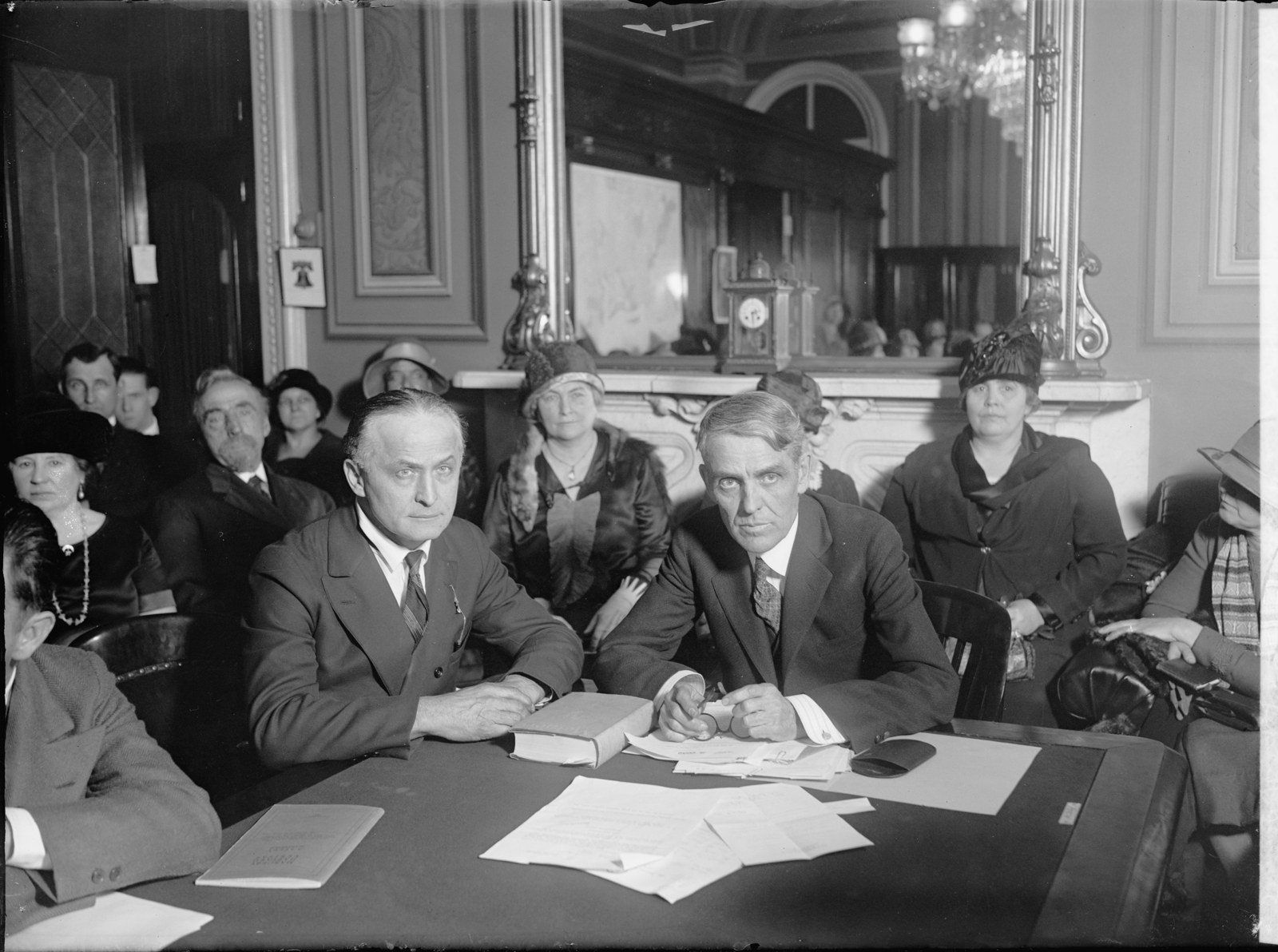

Harry Houdini died in a Detroit hospital on October 31, 1926, a century ago this Halloween, and only days after a McGill University student struck him in the stomach in his Montreal dressing room. His death was put down to peritonitis from a ruptured appendix, but the blows, a missing autopsy and a later poisoning theory have kept the story open ever since. So what actually killed the most famous escape artist of his age, and how much of the familiar version holds up?
According to Howard Markel, a physician and historian who directs the Center for the History of Medicine at the University of Michigan, writing for PBS NewsHour, a few students visited Houdini at 5 p.m. on October 22, 1926, after a matinee at the Princess Theatre. One of them asked whether the performer could take a punch and, once Houdini nodded, hit him before he had a chance to brace himself. Markel writes that “The doctors at the time concurred that the appendicitis was likely caused by the blunt force of the medical student’s blows” and then sets out why that link is far from settled.
The case matters because Houdini’s death became the founding example in a medical argument that is still running. The caveat is that no autopsy was performed, as reported by the Associated Press in 2007, so every theory rests on the hospital record, the death certificate and the memories of people in that room. What follows is indicative rather than conclusive.
What Happened in the Montreal Dressing Room?
The McGill University Archives call the punch story “A popular but misleading explanation” when it is told as the cause of death. In the archives’ account, Houdini came to the university to give students a presentation on his recent debunking of a Boston medium, and afterward at least two students visited him, Jocelyn Gordon Whitehead and Samuel J. Smilovitz, who had decided to sketch the magician. Whitehead challenged his strength and, without warning, “delivered about three non-malicious punches” to his stomach.
The two accounts differ on the calendar, though only by a matter of days. McGill dates the campus presentation to October 20, 1926, while Markel places the dressing room visit two days later and the lecture “A few days earlier.” Both agree on the essentials, which are a student, a sudden series of blows and a performer who had no time to tense the muscles he was famous for.
Houdini kept working through the pain, and Markel writes that he spent more than 15 hours on a train to Detroit and blamed his pain on the punches and a recently fractured foot. At the Garrick Theatre a physician found a high fever, diagnosed acute appendicitis and urged him to go to the hospital, and Houdini answered, “I’ll do this show if it’s my last.”
Markel is firm that Houdini did not collapse on stage or need rescuing from his water torture cell, scenes he describes as “apocryphal tales and motion pictures” rather than history. After the show, at his wife Bess’s insistence, Houdini went to Grace Hospital, where surgeons operated on October 24 and found that his appendix had already ruptured. He was operated on again, received a new serum against infection and died on October 31 at the age of 52. His last words, Markel writes, were reportedly “I’m tired of fighting.”
Can a Punch Really Cause Appendicitis?
This is where the real disagreement lies, and it is a medical one. McGill’s archivists come down on the side of aggravation, writing that the student’s punch was survivable on its own and “aggravated an existing but still undetected case of appendicitis.” In that view the illness was already there and the blows made it worse, or at least hid its warning signs behind ordinary bruising.
Markel is more cautious about the link, accepting that the blows could have caused the appendicitis before adding that “it is also more than possible that the blows and the appendicitis were coincidental rather than causal,” with muscular pain from the punches giving Houdini a false explanation for what was happening inside him.
Surgeons have argued over the same question for nearly a century. A 2010 systematic review in the Annals of the Royal College of Surgeons of England, led by Z. Toumi, found 28 published cases of appendicitis after blunt abdominal trauma between 1991 and 2009 and opened with the line “Trauma has been known to be a rare cause of appendicitis for a long time.” The same authors named Houdini as perhaps the most famous case and wrote that “There has been much debate as to whether acute appendicitis following trauma is coincidental or causal.”
A 2013 case report in the World Journal of Emergency Surgery, by surgeons at University Hospital Hassan II in Fez, Morocco, went further back. Its authors suggested that “Interest in the association between appendicitis and blunt abdominal trauma may have begun with illusionist Harry Houdini’s untimely death in 1926,” and concluded that “the role of abdominal trauma is still uncertain in the etiology of appendicitis.” The surgical literature, in other words, treats a punch as a rare but possible trigger and leaves Houdini’s own case unresolved.
Why Did Some Suspect Poison?
In 2006 the authors William Kalush and Larry Sloman revived an older suspicion in their biography The Secret Life of Houdini. As reported by the Associated Press, they argued that “the Spiritualist underworld’s modus operandi in cases like this was often poisoning,” and they also raised the possibility of harm from “an experimental serum” given at Grace Hospital. Sloman told Newsday, as quoted by the Los Angeles Times, that it was “impossible for a blow to the stomach to cause appendicitis,” a claim the surgical reviews above do not support.
The theory drew real attention from the press and from forensic scientists. In March 2007 a great-nephew of Houdini announced plans to seek exhumation, and the forensic pathologist Michael Baden told the Associated Press that a diagnosis of appendicitis caused by a punch was “very unusual.” He also noted that the death certificate placed the appendix on the left side of the body. Houdini historian John Cox later wrote on his Wild About Harry site that the Hinson-Blood family and members of the magic community raised objections, that no legal papers were ever filed, and that the exhumation never happened. Cox called the poisoning idea a theory “which most Houdini historians, including myself, find highly dubious.”
Behind the theory sits the bitter public fight of Houdini’s final years. National Geographic writer Parissa DJangi describes a $2,500 prize offered in that era to any medium who could show paranormal abilities under rigorous examination, and she writes that Houdini reported that the Boston medium Mina Crandon, known as Margery, rang her famous bell with her feet. Some mediums and their supporters attacked him in the press, and during a 1924 sitting the voice Crandon presented as her late brother Walter was reported to have cursed him.
Did Houdini Set Out to Mock Believers?
His own words suggest that he saw his work very differently from that. In A Magician Among the Spirits, published in 1924, Houdini described how his mother’s death in 1913 changed him, writing that “I too would have parted gladly with a large share of my earthly possessions for the solace of one word from my loved departed.” He told readers plainly that “I firmly believe in a Supreme Being and that there is a Hereafter,” and he aimed his campaign at what he regarded as fraud rather than at faith.
He also wrote warmly of his friend Sir Arthur Conan Doyle, who had turned to Spiritualism for comfort after his son Kingsley died just weeks before the end of World War I, according to National Geographic. “There is no doubt that Sir Arthur is sincere in his belief,” Houdini wrote, even as he explained why he could not share it. The two men eventually fell out over the question, though Houdini’s book presents the disagreement as one between sincere friends.
Houdini added that he had made compacts with 14 different people that whoever died first would try to reach the other, and he reported, “I have never received a word.” He made the same kind of pact with Bess, and that promise shaped the decade after his death.
What Came of the Halloween Séances?
Mark Dimunation, chief of the Rare Book and Special Collections Division at the Library of Congress, writes that Bess and a circle of friends gathered every Halloween after 1926 to see whether Houdini would keep his word. The couple had agreed on a coded message built around the word “Rosabelle,” and the tenth attempt was to be the last. In 1929 a medium named Arthur Ford announced the code, though National Geographic says he probably learned it from a Houdini biography.
The final séance took place on the roof of the Knickerbocker Hotel in Hollywood on Halloween night in 1936, before an invited audience of 300 people and a radio audience. Dimunation writes that the program included a solemn Christian prayer and closed with Bess announcing, “Houdini did not come through.” She ended the broadcast with the words “I now, reverently, turn out the light. It is finished. Good night, Harry!”
Read next: A Master of His Art: The Escapes of Harry Houdini and Secrets Revealed: Harry Houdini’s Diaries (Video)
A century after that Halloween in Detroit, the record supports a ruptured appendix and peritonitis as the cause of death, and it leaves the punches as a possible trigger that surgeons still argue over. The poisoning theory rests on motive and suspicion, with no physical evidence behind it. Houdini’s death remains less a murder mystery than an open medical question about a sudden illness, a few hard blows and a man who refused to stop performing.
Established: Harry Houdini died at Grace Hospital in Detroit on October 31, 1926, aged 52, of peritonitis after a ruptured appendix, days after a McGill student struck him several times in the stomach in Montreal. Bess Houdini held Halloween séances for 10 years and announced in 1936 that he had not come through.
Disputed: The punches caused or aggravated the appendicitis that killed him. McGill’s archives and the doctors of 1926 linked the two, while Howard Markel and the surgical reviews of 2010 and 2013 treat trauma as a rare cause and say coincidence remains possible.
Unverified: Spiritualists or a hospital serum poisoned Houdini, as Kalush and Sloman suggested. Whitehead meant to harm him. Houdini collapsed on stage or had to be rescued from the water torture cell in Detroit. Arthur Ford learned the Rosabelle code from a published Houdini biography.
Fringe: A curse spoken at a 1924 séance brought about Houdini’s death. A medium received a genuine message from Houdini after he died.
By Historic Mystery
Sources
- Howard Markel, column on the cause of Harry Houdini’s death, PBS NewsHour, March 24, 2019. pbs.org
- McGill University Archives, Did a McGill student accidentally kill Harry Houdini? mcgill.ca
- Z. Toumi, A. Chan, M. B. Hadfield and N. R. Hulton, Systematic review of blunt abdominal trauma as a cause of acute appendicitis, Annals of the Royal College of Surgeons of England 92, no. 6 (2010), 477 to 482. PMC3182788
- A. Bouassria and colleagues, Traumatic appendicitis: a case report and literature review, World Journal of Emergency Surgery 8 (2013), 31. doi.org
- Houdini, A Magician Among the Spirits (New York and London: Harper and Brothers, 1924), Project Gutenberg eBook 66451. gutenberg.org
- Mark Dimunation, Hollywood, Houdini and the Halloween Seance of 1936, Timeless, Library of Congress blog, October 2020. loc.gov
- Parissa DJangi, Harry Houdini’s unlikely last act? Taking on the occult, National Geographic, October 16, 2023. nationalgeographic.com
- Associated Press, Houdini Poisoned? Kin Wants Exhumation, via CBS News, March 2007. cbsnews.com
- Houdini’s remains may be exhumed for clues to death, Los Angeles Times, March 23, 2007. latimes.com
- John Cox, Time to bury the Houdini exhumation, Wild About Harry. wildabouthoudini.com
- Library of Congress, Great Escapes, Library of Congress Information Bulletin, February 24, 1997. loc.gov
