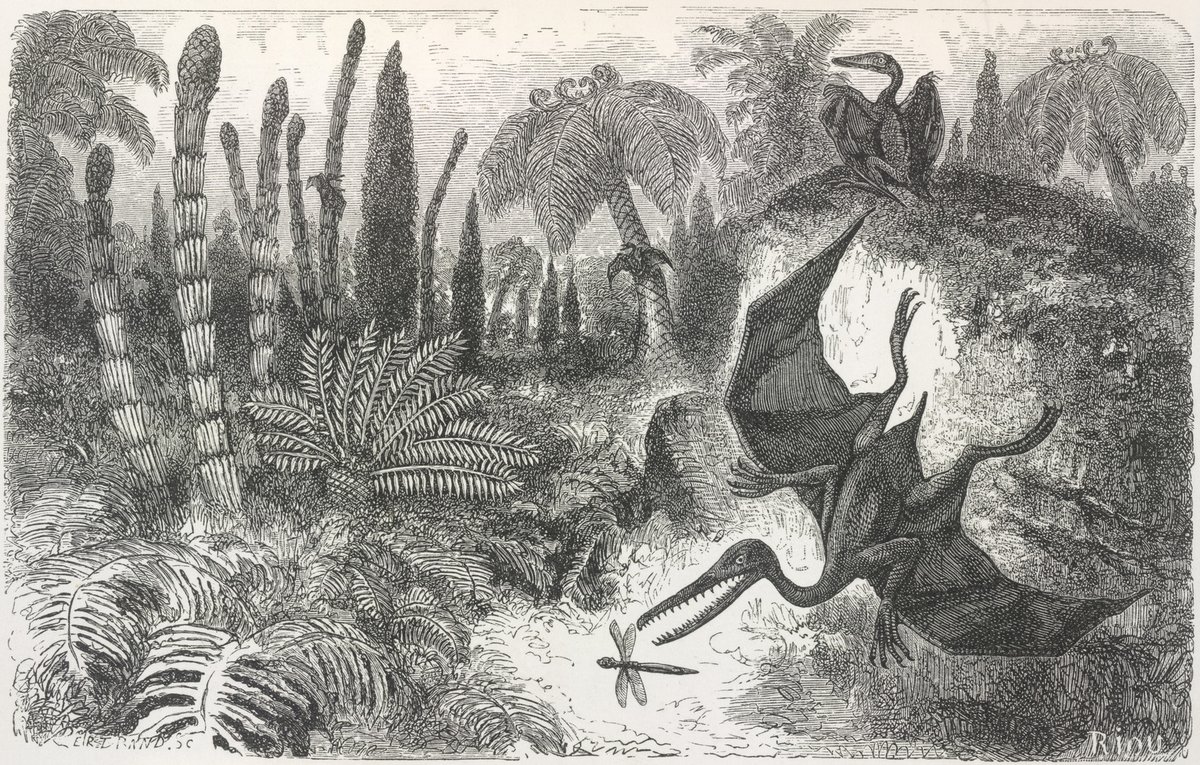
The Van Meter Visitor is one of the most peculiar monster stories ever printed in an American newspaper, the tale of a winged creature with a light on its forehead that was said to have terrorized a small Iowa coal town for five nights in 1903. According to the reports, a doctor, a bank cashier and other respectable residents fired on it again and again, and each time it got away. The story ended at an abandoned coal mine, where two of the monsters were said to have vanished down the shaft at dawn.
More than a century later the town holds a festival in the creature’s honor, and people still claim to see something large and winged in the Iowa sky. However, within days of the first report, some Van Meter residents were writing to another Des Moines paper to complain that the whole affair had been invented. But did the people of Van Meter really face a monster in 1903, or did one local writer make the entire story up?
A Town in a State of Terror
Van Meter lies in Dallas County, west of Des Moines, and in 1903 the newspapers gave its population as 1,000 people. The story that made it briefly famous first appeared in the Des Moines Daily News under the headline “Town of Van Meter Wrought Up Over a Fishy Story.” According to the skeptical investigator Blake Smith of the Skeptoid podcast, the article was written by a Van Meter local named Harry Phillips.
A condensed version soon traveled across the country on the news wires, appearing in the Evansville Courier and Press in Indiana on October 7, the Saint Paul Globe on October 11 and the Evening News in San Jose, California, a day later. All three described Van Meter as gripped by a “horrible monster” and reported that “every man, woman and child in the town is in a state of terror.”
The First Nights
According to the reprints, the trouble began on Monday night, which was September 28, 1903. An implement dealer named UG Griffith drove into town at about 1 a.m. and saw what looked like “an electric searchlight” on top of a store on the main street. While he watched, the light sailed across to another building and then disappeared. His story was dismissed the next day.
The following night, the town doctor was woken by a bright light shining in his face. The original story called him Doctor Alcott, while the reprints named him as AC Olcott. He grabbed a shotgun and ran outside, where he saw a monster that was “seemingly half human and half beast, with great bat-like wings.” The source of the light was the most remarkable detail of all:
“A dazzling light that fairly blinded him came from a blunt, horn-like protuberance”
The light came from the middle of the creature’s forehead, and the beast gave off a stupefying odor that almost overcame the doctor. He fired his weapon and fled back into his office, barring the doors and windows, and he “remained there in abject terror until next morning.”
On the third night it was the turn of Peter Dunn, the cashier of the only bank in town. The original story said that Dunn, “fearing a robber, tore himself from the bosom of his family” to stand guard over the bank’s funds. He loaded a repeating shotgun with buckshot, and at 2 o’clock he was blinded by a light of great intensity. When he could finally make out the shape of the monster he fired through the window, tearing out the plate glass and the frame, and the creature disappeared.
The next morning, the reprints said, the imprints of great three-toed feet could be seen in the soft earth outside. “Plaster casts of them were taken,” the dispatch added. The Daily Yonder later named the man who took a cast as Clarence Dunn, while every 1903 version consulted for this article calls the cashier Peter Dunn.
A Beak Like a Parrot
The cashier’s buckshot did nothing to drive the creature off. But it didn’t end there. The following night a man the reprints call Doctor OV White saw the monster climbing down a telephone pole, which the original story said it did “after the manner of a parrot, using its huge beak.” When it reached the ground it seemed to travel in leaps “like a kangaroo.”
This time, the dispatch noted, “It gave off no light.” White fired at the creature and believed he had wounded it, and the shot was followed by an overpowering odor. A neighbor named Sidney Gregg, roused by the gunfire, looked out in time to see the monster flying away.
The Abandoned Coal Mine
By Friday night, which was October 2, the whole town was on edge. Professor Martin, the principal of the schools, decided from the descriptions that the creature was “an antedeluvian animal,” a beast from the age before the Biblical flood.
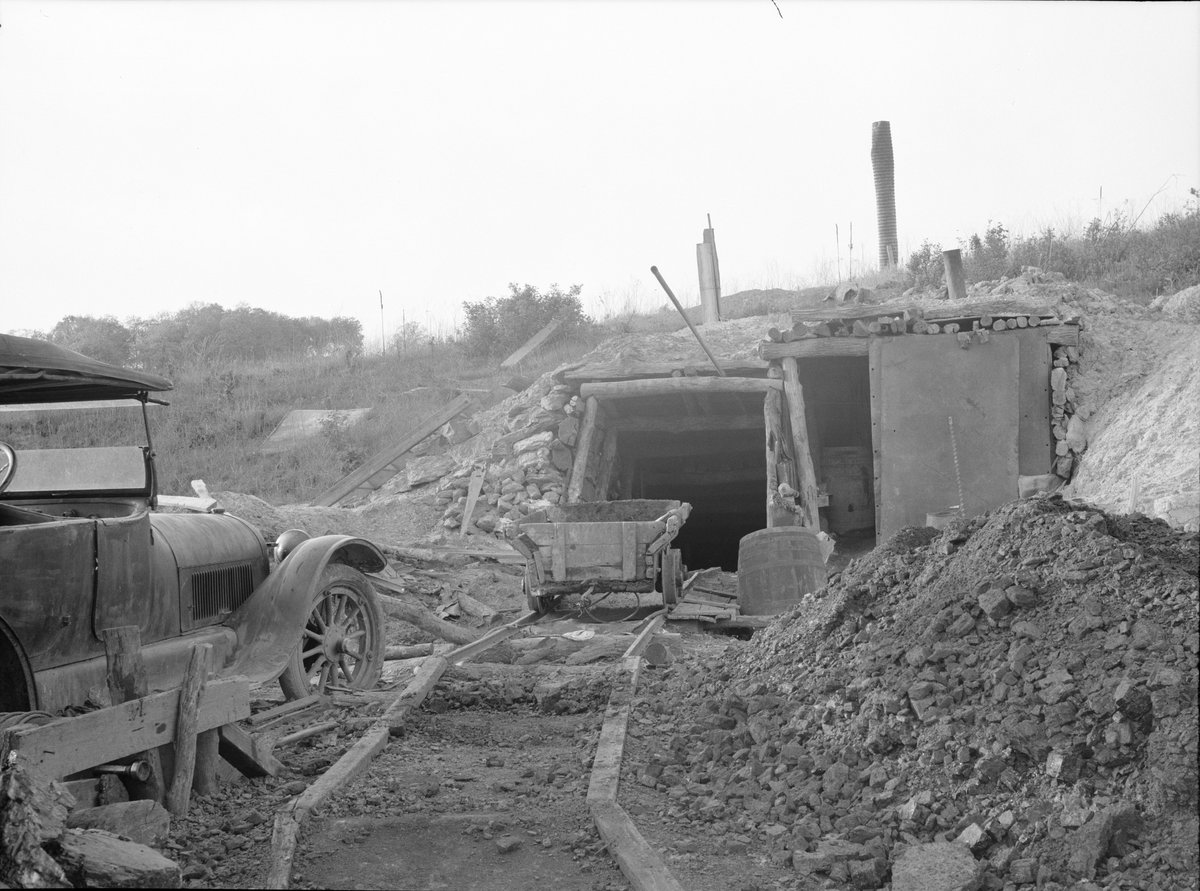
Shortly after midnight, JL Platt, the foreman of the brick plant, heard a peculiar sound coming from an abandoned coal mine. A body of armed volunteers set out to investigate. The original Daily News story described the moment with a writer’s flourish:
“Presently the noise opened up again, as though Satan and a regiment of imps were coming forth for battle.”
According to the reprints, the monster emerged from the shaft “accompanied by a smaller one.” The armed men opened fire, and “A score of shots were fired without effect.” The Daily News version was even more colorful, claiming that “The reception they received would have sunk the Spanish fleet.” The town kept watch for the rest of the night, and just at dawn the two monsters returned and disappeared down the shaft. According to Smith’s summary of the original, the town then barricaded the entrance to the mine.
The Town Hits Back
However, not everyone in Van Meter was pleased to see the town described as cowering behind locked doors. On October 6, 1903, the Des Moines Daily Capitol published a piece headlined “Van Meter Hot Under the Collar,” which reported that “The town of Van Meter is justly indignant over a series of articles that have appeared in the Daily News.” It then quoted one angry resident’s letter at length.
“It is very apparent on the face of every sane person that it is pure fabrication, but to the residents of the town here it is the height of foolishness,” the letter said. Its writer added that “It seems as though the corporation manufactured this story from an incident or two and sent it into the news.” That phrase is intriguing, because it suggests that even an angry resident believed something small had set the tale in motion.
Hoax, Prank or Something Else?
Smith believes the creature’s anatomy gives the game away. The monster had a horn that threw a blinding beam, and he notes that “nothing resembling a high-intensity biological spotlight has any precedent.” In later retellings it also had four legs as well as its wings, and Smith points out that “no large animal possesses both four functional legs and two functional wings.”
He also places the tale within the so-called American Dragon tradition, in which newspapers from the 1860s to the early 1900s reported flying serpents and winged reptiles across the Midwest and West. In his view, later writers largely ignored the simplest explanation, which is that Phillips “might have just made the whole thing up.”
However, the book that revived the legend in 2013, written by the paranormal researchers Chad Lewis, Noah Voss and Kevin Lee Nelson, took a very different view. Lewis wrote that he began his research “convinced that it would turn out to be nothing more than some sort of twisted hoax,” and that over months of work “the idea of the monster being some sort of prank or joke quickly eroded away.” Smith counters that the authors dismissed the hoax theory on the belief that too many people would have needed to be involved.
The Visitor Returns
For most of the 20th century the story was almost forgotten, apart from a mention in Fate Magazine in the 1950s and a 2009 article in Fortean Times. Since the 2013 book, Smith counts more than 40 podcasts, dozens of books and hundreds of YouTube videos about the incident, nearly all of them credulous.
Lewis has also passed on reports of later sightings, from a 5-foot (1.5-meter) bat-like creature seen near the old mine in the 1980s to a giant bird near Boone, Iowa, in 2020, whose witness said: “When it flapped its huge wings, all I could see was light, dark, light dark.”
Since the book appeared, Van Meter has embraced its monster with an annual Van Meter Visitor Festival, which Lewis says now draws about 500 people to a town with fewer than 1,500 residents. That is a fraction of the nearly 15,000 people who, according to Lewis, attend the Mothman Festival in Point Pleasant, West Virginia. “You get to literally walk in the footsteps of the townsfolk of 1903,” Lewis told CityView in 2026.
Lewis himself, after more than 30 years of investigating strange reports, remains undecided. “I can honestly say that after poring over countless records, interviewing residents, unearthing local history and touring the sites of the original encounters, I am still as puzzled today as the people of Van Meter were back in 1903,” he wrote. Whether the Van Meter Visitor was a misidentified bird, a prank, a local writer’s invention or something stranger, what the people of Van Meter saw in the autumn of 1903 still remains a mystery.
Read next: The Jersey Devil
Established: In October 1903 newspapers from Des Moines to San Jose printed an account of a winged monster in Van Meter, beginning with the Des Moines Daily News, and on October 6, 1903, the Des Moines Daily Capitol printed residents’ complaints that the story was a fabrication.
Unverified: That the Van Meter writer Harry Phillips invented the story himself. This is Blake Smith’s suggestion, and no confession or other direct proof of it has come to light.
Unverified: That the townspeople saw something real that set the story off, such as a misidentified bird or a prank, as the Daily Capitol letter’s reference to an incident or two may hint.
Unverified: That plaster casts of three-toed footprints were taken outside the bank, as the 1903 reprints claim.
Unverified: The later sightings reported by Chad Lewis, from the 1980s near the old mine to Boone in 2020.
Fringe: That a real winged creature with a light-emitting horn lived in the Van Meter coal mine and was sealed inside it.
By Historic Mystery
Sources
- Blake Smith, The Van Meter Visitors, Skeptoid episode 1024 (January 20, 2026)
- Evansville Courier and Press, October 7, 1903, page 3, clipping via GenealogyBank
- Saint Paul Globe, October 11, 1903, page 2, clipping via GenealogyBank
- Evening News, San Jose, October 12, 1903, page 3, clipping via GenealogyBank
- Liz Carey, Visiting with the Van Meter Visitor as the Festival Takes Shape This Fall, Daily Yonder (August 6, 2021)
- Kristian Day, Van Meter’s Visitor Keeps the Legend Alive, CityView (September 17, 2026)
- Iowa PBS, Local Lore: The Van Meter Visitor
- Wikimedia Commons, Iowa coal mine, Carl Mydans (1936)
- Wikimedia Commons, Pterodactyls, The World before the Deluge (1865), British Library


