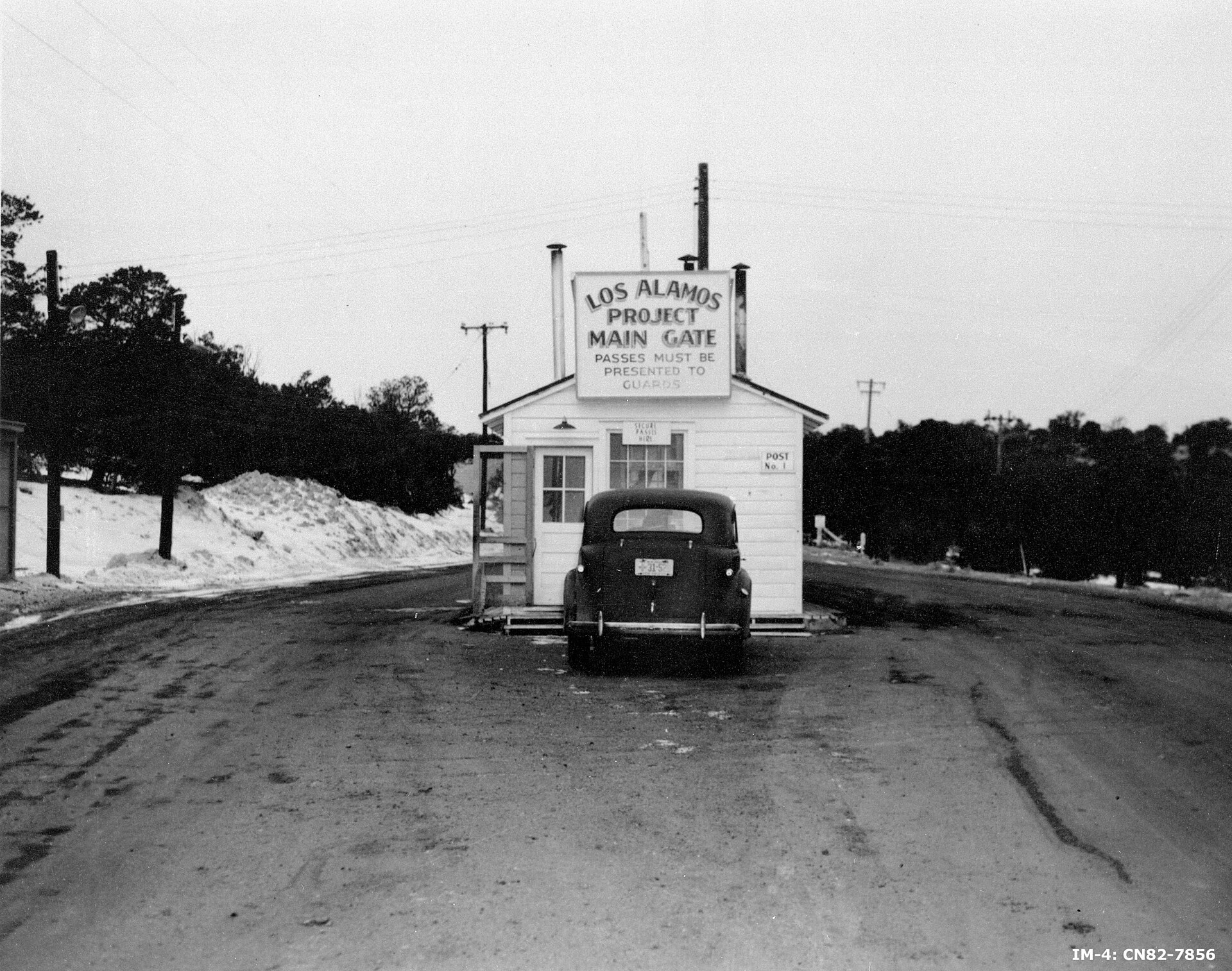

Late in November 1948, people around Albuquerque began to report bright green lights streaking low across the night sky. Within weeks the reports came from pilots, security guards and scientists at the atomic weapons laboratory at Los Alamos, and the military treated them as a security problem. More than 75 years later, the question the Air Force asked in 1949 still divides the people who have studied the files.
Were the green fireballs of New Mexico unusual meteors, or something made by human hands? The main witness to the official inquiry, an Air Force officer named Edward J. Ruppelt, left a detailed account. So did the papers of the meteor expert who led the search, as summarized by the researcher Joel Carpenter.
What happened on the night of December 5, 1948?
Ruppelt organized Project Blue Book, the Air Force study of unidentified flying objects, in the summer of 1951, and he described the green fireballs in his 1956 book The Report on Unidentified Flying Objects. He wrote that the first reports mentioned only a “green streak in the sky,” low on the horizon, and that Air Force intelligence first wrote the objects off as flares.
The flare answer did not last long, because on the night of December 5, 1948, the crew of an Air Force C-47 transport flying east of Albuquerque saw a green ball of fire flash across the sky ahead of them. Ruppelt says it “looked something like a huge meteor except that it was a bright green color and it didn’t arch downward, as meteors usually do.” The crew had seen a similar object about 20 minutes earlier near Las Vegas, New Mexico.
A few minutes later the captain of Pioneer Airlines Flight 63 reported his own sighting near Las Vegas at 9:35 p.m. In Carpenter’s chronology, drawn from the memos and letters of the meteor expert Lincoln La Paz, the crew first took the light for a “shooting star” but decided it “was too close to the ground.” The pilot, Ernest Van Lloyd, said the light seemed to come straight at his plane, and Ruppelt writes that the captain swung the DC-3 into a tight turn because he thought they would collide.
Carpenter’s chronology records that a University of New Mexico press release asking the public for reports was stopped before publication because of “pressure from other agencies also investigating this occurrence.”
Why did the military care so much?
The location of the sightings explains much of the worry among military officers. Ruppelt pointed out that within 100 miles of Albuquerque stood “two installations that were the backbone of the atomic bomb program, Los Alamos and Sandia Base.”
Air Force investigators tried to see the lights for themselves. On December 8, according to Ruppelt, two intelligence officers flew north of Albuquerque just before dark with a plan for what each man would watch. At 6:33 p.m. they saw one, and their report, quoted by Ruppelt, described an object “similar in appearance to a burning green flare, the kind that is commonly used in the Air Force,” but brighter and larger, on a flat path that lasted about two seconds.
The Army also took notice of the reports that winter, and a memo of January 13, 1949, from Col. Eustis Poland of Fourth Army intelligence, reproduced in Carpenter’s chronology, said that agencies in New Mexico were “greatly concerned over these phenomena.” It listed theories that ranged from a foreign power testing a high altitude device to secret experiments by the United States itself.
What did Lincoln La Paz find?
The Kirtland intelligence officers called in La Paz, who was head of the Institute of Meteoritics at the University of New Mexico and was known for tracking meteorites to the ground. His method was simple in principle, since he collected the direction, height and time of a sighting from many witnesses, plotted where their lines of sight met, and searched where the object should have landed.
After the December 5 reports, Ruppelt says, La Paz and a team of officers worked across northern New Mexico to the Texas border. They plotted where the brightest fireball should have struck and searched the area again and again without finding anything. La Paz later told Ruppelt that this was the first time he “seriously doubted the green fireballs were meteorites.”
La Paz gave Ruppelt three main reasons for his doubt. The color was a vivid green, which he said differed from the pale green reported for known green meteors. The paths were too flat. No sound was reported either, even though meteorites large enough to be that bright often cause booms and shock waves.
His own notes, as summarized by Carpenter, add more detail. Carpenter records that during the Geminid meteor shower that December, La Paz noted that he had watched 414 Geminid meteors since December 1915, “and not one had been green.” On December 19 he set up cameras at security checkpoints west of Los Alamos. After a sighting by a Los Alamos patrol on December 20, he calculated that the object had leveled off and flown horizontally at far lower heights than meteors usually appear. He wrote that he had “no hesitancy in testifying” that the object “was not a falling meteorite.”
Carpenter also reports that air samples taken in January 1949 at the New Mexico School of Mines in Socorro by William Crozier, a colleague of La Paz, held unusual tiny copper particles. La Paz saw this as evidence that the fireballs were artificial, but Carpenter notes that Crozier was more cautious.
What did the Los Alamos conference decide?
In mid February 1949 a conference met at Los Alamos to decide what to do. Ruppelt lists among those who attended the upper atmosphere physicist Joseph Kaplan, the physicist Edward Teller and La Paz, along with military officers and laboratory scientists. Almost everyone at the meeting, he says, had seen a fireball at some point during the wave of sightings.
Opinion at the meeting split into two camps, and one group argued that greenish meteors had been seen many times before, that a meteor can look flat from some angles, and that the clear winter weather over the Southwest explained why so many had been reported. La Paz led the other side. Ruppelt says the conference ended after two days with a decision that the fireballs were “a natural phenomenon of some kind,” and with a recommendation that the Air Force Cambridge Research Laboratory set up a project to photograph them.
Why did Project Twinkle fail?
That project, called Twinkle, began in the late summer of 1949. Ruppelt says it planned three cinetheodolite stations near White Sands, cameras that record time and angle so that two of them together can measure an object’s height, speed and size. Only one camera was ever available, however, and its crew kept moving to wherever reports came in, always too late.
Ruppelt summed up the result in two short sentences. “Project Twinkle was a bust,” he wrote. “Absolutely nothing was photographed.” He blamed budget cuts and poor morale, and he says the project quietly ended when the Korean War began in 1950, along with official interest in the fireballs.
What could the green fireballs have been?
The natural explanation has never gone away, because meteors can and do glow green. A NASA Astronomy Picture of the Day from December 2018, showing a colorful Geminid, explains that meteor colors come from ionized elements, “with blue-green typically originating from magnesium” and “nickel glowing green.” Kaplan and Teller, according to La Paz, both thought the fireballs were natural meteors.
The case against a meteor rests mostly on La Paz. He argued that the color was the wrong green, that the paths were too flat, that there was no sound, and that he never found a fragment after repeated searches. When Ruppelt finally asked him what he thought the fireballs were, La Paz would only say he did not think they were natural, and that he hoped they were.
La Paz also had a theory of his own. Carpenter writes that his notes show he came to believe the lights were “Soviet missile experiments of some type,” or at least secret American weapons tests. No document in the sources cited here shows that either the Soviet Union or the United States was testing such a device over New Mexico at the time.
Ruppelt recorded one more idea, which he heard over lunch at Los Alamos. There a group of scientists told him that the fireballs might be unmanned test vehicles sent down from a spacecraft hovering high above the Earth. He presented this as an informal discussion, and nobody in his account offered evidence for it.
Why does the case still matter?
By the time Ruppelt began looking into the files in 1951, he says, Blue Book’s files held no green fireball report for about a year and a half. La Paz told him that later reports were just greenish meteors. The wave of sightings over the atomic sites in the winter of 1948 and 1949 was never explained to everyone’s satisfaction, and the one project designed to measure the lights never photographed any of them.
Established: Green lights were reported over New Mexico from late 1948, Air Force and Army intelligence investigated them, a conference met at Los Alamos in February 1949, and Project Twinkle photographed nothing, according to Edward J. Ruppelt and the papers of Lincoln La Paz summarized by Joel Carpenter.
Disputed: Whether the fireballs were meteors. Kaplan, Teller and the February 1949 conference favored a natural cause, while La Paz argued against it on color, flat paths, silence and missing fragments.
Unverified: That the lights were Soviet missile tests or secret American weapons. La Paz suspected this and a 1949 Army memo listed both ideas, but no source cited here shows such tests took place.
Fringe: That the fireballs were probes sent from an alien spacecraft. Ruppelt heard the idea from scientists in an informal talk, and no evidence was offered for it.
Sources
- Edward J. Ruppelt, The Report on Unidentified Flying Objects (1956), chapter 4, “Green Fireballs, Project Twinkle, Little Lights, and Grudge.” Project Gutenberg eBook #17346. gutenberg.org
- Joel Carpenter, Green Fireball Chronology, 1946 to February 1949, Project 1947, drawn from the papers of Lincoln La Paz. project1947.com
- NASA, Astronomy Picture of the Day, A Rainbow Geminid Meteor, December 19, 2018. apod.nasa.gov
