Draw a line across Lake Michigan from Manitowoc, Wisconsin, to Ludington, Michigan, then run it south to Benton Harbor, Michigan, and back. The triangle you have drawn has a name on the internet, the Michigan Triangle, and a reputation to match. Ships are said to have vanished inside it without a trace, and an airliner carrying 58 people went down somewhere within it in 1950 and has never been found. Is there anything unusual about this stretch of water, or does it simply have more than its share of storms, traffic and stories?
Where did the idea of a triangle come from?
The idea borrows its shape from the far more famous Bermuda Triangle. Milwaukee Magazine, in a feature on local legends by Archer Parquette, laid out its boundaries as running “west to Manitowoc, Wisconsin, east to Ludington, Michigan, and south to Benton Harbor, Michigan.” The article strung together a series of disappearances and wrecks within that area and listed the explanations people have offered, from bad weather to UFOs and time portals.
The magazine was frank about the quality of the evidence. “The list of ships is long and the stories are awash in speculation and misinformation,” it said. It also conceded that “one can make a rational argument to explain every one of them.” That leaves a fair question. What happens when the best known cases are checked against the records?
What happened to the Thomas Hume?
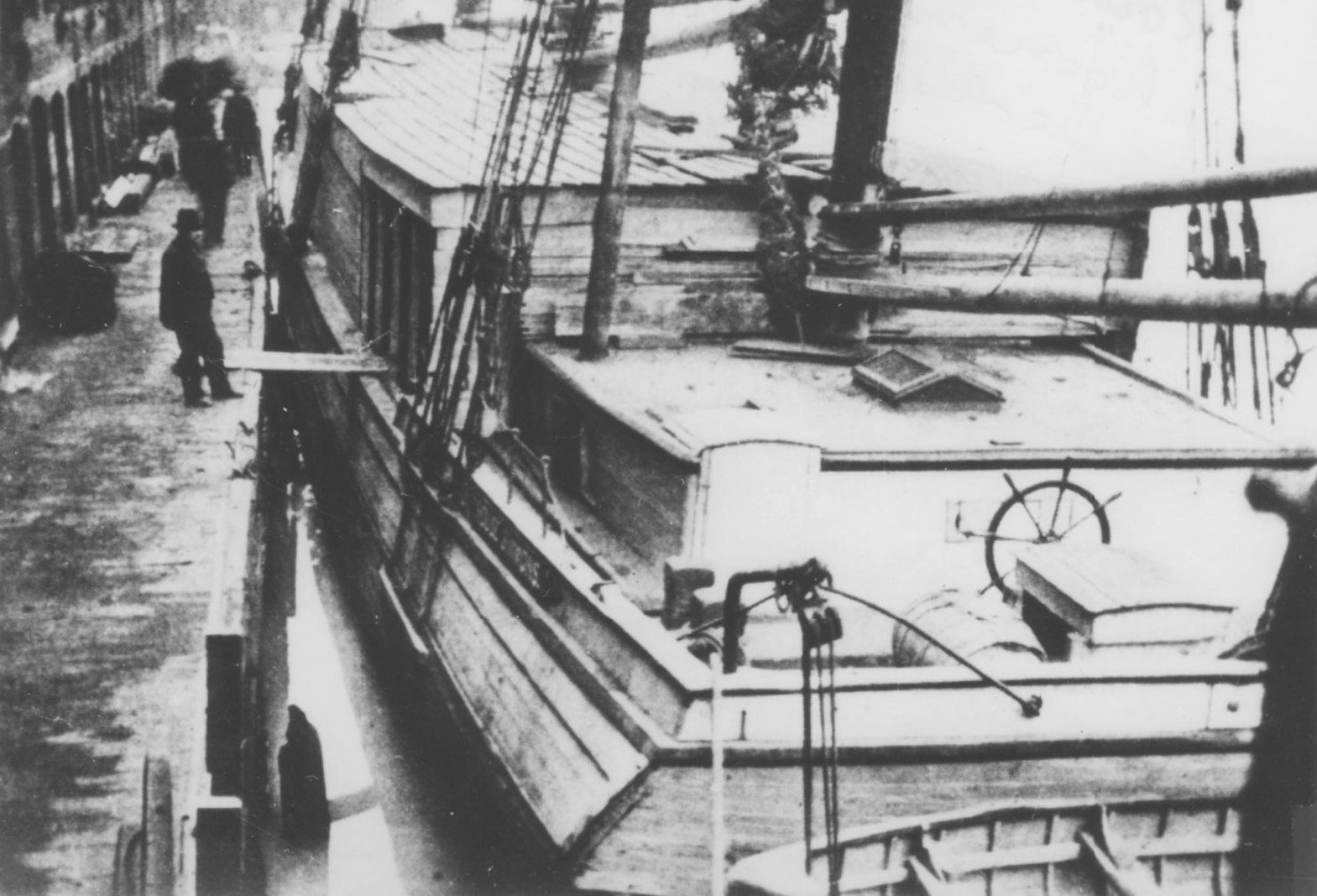
The story often told as the first great triangle disappearance involves a lumber schooner from Muskegon. According to a 2008 report by Eric Gaertner in the Muskegon Chronicle, the Thomas Hume was a 132-foot, three-masted schooner owned by the lumbermen Charles Hackley and Thomas Hume. In May 1891 it delivered a load of lumber to Chicago and set out to return to Muskegon, riding empty alongside another company schooner, the Rouse Simmons.
The two ships ran into a squall. The maritime author Elizabeth Sherman, a great granddaughter of the schooner’s namesake, told a conference in 2008 that the weather “made the captain of the Rouse Simmons nervous enough to turn back to Chicago.” The Thomas Hume sailed on and was never seen again. No one realized it was missing until the Rouse Simmons sailed from Chicago for Muskegon two days later, expecting to find the Thomas Hume already tied up there.
The owners searched other ports and the lake but found nothing, not even debris, and wild theories followed. One held that the captain had sailed to another port, painted the ship and given it a new name. Another claimed that a steamer had run the schooner down and its captain had sworn the crew to secrecy. A $300 reward for information was never claimed.
The answer turned out to be on the lake bed. A Chicago diver, Taras Lysenko, found a wreck in southern Lake Michigan in 2005, and in 2008 the shipwreck researcher Valerie van Heest and Sherman identified it with near certainty as the Thomas Hume by matching an old photograph of the ship to video of the wreck. The hull was intact, with its three masts lying on the deck. Van Heest and Sherman said they believed the schooner had “turned turtle” in the squall and sunk. “When after 117 years the answer is found, it’s significant and important,” van Heest said.
Why did the Christmas Tree Ship sink?
The Rouse Simmons, the schooner that turned back in 1891, became the subject of the triangle’s most famous story two decades later. According to an article by Glenn V. Longacre in Prologue, the magazine of the National Archives, Captain Herman Schuenemann had hauled Christmas trees to Chicago for almost three decades and was known in the city as Captain Santa. The Rouse Simmons itself “was now 44 years old and long past its peak sailing days.”
On Friday, November 22, 1912, the schooner left Thompson, Michigan, loaded with 3,000 to 5,000 Christmas trees in its hold and on its deck. Longacre noted that the departure coincided with the start of a severe winter storm on the lake that sank several other ships. The next afternoon, at 2:50 p.m., a surfman at the Life Saving Station in Kewaunee, Wisconsin, spotted a schooner flying its flag at half mast, the sign of distress.
The station keeper, Captain Nelson Craite, recorded what he saw. “I immediately took the Glasses, and made out that there was a distress signal. The schooner was between 5 and 6 miles E.S.E. and blowing a Gale from the N.W.” Within a few minutes the ship had passed out of view of the Kewaunee crew. Craite telephoned the next station south at Two Rivers, whose keeper sent out a powerboat, but darkness, heavy snow and mist hid any trace of the schooner and its crew.
Christmas trees washed up along the Wisconsin shore over the following weeks and months. In 1924, Longacre wrote, fishermen in Wisconsin pulled up a wallet wrapped in waterproof oilskin that turned out to belong to Schuenemann. The wreck itself was found in October 1971 by a Milwaukee diver, Gordon Kent Bellrichard, sitting upright on the lake bed in 172 feet of water off Two Rivers.
A survey of the wreck by the Wisconsin Historical Society in July and August 2006 offered an explanation. The anchor chain, masts and spar were all found lying forward beyond the bow. “The location of these items suggest that the schooner’s weight was in the bow, causing it to nose-dive into the heavy seas and founder,” Longacre wrote. An old, heavily loaded ship in a November gale needs no further explanation.
What happened to Flight 2501?
However, the case that keeps the triangle alive in modern retellings involves an airliner. According to the shipwreck researcher Valerie van Heest, Northwest Airlines Flight 2501, a DC-4, left LaGuardia Airport in New York at 8:30 p.m. on Friday, June 23, 1950, bound for Seattle with stops planned in Minneapolis and Spokane. It carried 55 passengers and three crew under Captain Robert C. Lind.
Lind had been told of thunderstorms over Lake Michigan before takeoff. Van Heest writes that a squall line reached the lake that night, with lightning between the storm cells and strong winds churning the surface. At 12:13 a.m., near Benton Harbor, Lind asked permission to descend to 2,500 feet without saying why. Air traffic control refused because of other traffic in the area, and nothing more was heard from the flight.
By morning it was clear that the plane had come down in the lake. An oil slick and floating debris were found, but the main wreckage was never found. The Michigan Shipwreck Research Association, which van Heest cofounded, notes that the official cause was listed as “unknown.” It adds, “No major piece of wreckage ever was found.” With 58 people killed, it was the worst American aviation accident up to that time, according to van Heest.
The association has also noted where the more exotic theories come from. “Today, Flight 2501 is listed on nearly every UFO website as a strange anomaly since some in the Wisconsin area reported a bright light over the lake about two hours after the event,” its account says. A light seen two hours later and miles away is a thin thread, and the storm that the crew flew into is a far simpler explanation. Searches by the association and Clive Cussler’s National Underwater and Marine Agency have covered hundreds of square miles of lake bed since 2004 and found ten other significant shipwrecks along the way, but not the airliner.
Is the Michigan Triangle real?
Looked at case by case, the triangle’s famous mysteries share a common thread. The Thomas Hume met a squall and capsized. The Rouse Simmons was an old ship carrying a heavy load into a November gale. Flight 2501 flew into a line of thunderstorms. The first two wrecks have now been found and examined, and the evidence points to weather and seamanship rather than anything unexplained. The third is unexplained only in the sense that its wreckage and its exact cause have never been established.
However, the triangle also covers a wide stretch of open water crossed by ships sailing between Wisconsin and Michigan ports, and by aircraft such as Flight 2501 on routes to the west. The Muskegon Chronicle noted in 2008 that an estimated 8,000 ships lie on the bottom of the Great Lakes as a whole. Seen against that figure, a handful of famous wrecks in one region of one lake is no surprise.
No study has shown that ships or aircraft are more likely to disappear inside the triangle than anywhere else on Lake Michigan. What remains is a set of real tragedies, some solved and one still open, and the question of where Flight 2501 came to rest.
Established: The schooner Thomas Hume disappeared on Lake Michigan in May 1891, and its wreck was found in 2005 and identified in 2008.
Established: The Rouse Simmons sank in a gale in November 1912, and its wreck was found off Two Rivers, Wisconsin, in 1971.
Established: Northwest Airlines Flight 2501 came down in Lake Michigan on June 24, 1950, killing all 58 aboard, and its main wreckage has not been found.
Unverified: That the area called the Michigan Triangle has an unusually high rate of disappearances. No study supporting this was found.
Fringe: That a UFO or other unexplained force was involved in the loss of Flight 2501 or any of the ships.
Sources
- Glenn V. Longacre, The Christmas Tree Ship: Captain Herman E. Schuenemann and the Schooner Rouse Simmons, Prologue, National Archives, Winter 2006, Vol. 38, No. 4. archives.gov
- Eric Gaertner, Shipwreck mystery solved, The Muskegon Chronicle via MLive, September 7, 2008, read via the Internet Archive. web.archive.org
- Valerie van Heest, Northwest Airlines Flight 2501. valerievanheest.com
- Michigan Shipwreck Research Association, Northwest Airlines Flight 2501 DC-4. michiganshipwrecks.org
- Archer Parquette, The Legend of the Lake Michigan Triangle, Milwaukee Magazine, read via the Internet Archive. web.archive.org
