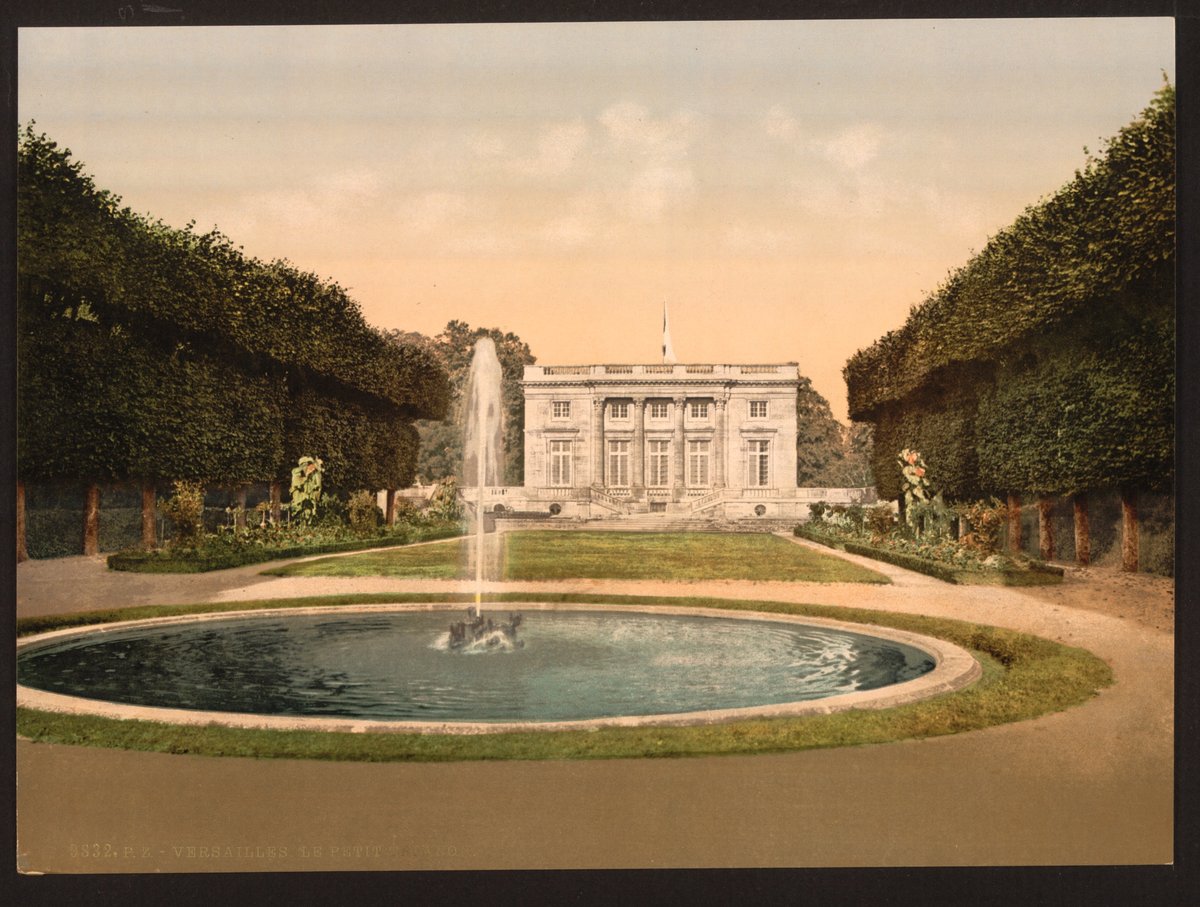
The Versailles Time Slip is one of the most famous ghost stories of the 20th century, and one of the most argued over. On an August afternoon in 1901, two respected Oxford academics, Charlotte Anne Moberly and Eleanor Jourdain, went looking for the Petit Trianon, the small château in the grounds of Versailles where Marie Antoinette had amused herself away from the court.
Ten years later they published a book claiming that, for part of that afternoon, they had walked through the gardens as they looked in the last years of the French monarchy. They came to believe they had even seen the queen herself, sketching on the lawn. Their story has been doubted and picked apart ever since. But did they really step into the past?
An August Afternoon at the Petit Trianon
Moberly was the first principal of St Hugh’s College, Oxford, a college for women students, and Jourdain was about to become her deputy. In August 1901, the two women were spending a few days sightseeing in Paris. By her own admission the pair set off for Versailles with “very hazy ideas as to where it was or what there was to be seen.”
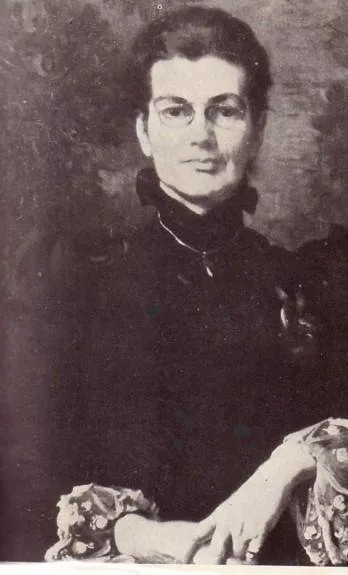
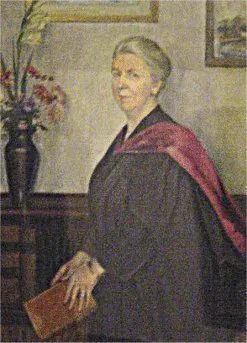
They toured the palace and then, with a Baedeker map, set out across the park. After passing the Grand Trianon they strayed from the direct route and walked up a lane. There they met two men “dressed in long greyish-green coats with small three-cornered hats,” whom they first took for gardeners, and who told them to go straight on.
From that point, Moberly wrote, “an extraordinary depression had come over me” that grew steadily worse, though she kept it from her companion, and Jourdain, it later emerged, was fighting the same gloom. “I began to feel as if I were walking in my sleep,” she recalled, and she found that “the heavy dreaminess was oppressive.”
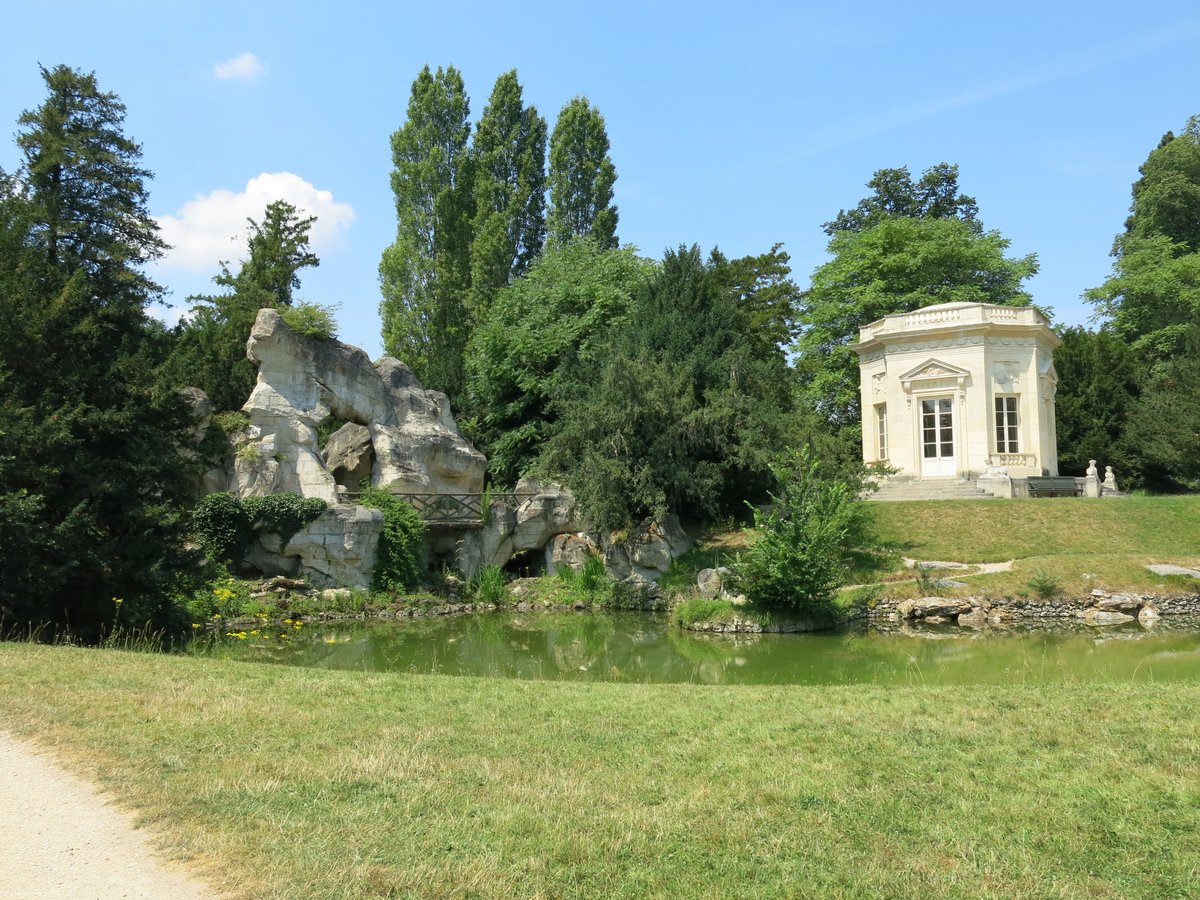
The path ended at a wood, where a man in a cloak and a large hat sat beside a garden kiosk, “circular, and like a small bandstand.” Moberly found his face “most repulsive,” and Jourdain noted that it was “marked by smallpox.” Moberly captured the peculiar stillness of the scene in two sentences:
“There were no effects of light and shade, and no wind stirred the trees. It was all intensely still.”
A second man came running up, red in the face, and warned them in French against the way they were heading. He waved them to the right with the words “par ici … cherchez la maison” (this way, look for the house), and then, to Moberly’s surprise, he was suddenly no longer there.
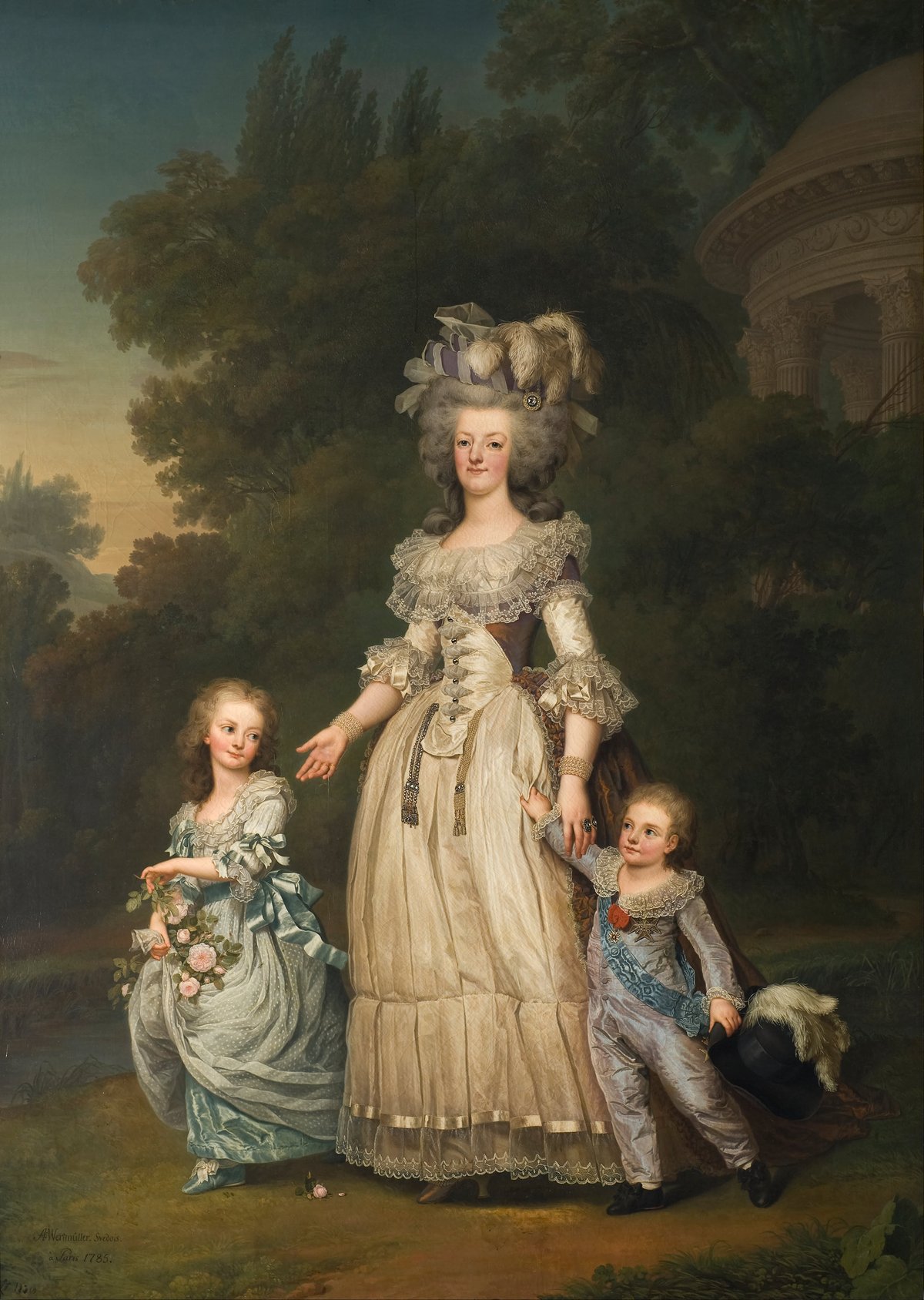
The two women crossed a small rustic bridge and came out in front of the house. On the rough grass below the terrace, Moberly saw a woman who appeared to be sketching. “She had on a shady white hat perched on a good deal of fair hair that fluffed round her forehead,” wrote Moberly.
Moments later a young man burst out of a side building, banging the door, and showed them round to the entrance, where they joined a merry French wedding party touring the rooms. Neither woman mentioned the afternoon for a week, until Moberly asked her friend: “Do you think that the Petit Trianon is haunted?” Jourdain’s answer was prompt, “Yes, I do.”
Ten Years of Research and a Bestselling Book
Three months later the story took a remarkable turn. On November 10, 1901, Moberly mentioned the sketching lady, and Jourdain replied “that she had seen no lady.” Each wrote her own account, and Jourdain realized that their visit had fallen on August 10, the anniversary of the day in 1792 when the Tuileries in Paris was sacked and the royal family fled to the Assembly.
Looking back, the two women wondered, in Moberly’s words, “whether we had inadvertently entered within an act of the Queen’s memory when alive.” Perhaps the queen had thought back so vividly to happier days at Trianon that her memory had somehow left its mark on the place. But it didn’t end there.
On January 2, 1902, Jourdain returned to the gardens alone. Near the Hameau, the queen’s model village, she saw two laborers loading a cart, only to find them gone a moment later. In a thick wood she heard rustling silk, women’s voices speaking French and faint band music, “very light music with a good deal of repetition in it,” although she was later told the band had not played that day.
In the following years the pair studied memoirs and old maps, and identified the man by the kiosk as the Comte de Vaudreuil, a courtier who, they read, “was a Creole and marked by smallpox.” Moberly felt that a portrait of the queen by Adolf Ulrik Wertmüller “was the first of all the pictures I had seen which at all brought back the face of the lady.”
When they went back together in July 1904, the grounds were full of trams, crowds and lemonade stalls. “The kiosk was gone,” Moberly wrote, and so were the little bridge and its cascade. “Exactly where the lady was sitting we found a large spreading bush of, apparently, many years’ growth,” she added.
In 1911 Macmillan published their story as An Adventure, under the pseudonyms Elizabeth Morison and Frances Lamont. A publishers’ note insisted that “the signatures appended to the Preface are the only fictitious words in the book.” According to Terry Castle, then professor of English at Stanford University, 11,000 copies had been sold by 1913, and the real authors were not publicly named until the 1931 edition.
Of all the so-called time slips, from the Kersey time slip to the tale of Rudolph Fentz, Versailles is probably the best known. The case “would probably be in the top three. Some would argue it’s the number one,” said Melvyn Willin, archive officer of the Society for Psychical Research, speaking to Atlas Obscura.
Tricks of Memory and Accounts That Grew
However, the first serious attack on the book came from that very society. In an unsigned 1911 review, Eleanor Sidgwick argued that the women had met “real persons and things” from 1901. In her view the pair had later embellished what they saw, “decked out by tricks of memory (and after the idea of haunting had occurred to them) with some additional details of costume suitable to the times of Marie Antoinette.”
Sidgwick added that “a good deal of evidence would be required before a phenomenon of this kind could be accepted as a fact.” In 1950 W. H. Salter noted that the women had sent the society only their shorter first accounts in 1902, and argued that the fuller versions, which carried many of the most persuasive details, were possibly written as late as 1906.
The slammed chapel door, for example, appears only in those longer accounts. In Salter’s words, the authors left “the whole affair in an impenetrable fog of uncertainty.” Reviewing a later critique in The Spectator in 1957, Antony Flew wrote that the later statements differed “in every case without exception in ways which make the story harder to fit into the Versailles of 1901 and easier to square with the Versailles of Marie Antoinette.”
That critique was The Ghosts of Versailles (1957) by Lucille Iremonger, a former St Hugh’s student who treated the story as a folie à deux, a delusion shared by two people. Castle called it “the most gossipy attack on An Adventure,” and noted a bizarre twist, since Iremonger was descended from the Comte de Vaudreuil. Castle also argued that the diagnosis carried old prejudices, among them the notion “that pairs of women were untrustworthy.”
Montesquiou and the Costume Party Theory
The most colorful explanation came from Joan Evans, Jourdain’s literary executor and the holder of the copyright to An Adventure. Writing in Encounter magazine in 1976, she drew on Philippe Jullian’s 1965 biography of the dandy and aesthete Robert de Montesquiou, the model for Proust’s Baron de Charlus. Jullian reported that Montesquiou had lived in a house at Versailles and held fancy dress parties there.
On this reading, Moberly and Jourdain had wandered into a “rehearsal,” with Montesquiou and his companion Gabriel Yturri as the men in green coats trying out their costumes, and a man in costume as the sketching lady. However, as Castle points out, “it was not clear in what year Montesquiou’s parties had taken place, or whether he had ever held one near the Trianon.”
Brian Dunning of the Skeptoid podcast agrees that “no evidence survives that indicates de Montesquiou may have actually thrown such an event in 1901.” The authors had checked for costumed fêtes themselves, and found that one in June 1901 had been confined to the Hameau. Of the month of their visit, they wrote: “There was none in August, 1901.”
Mark Lamont, author of a 2021 book-length study of the case, also has little confidence in Jullian’s theory, according to the Psi Encyclopedia of the Society for Psychical Research. Even so, he argues that the paranormal claims cannot be completely discredited.
A Case That Refuses to Close
However the afternoon is explained, the two women never wavered. Jourdain succeeded Moberly as principal of St Hugh’s in 1915 and died on April 6, 1924, while Moberly outlived her by 13 years. The two friends are buried a few feet apart in Wolvercote Cemetery, Oxford.
Castle concluded that as long as skeptics cannot draw a clear line between collective belief and collective hallucination, An Adventure “will remain what Moberly and Jourdain intended it to be: a rebuke to scoffers, a challenge to the incredulous.” Whether they met the court of Marie Antoinette, a costumed rehearsal or ordinary people reshaped by memory and years of research still remains a mystery.
Established: Moberly and Jourdain visited the Petit Trianon in August 1901, wrote accounts of what they believed they saw, and published them in 1911 as An Adventure under the names Elizabeth Morison and Frances Lamont.
Unverified: the claim that the two women saw Marie Antoinette, her courtiers or the gardens as they were in the 1780s, whether by a time slip or by entering the queen’s memory. No record from the day supports it, and the earliest surviving accounts were written three months later.
Unverified: the theory that they stumbled into a costume rehearsal held by Robert de Montesquiou, since no source shows any such event at the Trianon in August 1901.
Disputed: the view that memory and later editing reshaped the story, as Sidgwick, Salter and Flew argued. The authors and their defenders rejected it, and the fuller manuscripts were destroyed after copying.
By Joanna Gillan
Sources
- C. A. E. Moberly and E. F. Jourdain (as Elizabeth Morison and Frances Lamont), An Adventure, Macmillan, London, 1911, Project Gutenberg eBook 64809
- Terry Castle, Contagious Folly: An Adventure and Its Skeptics, Critical Inquiry 17, no. 4 (1991): 741 to 772
- Psi Encyclopedia, Society for Psychical Research, Versailles Time-Slip
- Antony Flew, No End of the Affair, The Spectator, February 1, 1957
- Brian Dunning, The Versailles Time Slip, Skeptoid episode 296 (2012)
- Atlas Obscura, Did These Oxford Professors Time Travel from the Victorian Era to the French Revolution?
- Wikimedia Commons, Petit Trianon, Versailles, France, Photochrom Print Collection, Library of Congress
- Wikimedia Commons, Charlotte Anne Moberly
- Wikimedia Commons, Eleanor Jourdain
- Wikimedia Commons, Adolf Ulrik Wertmüller, Queen Marie Antoinette of France and Two of her Children Walking in the Park of Trianon (1785)
- Wikimedia Commons, Grand Rocher et Belvédère du Petit Trianon, photo by Tangopaso


