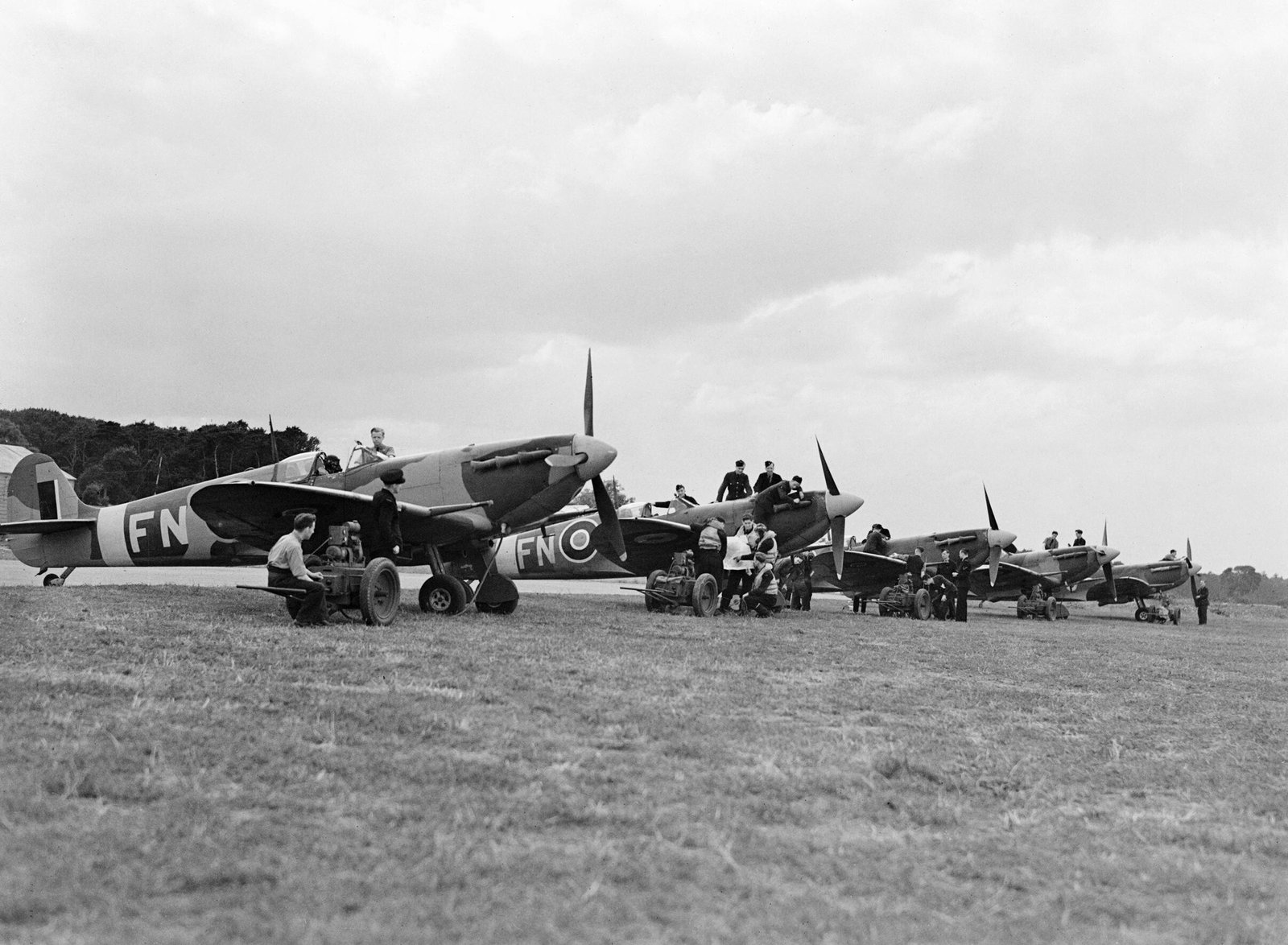

In 1935, a senior Royal Air Force officer named Victor Goddard flew over a run down airfield in East Lothian and, by his own later account, saw it briefly transformed into a busy station with yellow aircraft and mechanics in blue. Four years later the field reopened. Did he really glimpse the RAF of 1939, or did the story change over the decades he spent telling it?
According to the version quoted by the Daily Record from J. H. Brennan’s book Time Travel: A New Perspective, Goddard found the field “in a very dilapidated state with cattle grazing on grass that had forced through cracks in the tarmac.” Later that day, the account goes, he was caught in heavy rain while flying his biplane and turned back toward the airfield to get his bearings.
The weather broke as he came back over the field, and in Brennan’s words, “As he approached the airfield the torrential rain abruptly changed to bright sunlight,” and “There were mechanics in blue overalls walking around and four yellow planes parked on the runway.” The account adds that “One of these was a model which, for all his aviation experience, he completely failed to recognise.”
The case matters because of who told it, since the claim came from an officer who later rose to air marshal rather than from an anonymous storyteller. That standing has lent the story weight for decades, yet the version most writers cite was published 40 years after the flight, and the details have shifted with nearly every retelling.
Who Was Victor Goddard?
Goddard’s service record, compiled by the RAF history site Air of Authority, traces a career that began at sea. He was a midshipman in 1914, trained as an airship pilot in the First World War, and by December 1917 was first officer of the airship NS5 at East Fortune Air Station.
Between the wars he instructed pilots, commanded No 30 Squadron in Iraq and attended staff colleges. The same record shows he became an air staff officer at Headquarters Western Area on January 1, 1935, and was promoted to wing commander on July 1, 1935. He went on to senior posts in the Second World War and retired as an air marshal in 1951.
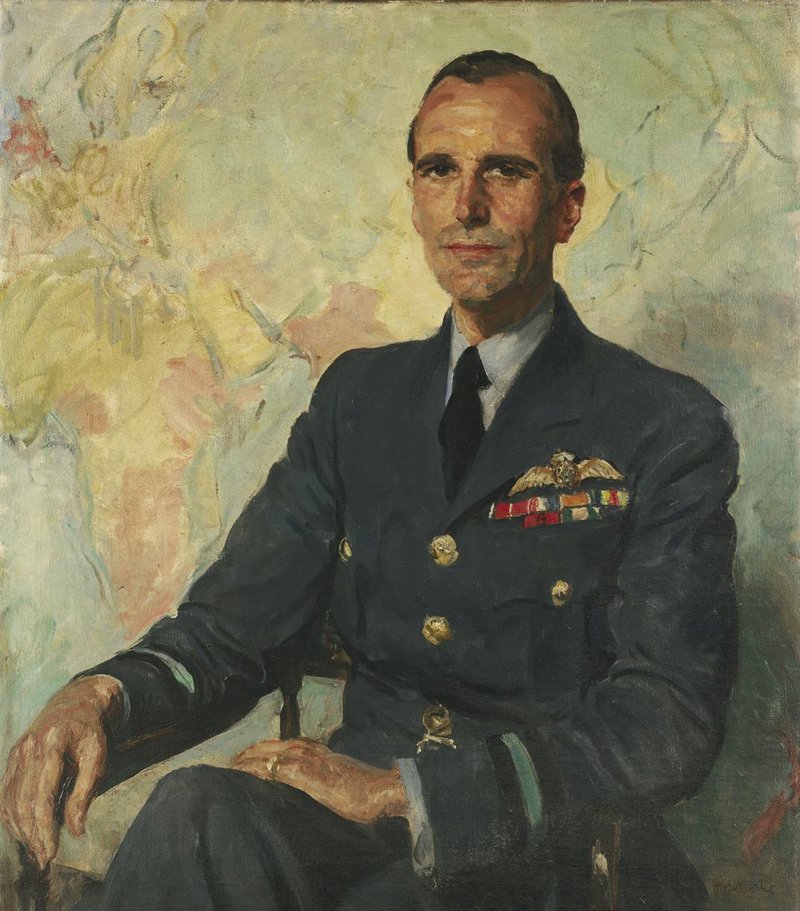

Retirement brought Goddard a second set of interests, and writing for Skeptic.com in 2015, the researcher Blake Smith said Goddard “effectively had a second career as a paranormal enthusiast after retiring.” His 1975 book Flight Towards Reality is the source most writers cite for the Drem episode, and Smith describes it as largely a collection of thoughts on the spirit, ESP and continued consciousness.
What Did the Airfield Really Look Like in 1935?
The airfield’s own past helps set the scene for 1935. According to an archived history of RAF Drem compiled by enthusiasts, the First World War field at West Fenton had been renamed Gullane Aerodrome, and it was “vacated in 1919 and remained unused until 1933.” From then on it saw occasional use during coastal defense exercises by two auxiliary squadrons.
Those squadrons, the same history adds, were then flying Hawker Hart biplanes. The Airfields of Britain Conservation Trust gives a similar picture, noting that “the airfield was used as a temporary site for a military exercise in 1933,” and otherwise stood empty until shortly before the Second World War. In 1935, in other words, the site was quiet but not wholly forgotten by the RAF.
One detail in the popular telling does not fit the record at all. The cattle in Brennan’s version graze through “cracks in the tarmac,” yet the archived station history states that “The runways were of grass, remaining so throughout its existence.” It is a small point, but it suggests how much color was added as the story moved from teller to teller.
How Closely Did 1939 Match the Vision?
For believers, the revival of the airfield arrived right on schedule. The archived history records that in 1939 “the grass airfield which had grown into disrepair, was resurfaced, and renamed RAF Drem.” The Air of Authority unit pages add that No 13 Flying Training School “was formed on 17 March 1939 at RAF Drem,” before fighter squadrons took over the station that October.
The station history lists the school’s aircraft as the Airspeed Oxford, the Hawker Hart and the Audax. As reported by the Daily Record in 2018, RAF training aircraft were silver in 1935 and turned a distinctive yellow soon after, while mechanics’ overalls changed from tan to blue at about the same time. On paper, the match with Goddard’s scene looks striking.
The fit is looser than it first appears, however. The name Drem itself belongs to 1939, since the field Goddard saw in 1935 was still officially Gullane. The Daily Record article even dated the flight to 1939 in one paragraph and to 1935 in another, a sign of how easily the details slide in the retelling.
Precognition or an Honest Misreading?
The most detailed critique comes from Robert A. Charman, who reviews books for the Society for Psychical Research, a long established British society that studies psychic claims. Charman writes that the vision is “widely quoted in the literature as factually confirmed beyond all reasonable doubt,” but he challenges a key part of the usual account.
“Contrary to many inaccurate accounts, Goddard did not see RAF Drem from the air for himself in 1939,” Charman wrote in a 2018 review. Instead, he argues, Goddard knew the field had been rebuilt and assumed it had the new yellow monoplane trainers then in wide use. His conclusion is that “the most likely explanation is that it was an honest misinterpretation of his sunlit experience when he flew over Gullane airfield.”
Charman set out that case in a 2019 research note in the Journal of the Society for Psychical Research, which this article has not been able to consult directly. In a separate review he stressed that the vision “is what Goddard genuinely believed as he was unable to account for it in any other way.” Nobody in this debate accuses the air marshal of inventing the story.
Blake Smith makes a related point about memory. He notes that “one common feature of all his stories is that he told and retold them and discussed them with others for years before setting them to paper,” and adds that “Memories are quite malleable and certainly subject to more and more modifications the longer one ponders and replays them.” The evidence for a slip in time is therefore indicative rather than conclusive at best.
The Drem story belongs to a wider family of reported time slips, from the Kersey time slip in Suffolk to the tale of Rudolph Fentz, the supposed New York time traveler. What sets Goddard’s case apart is that the airfield’s real history can be checked, and that history explains much of what he described.
More than 90 years on, the account most writers rely on comes from a book published four decades after the flight. A disused field with occasional visitors, a sudden break in the weather and a career’s worth of retelling can account for much of the scene. The Drem episode remains less a window on 1939 than a case study in how an honest memory can grow.
Established: Victor Goddard was a senior RAF officer who later reached the rank of air marshal. The airfield then called Gullane was largely disused in 1935, and it was resurfaced and reopened as RAF Drem in 1939.
Unverified: the claim that Goddard saw the airfield as it would look in 1939, through a time slip or precognition. No record from 1935 supports it, and the best known accounts were published decades later.
Disputed: the view that Goddard honestly misinterpreted a real sunlit view of the old airfield and later matched it to 1939, as Charman argues. Believers in the case still treat it as confirmed precognition.
By Historic Mystery
Sources
- Air of Authority: A History of RAF Organisation, Air Marshal Sir Victor Goddard, service biography. rafweb.org
- Air of Authority, No 13 Flying Training School, and RAF Drem station pages. No 13 FTS, RAF Drem
- RAF Drem website, History (archived November 18, 2015). web.archive.org
- Airfields of Britain Conservation Trust, Drem (Gullane) (West Fenton). abct.org.uk
- Imperial War Museums, Interview with Robert Victor Goddard, sound archive, recorded 1973. iwm.org.uk
- Michael Reynolds, Fascinating story of time travel in Scotland reveals pilot’s eerie encounter on airfield, Daily Record, February 14, 2018. dailyrecord.co.uk
- Blake Smith, Should Goddard’s Squadron Drop Dead Fred?, Skeptic.com, February 2, 2015. skeptic.com
- Robert A. Charman, review of Time Loops by Eric Wargo, Society for Psychical Research, 2018. spr.ac.uk
- Robert A. Charman, review of A Walk on the Wild Side by Gary Williams, Society for Psychical Research, 2018. spr.ac.uk
- Robert A. Charman, Research note on Victor Goddard and Gullane airfield, Journal of the Society for Psychical Research 83 (2019): 18 to 30. Cited as listed in Charman’s SPR review of The Foreseeable Future by Gary Williams. spr.ac.uk
