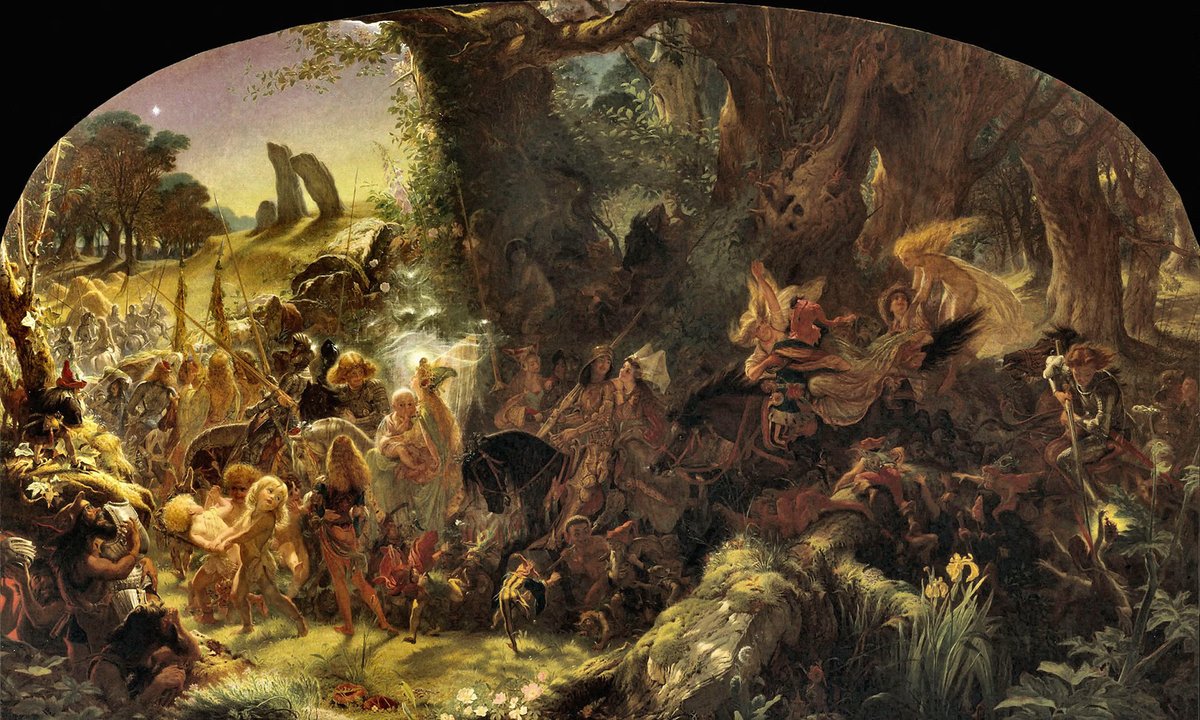
The death of Bridget Cleary is one of the most disturbing cases in the history of Irish folk belief, a killing in a laborer’s cottage in County Tipperary that made headlines across Ireland, Britain and America in 1895. Her husband, Michael Cleary, told anyone who would listen that the woman who died in his kitchen was a fairy changeling left in his wife’s place.
Some of the people around him seem to have believed it too, and for days they had tried to drive the fairy out with herbs, prayers and threats. Even now, local children are said to chant a rhyme about her that asks, “Are you a witch or are you a fairy,” and then adds a second line naming her husband. But did Michael Cleary truly believe the fairy story, or did he use an old folk belief to cover the killing of his wife?
A Dressmaker in Ballyvadlea
According to the historian Angela Bourke, writing in the Dictionary of Irish Biography, Bridget Boland was born in Ballyvadlea, near Cloneen, probably in February 1867, although most newspapers of the day gave her age at death as 26. She went to school with the Sisters of Mercy at Drangan, some four miles (about 6 kilometers) from home, and was later apprenticed to a dressmaker, possibly in Clonmel.
In August 1887 she married Michael Cleary, a cooper from Killenaule. For years he kept working in Clonmel and visited at weekends, while Bridget stayed with her parents. By the early 1890s the couple and her father, Patrick Boland, had moved into a new laborer’s cottage in Ballyvadlea, where Michael built up a local coopering trade and Bridget earned her own money by dressmaking and selling eggs.
Bourke notes that by 1895 the Clearys had become conspicuous in their community. They were more prosperous than most of their neighbors and had no children, and there were reports of an affair between Bridget and William Simpson, the caretaker of a nearby evicted farm. Mental Floss, drawing on Bourke’s research, describes a literate, independent and fashionably dressed working woman who was fascinated by the fairies and often visited the old ringfort on Kylenagranagh Hill, a place local lore said should be avoided.
The Changeling in the Bed
On Monday, March 4, 1895, Bridget walked to deliver eggs to her father’s cousin, Jack Dunne, and came home chilled. Within days she was in bed with what the dispensary doctor eventually diagnosed as “nervous excitement and slight bronchitis.” A priest also called, gave her the last rites in case the illness worsened, and later said mass in the house.
However, by then a very different explanation was going around the townland. Rumors based on old oral legend suggested that the real Bridget had been taken by the fairies, and that the sick woman in the bed was a changeling. Michael told people that the woman was “two inches taller” than his wife, a height difference of about 5 centimeters, and that she was “too fine” to be his wife at all. That made the case unusual even by the standards of folklore, since changeling stories mostly told of stolen babies, and the writer E. F. Benson observed in 1895 that “it is somewhat rare for an adult to be changed, the victims being usually children.”
Bourke names Dunne, a 55-year-old storyteller who could not read and yet knew the old traditions well, as the man several sources blame for starting the rumor. Mental Floss quotes him urging Michael on with the words “It is not your wife is there.” Michael went to a so-called fairy doctor named Denis Ganey, who lived on the slopes of Slievenamon, and came back with herbs to be boiled in new milk.
Over the night of March 14, a group of male relatives and neighbors held Bridget down, forced the herbs on her and carried her to the kitchen fire, demanding again and again that she answer to her own name. Her cousin Johanna Burke later said Bridget seemed “wild and deranged” by the end of it. However, the men pronounced her recovered from the fairies, and for a few hours it seemed the peculiar ritual was over.
The Night of March 15
The following evening Bridget got up and dressed in her own fine clothes for the first time in 11 days. With relatives crowding the kitchen, an argument broke out over food and her name, and Johanna Burke remembered Bridget turning on her husband with a remark that left him furious:
“Your mother used to go with the fairies and that is why you think I am going with them.”
What followed is recorded in the trial testimony and does not need retelling in full. Bourke’s entry says only that Michael knocked his wife to the ground in front of the fire, questioned her violently and set fire to her clothes, so that she died in the kitchen of her own home. According to Mental Floss, relatives heard him insist even then, “She’s not my wife. She’s an old deceiver sent in place of my wife.”
With Bridget’s cousin Patrick Kennedy, Michael buried her in a shallow grave some distance from the cottage. In the days that followed, several of those present claimed they had seen her walk off across the fields with two men. Michael then kept watch at the Kylenagranagh ringfort, telling people that his wife would ride out among a troop of fairies on a white horse, and that he only had to cut her free to have her back.
The Trial at Clonmel
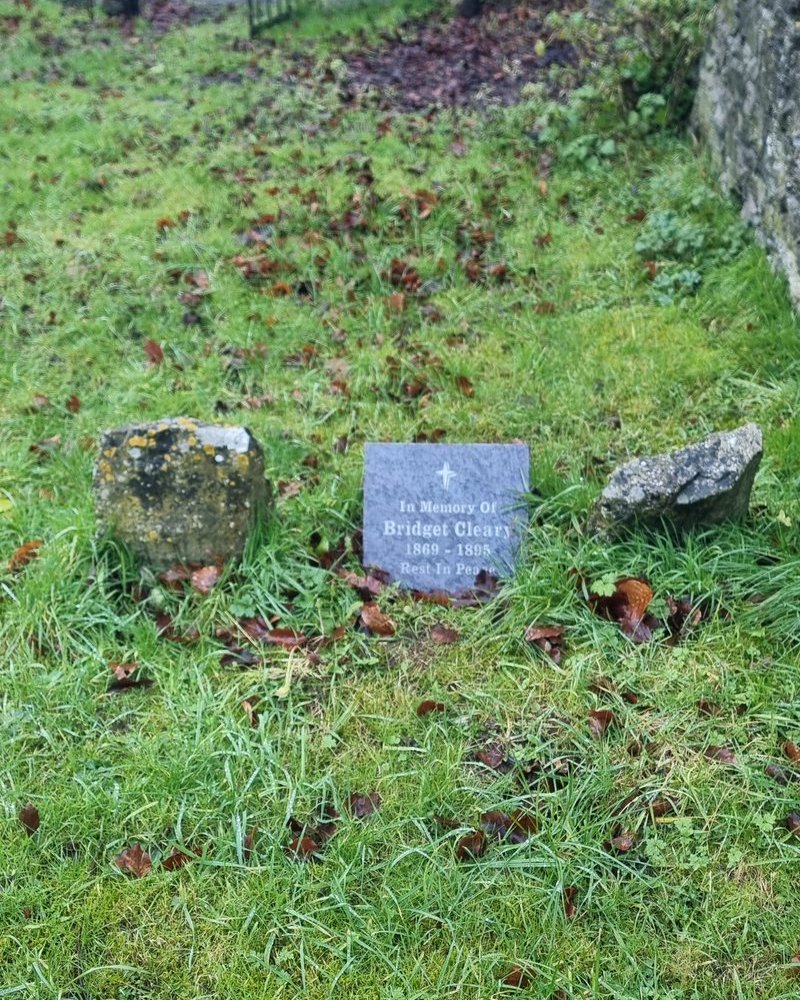
Rumors of the disappearance reached the Royal Irish Constabulary, and a police search found Bridget’s body on March 22, 1895. Michael Cleary and eight others, most of them her own relatives, were arrested, and Bourke records that police buried her in Cloneen cemetery under cover of darkness on March 27, while most of her family sat in Clonmel prison.
The case was tried at the Clonmel summer assizes in July. Michael was convicted of manslaughter rather than murder, and the Tipperary local history site hiddenhistory.ie reports that he was sentenced to 20 years’ penal servitude. The judge, Mr Justice O’Brien, is quoted there describing the case as revealing “a moral darkness, even religious darkness.” Michael was released in 1910 and, according to Mental Floss, sailed for Montreal.
Long before the verdict, the case had become a political weapon. The London correspondent of the New York Times reported in March 1895 that it was being cited by the anti-Irish papers as evidence of “the mental degradation and savagery of the Irish peasant population.” Bourke adds that “Unionist papers used it to portray the Irish as barbarians unfit for self-government” while campaigners for Irish home rule tried to distance their readers from fairy belief.
Belief, Illness or Cover Story?
The open question was argued almost as soon as the news broke. In June 1895, before the trial, Benson, drawing on studies of folk belief from around the world, argued in the magazine The Nineteenth Century that the accused had acted out of sincere belief. He pointed to the open door and the crowd of witnesses as proof that no one had set out to kill her:
“Terrible and ghastly as the case is, we cannot call it wilful murder.”
The record also holds evidence that points another way. During her illness, Bridget reportedly told her aunt that her husband “thought to burn me about three months ago,” which suggests the fairy accusations had surfaced before. In the days after her death Michael is said to have blamed Dunne, saying, “It was he who told me my wife was a fairy.” Rumors of an affair, along with the couple’s money and independence, gave him reasons that had nothing to do with the fairies.
Some modern writers lean toward that darker reading of the case and of Michael’s motives. The writer Sady Doyle, in a book extract published by Lit Hub, argued that the old legends of fairy wives taught men to distrust women who refused to be controlled, and concluded that for Michael “a woman who insisted too much on being treated like a person was probably not a person at all.”
Others have looked instead to the state of Michael’s mind in those days. In 2006, two authors writing in the Irish Journal of Medical Science reported “some evidence to suggest” that Michael Cleary and others were influenced by Capgras syndrome, the delusion that a loved one has been replaced by an impostor, and by a shared delusion spreading through the group. However, the authors worked only from written accounts of the case.
More than 130 years after that night in Ballyvadlea, the facts of what Michael Cleary did are not in doubt, and Bridget lies in Cloneen under a small memorial plaque. Whether he truly believed that a fairy lay in his wife’s place, or used the stories he grew up with to explain away a killing, remains a mystery.
Read next: The Charles Walton Witchcraft Murder
Established: Bridget Cleary died in her home in Ballyvadlea, County Tipperary, on the night of March 15, 1895, after days of a so-called fairy cure, and her husband Michael Cleary was convicted of her manslaughter.
Disputed: Michael Cleary genuinely believed his wife had been replaced by a fairy changeling, as E. F. Benson argued in 1895, rather than using the belief to cover a killing, as later writers suggest.
Unverified: Michael Cleary suffered from Capgras syndrome, and others in the house shared his delusion.
Unverified: Jack Dunne, the storyteller named in several sources, started the changeling rumor about Bridget.
Unverified: Bridget Cleary was having an affair with William Simpson.
By Historic Mystery
Sources
- Angela Bourke, Cleary, Bridget, Dictionary of Irish Biography (2009). https://www.dib.ie/biography/cleary-bridget-a1720
- H. O’Connell and P. G. Doyle, The burning of Bridget Cleary: Psychiatric aspects of a tragic tale, Irish Journal of Medical Science (2006). https://doi.org/10.1007/BF03169179
- E. F. Benson, The Recent ‘Witch-Burning’ at Clonmel, The Nineteenth Century 37 (June 1895), pp. 1053 to 1058. https://archive.org/details/sim_twentieth-century_1895-06_37_220
- The New York Times, London correspondence, March 31, 1895. https://archive.org/details/per_new-york-times-magazine_the-new-york-times_1895-03-31_44_13605
- The Tragic Murder of Bridget Cleary, the Irish Fairy Wife, Mental Floss (2018, updated 2024). https://www.mentalfloss.com/crime/bizarre-death-bridget-cleary-irish-fairy-wife
- Sady Doyle, The Man Who Insisted His Wife Was a Malevolent Fairy, Lit Hub (2019). https://lithub.com/the-man-who-insisted-his-wife-was-a-malevolent-fairy/
- March 22 1895: Body of Bridget Cleary Found, hiddenhistory.ie, On This Day in Tipperary. https://www.hiddenhistory.ie/on-this-day-in-tipperary/march-22
