
On July 11, 1897, three Swedish men climbed into the basket of a hydrogen balloon on Danes Island in northwest Svalbard and rose into the Arctic sky, bound for the North Pole. Salomon August Andrée, the engineer who had dreamed up the flight, took with him the young photographer and scientist Nils Strindberg and the engineer Knut Frænkel. After a few days, the world heard nothing more from them for 33 years.
When their last camp was finally found in 1930, it held their bodies, their diaries and rolls of film that could still be developed. It did not hold a clear answer to the question that has followed the expedition ever since. Three men with food, guns, ammunition and fuel died within days of reaching dry land, and nobody can say for certain why.
Why Did Andrée Want to Fly to the North Pole?
By the 1890s, ship after ship had tried to force a way north through the pack ice and failed. As the Svalbard Museum puts it, “The Swedish engineer Andrée was ahead of his time, and decided to try to fly over the ice.” Andrée was an experienced balloonist, and on a trial flight in the balloon Svea in 1894 he had found that a sail and long ropes dragging on the ground could steer a balloon some way across the wind.
The plan drew both money and ridicule, and the Andrée Diaries, the official account published in English in 1931, recorded one Austrian newspaper’s verdict that “This Mr. Andree, who wishes to go to the North Pole and back by means of an air balloon, is simply a fool or a swindler.” King Oscar II and wealthy backers supported the project anyway. A first attempt in 1896 had to be abandoned because the wind blew from the wrong direction, according to the Svalbard Museum, so the three men returned to Danes Island the following summer.

What Happened After the Balloon Left Danes Island?
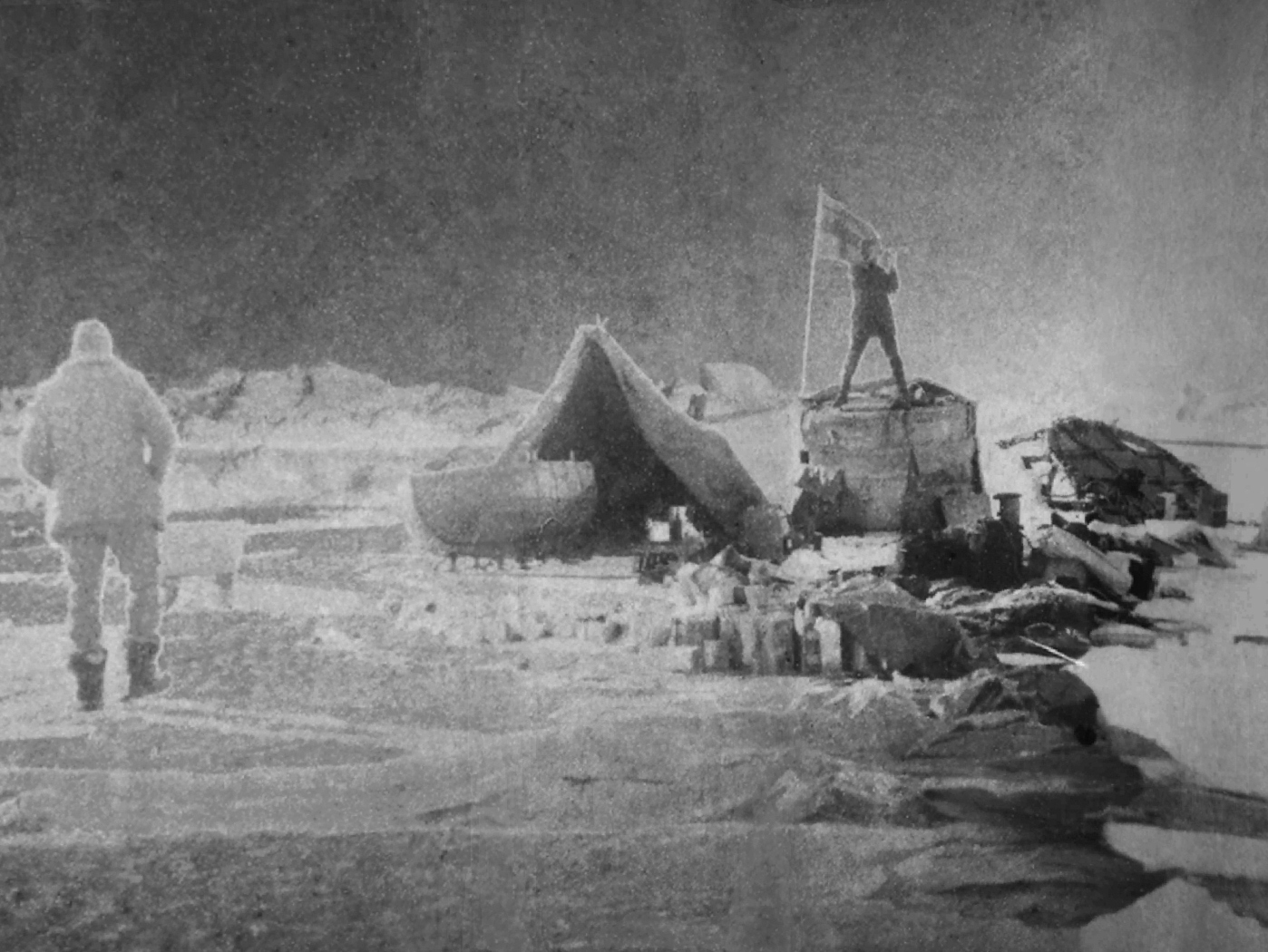
The flight went wrong almost at once, because according to the Svalbard Museum some of the drag ropes came away immediately after the launch, which left the crew unable to steer. Rain and fog then coated the balloon in ice, and after about 65 hours in the air the Eagle came down on the pack ice on July 14. The Atlas Obscura account of the expedition blames inadequate testing of the balloon and Andrée’s insistence on steering with drag ropes trailed across the ice.
Before the landing, the men sent their news south in the only ways they could. A carrier pigeon, shot from the rigging of the Norwegian sealer Alken by its skipper on July 15, carried a note dated July 13 that ended “All well on board. This is the third pigeon-post. Andree.” A message buoy thrown out on the first evening, which washed ashore years later, reported that “Our journey has hitherto gone well.” For a generation, those few lines were all anyone knew.
On the ice, the three men loaded their sledges and began to walk. They first aimed for the expedition’s depot at Cape Flora in Franz Josef Land to the southeast, then turned toward the Seven Islands of Svalbard to the southwest. In a 2019 study in the journal Polar Record, Björn Lantz used their own position fixes to show that the ice under them drifted the wrong way for most of the march, away from whichever goal they chose. He concluded that “the disastrous ending of the expedition was, at least to some extent, a result of bad luck.”
What Did the Diaries Say About the Last Days on the Ice?
On September 16, according to Strindberg’s almanac, the men resolved to remain on their large floe, and a week later they were building a snow hut on it for the winter. However, at dawn on October 2, the floe cracked apart beneath them. Andrée wrote that “we heard a crash and thunder, and water streamed into the hut,” and that the floe had broken into small pieces. Even then he insisted that “with such comrades one should be able to manage under, I may say, any circumstances.”
From this point, the record grows very thin. Strindberg kept brief notes in an almanac, writing “exciting situation” for October 3 and 4, that they had moved to land on October 5, and “moving” for October 7. The three had come ashore on Kvitøya, which the expedition called White Island, a small island at the eastern edge of Svalbard that is almost entirely covered by a glacier. Andrée’s own last notes survived only as a few water-damaged pages that could barely be deciphered.
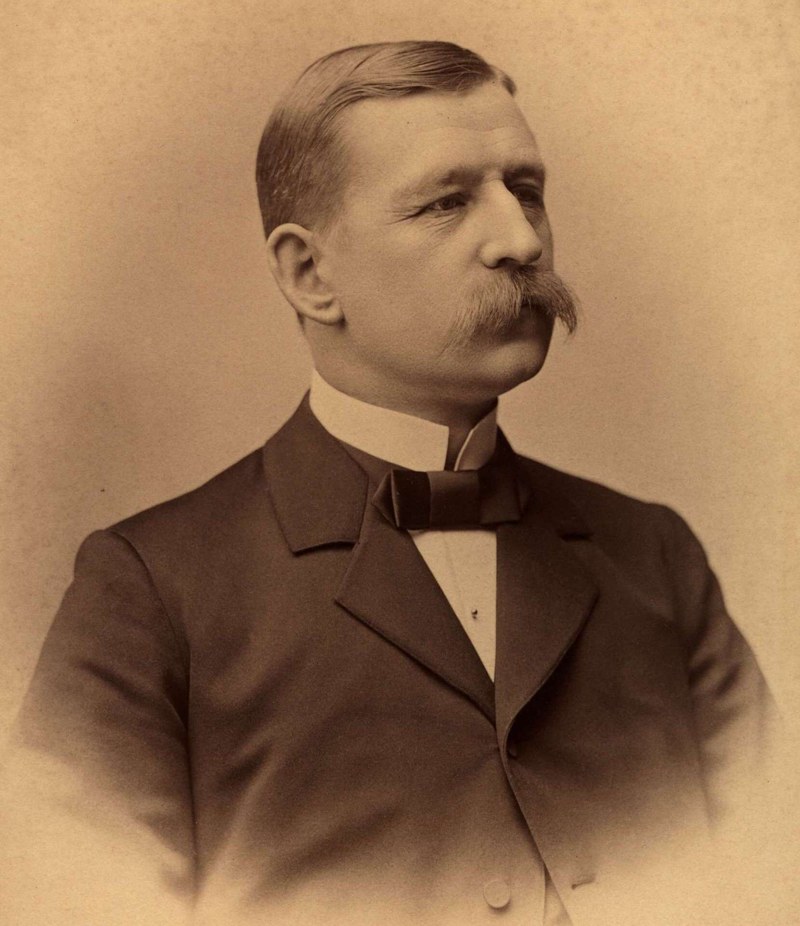
The final words from the expedition were Strindberg’s almanac note for October 17, “home 7.5 o’cl. a.m.” According to the Nordiska museet catalog record for his portrait, Andrée was born on October 18, 1854, so the note was written the day before his 43rd birthday. Nils Lithberg, the Swedish professor who wrote the chapter on White Island for the 1931 book, said of the time that passed after that entry, “It will never be possible to give a precise answer to this question.”
How Was the Andrée Camp Found in 1930?
On August 6, 1930, the Norwegian Bratvaag expedition, led scientifically by the geologist Gunnar Horn, went ashore on the southwest point of White Island. Its sealers came upon the remains of the camp and of two of the men. A second vessel, the Isbjørn, visited the site weeks later and recovered more. The 1931 account describes how Strindberg had died first and been laid in a narrow cleft in the rocks, covered with stones by his companions, and how he was identified by the engagement ring he wore for his fiancée, Anna Charlier.
The finds astonished the investigators, who listed a Primus stove with fuel in it, matches, guns and plenty of ammunition. The book observed that “When the ice-floe broke on the 2nd October, the Expedition was well supplied with meat.” Strindberg’s exposed film went to the Swedish photographic expert Hertzberg, who managed to recover pictures from rolls that had lain in the snow for 33 years, including the image of the Eagle on the ice. The three men were brought home and buried from Storkyrkan in Stockholm on October 5, 1930.
What Killed Andrée, Strindberg and Frænkel?
The first explanations came from the men who stood at the camp. One sailor on the Isbjørn judged that “the members of the Expedition were frozen to death,” blaming their thin clothing. The sealer Sørensen offered a gentler version, saying “I think they died in their sleep,” and adding “they have not died of hunger.” Lithberg wrote that Sørensen had most certainly given the correctest answer, although he also asked why the men had left their only sleeping bag and other gear unused, and why one sledge stood packed as if for a journey.
However, the bodies were cremated after the funeral without any tissue samples being kept, according to the Swedish archaeologist Rune Edberg in a 2017 review of the research. That left later investigators with nothing but the diaries and objects. In his 1952 book, the Danish physician Ernst Tryde argued that the men died of trichinosis, a parasitic disease, after he found infected remains of polar bear meat from the camp. The theory spread widely, and in 1997 the then head of the Andrée Museum in Gränna still named it as the most likely cause, Edberg noted.
Edberg called Tryde’s hypothesis untenable, pointing out that polar explorers and trappers had eaten bear meat for years without falling ill, and that modern studies put the death rate from trichinosis at about 0.2 percent, which made it hard to believe all three men died of it at roughly the same time. Other doctors and historians proposed scurvy, botulism, lead poisoning, too much vitamin A, an overdose of morphine and carbon monoxide from the stove, while the ethnologist Rolf Kjellström argued in the late 1990s that exhaustion, cold and apathy had simply worn them down.
In 2013, the physician and author Bea Uusma published a very different answer in her book Expeditionen. Edberg described how she went back to the 1930 reports, the photographs and the clothing stored at the museum, and found that the official account had placed the men wrongly. In her reading, only Frænkel died inside the tent, while Andrée was found sitting outside against a rock with his rifle. She also found that Strindberg’s jacket had been badly torn and later repaired, and that his underclothes carried tears she judged to be the marks of large claws.
From this, Uusma reconstructed a polar bear attack in which Strindberg was killed and Frænkel fatally injured, leaving Andrée alone. Lantz summarized her view that Andrée then took morphine when he understood how hopeless his situation was. Edberg found her case convincing enough to call the riddle solved. However, Lantz, writing two years later, still described the reasons for the men’s sudden deaths as having “puzzled scholars ever since,” and the Svalbard Museum says simply that “The cause remains a mystery.”
Read next: The Franklin Expedition
More than a century after the Eagle came down, the story of White Island is still told in two very different ways. Either three exhausted men slipped quietly into the Arctic winter, as the sealers believed in 1930, or a sudden attack ended their hopes in a matter of minutes, as Uusma argues. The answer may lie in a small museum box of torn clothing, or it may have gone into the fire with them in 1930.
Established: Andrée, Strindberg and Frænkel launched the balloon Örnen from Danes Island on July 11, 1897, came down on the pack ice on July 14, walked across the ice for nearly three months and reached White Island in early October, where their remains, diaries and film were found by the Bratvaag expedition on August 6, 1930.
Disputed: The cause of the three men’s deaths, which researchers have attributed to cold and exhaustion, to trichinosis from polar bear meat (Tryde, 1952) and to a polar bear attack (Uusma, 2013), with scholars still in disagreement.
Unverified: Botulism, scurvy, lead poisoning, too much vitamin A, carbon monoxide from the stove, and Andrée’s use of morphine at the end, as suggested by various writers.
By Historic Mystery
Sources
- Swedish Society for Anthropology and Geography (ed.), The Andrée Diaries, authorized translation by Edward Adams-Ray of Med Örnen mot polen, John Lane, London, 1931. archive.org
- Björn Lantz, Ice drift during the 1897 Andrée balloon expedition, Polar Record, Cambridge University Press, November 2019. doi.org/10.1017/s0032247419000706
- Rune Edberg, Isbjörnar och hermeneutik: Andrée-expeditionens öde och några iakttagelser om källmaterial och förklaringsförsök, META, 2017. histark.se
- Svalbard Museum, The Andrée Expedition. svalbardmuseum.no
- Atlas Obscura, Andrée Balloon Crash: A Photographic Journey through the Most Surreal Arctic Disaster. atlasobscura.com
- Nordiska museet, portrait record NMA.0033031, Salomon August Andrée, via Wikimedia Commons.
