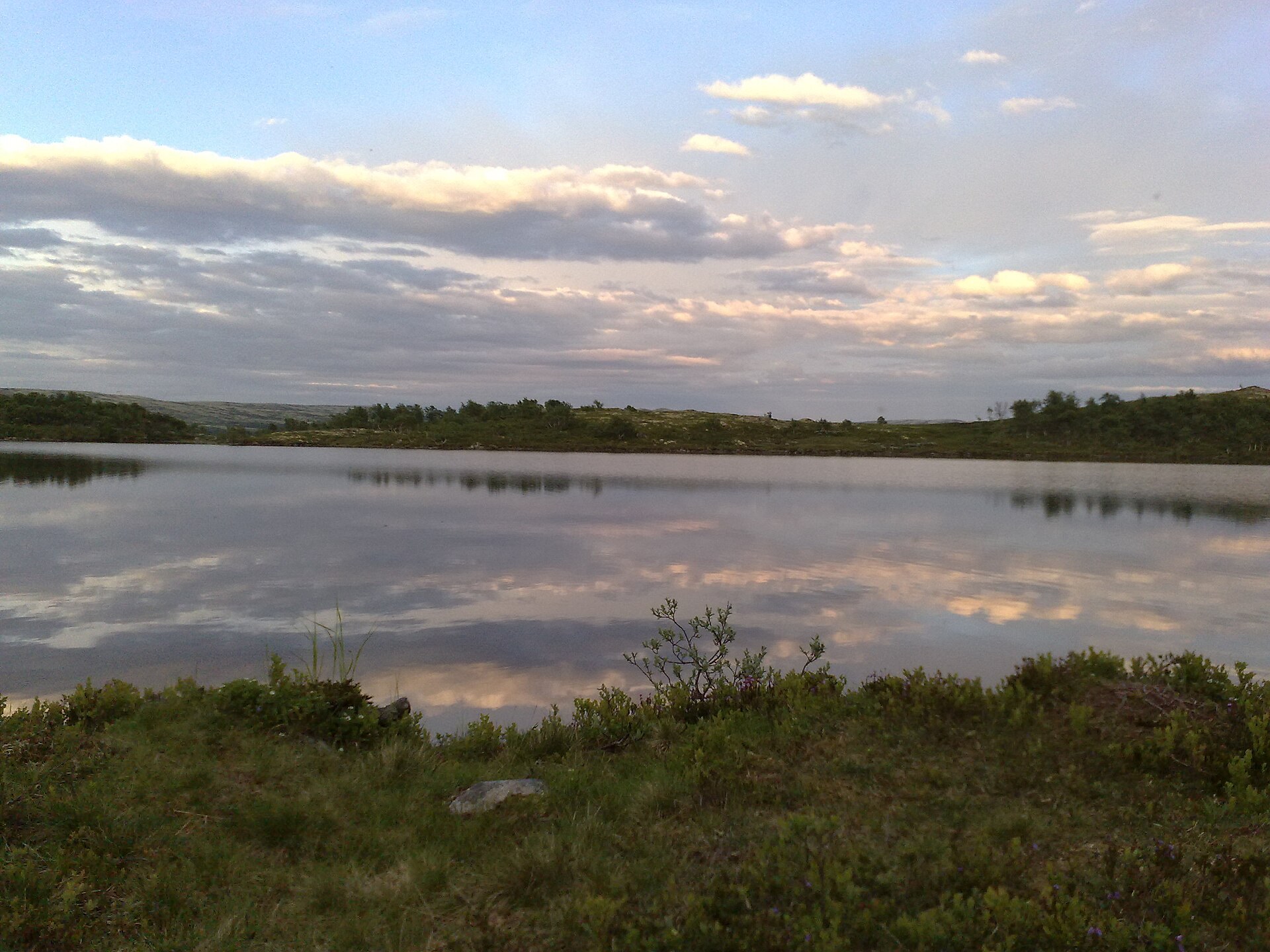

In December 1981 people in a quiet valley in central Norway began reporting lights that hovered over their roofs, drifted along the hillsides and then sometimes sped away at great speed. More than four decades later the lights of Hessdalen have been photographed, tracked on radar, analyzed in peer-reviewed journals and watched by automatic cameras, yet nobody can say for certain what they are.
Where is Hessdalen and what did people see?
Hessdalen is a valley about 12 km long, southeast of Trondheim and about 30 km northwest of the town of Røros. According to the 1984 technical report of Project Hessdalen, written by the engineer Erling Strand, about 150 people lived there when the sightings began.
The report says the lights appeared several times a day at the height of the activity, mostly in the evening or at night, and up to about four times in a single day. They were seen far more often in winter. In summer they were rarely reported at all, which the report suggests may be partly because the northern summer nights are almost fully light. A 2017 analysis of the report database by Torbjørn Aamodt puts the peak at “about 20 reports a week.”
Witnesses described the lights in three broad groups. Some were small, strong white or blue flashes that could appear anywhere in the sky. Others were yellow or yellow-white lights that sat just above the houses or even on the ground, stayed still for more than an hour and then accelerated sharply. A third type came as several lights at a fixed distance from each other, usually two yellow or white lights with a red one in front, which some residents simply called “The object”.
The shapes seen over the valley were just as varied, and Strand wrote that a light “could have a form of a bullet, with the sharp end down. It could be round as a football.” Most were white or yellow-white, sometimes with a small red light on the top or bottom, and the report adds that “at one time a speed of about 8500 m/s was tracked by radar.”
How did Project Hessdalen try to measure the lights?
The sightings dropped sharply in the spring of 1983, and in the summer of that year the team received no reports at all. By then a small group of Norwegian investigators had decided that no official institute was going to look into the problem, so five people started their own project on June 3, 1983. It was presented at an international congress in England that August, and in early January 1984 an information bulletin and a simple report form went out to 3,300 households in the district.
Fieldwork with instruments ran from January 21 to February 26, 1984. The team set up cameras, some fitted with diffraction gratings to split the light into a spectrum, along with a radar, a magnetometer, a seismograph, a spectrum analyzer, a Geiger counter, an infrared viewer and a laser. Specialists from the Norwegian Defence Research Establishment and the universities of Oslo and Bergen helped, and the American astronomer J. Allen Hynek sat on the project’s advisory committee.
In those five weeks the project logged 188 reports of lights. Each one was scored for quality and for how likely it was to have an ordinary explanation such as an aircraft. Strand set his threshold between the scores F4 and F5, and treated 53 reports at F5 or above as possible examples of the phenomenon. About 68 percent of those moved along a north-south axis, the same direction residents had described for years.
What did the radar and the laser show?
The radar produced the most striking data of the 1984 campaign. The team made 36 radar recordings, but only three of them were probably also seen as lights by the people on watch. Two radar reflections were photographed, and Strand wrote that each was as strong as the reflections from the surrounding mountains. A radar expert at the Defence Research Establishment who analyzed the pictures said: “If this isn’t a reflection of a solid object, but only gas in the air, the gas has to be locally and strongly ionised. Otherwise, it wouldn’t give such a strong reflection”.
The laser test began with a local story. Several reports from Hessdalen claimed that a light vanished when a strong lamp was pointed at it, so the team borrowed a 633 nm laser to check. On Sunday, February 12, 1984, they aimed it at flashing lights in two separate cases, nine times in total, and the report says that eight of those times there was a reaction. In the first case a regular single flash changed to a regular double flash while the laser was on it, then went back to single flashing after the beam was lowered.
The report itself does not overstate any of this. Its conclusion reads: “We have not found out what this phenomenon is.” It then makes the point that turned a local puzzle into a research subject, saying “we know that the phenomenon, whatever it is, can be measured.” In 2004 the Italian astrophysicist Massimo Teodorani wrote in the Journal of Scientific Exploration that the 1984 initiative “demonstrated for the first time that the phenomenon is measurable.”
Who watches the valley now?
Since the summer of 1998 an Automatic Measurement Station has run in Hessdalen under the guidance of Strand and Bjørn Gitle Hauge, both then assistant professors at Østfold University College in Sarpsborg. Teodorani reported that its records show the lights are logged more often in winter and between about 10 pm and 1 am. Italian teams from Project EMBLA joined field missions in 2000 and 2002, adding optical, radio and spectral instruments.
Østfold University College still describes the work on its research pages. The atmosphere physics group says that “Lights of unknown origin are frequently observed in the remote Hessdalen valley” and that it runs three permanent measuring stations there, the first of them operational in 1998. An observatory on the Skarvan mountain, at 975 m, has been in use since 2018, and staff and students make field trips once or twice a year. The group also adds a cautious line about its own results, saying “Attempts to record the phenomena by other methods have so far resulted in ambiguous results.”

Is it plasma, ball lightning or something else?
Most of the serious explanations start from the idea that the lights are glowing gas, which fits the radar expert’s comment about ionized air. In the 1984 data the gratings produced a very low-dispersion spectrum, and Teodorani wrote that it was possible “to establish that it was a continuum with no lines.” His own analysis of later images estimated that a cluster of light balls had an absolute luminosity of about 19 kW.
Teodorani compared the measurements with two ball lightning models, and he wrote that the Abrahamson model, in which a heated ball of silicon nanoparticles gives off the light, could match the way the light was spread across some of the balls. He also noted a problem, since that model depends on lightning discharges, and none were recorded in Hessdalen during his observations. He leaned instead toward Turner’s electrochemical model of ball lightning, in which a hot plasma sits inside a cooler coat of water and ions. Even so, his paper concludes that “the exact origin of the phenomenon is not yet known.”
In 2010 the researchers Paiva and Taft proposed a different source for the glow in the Journal of Atmospheric and Solar-Terrestrial Physics. Their paper suggests that the lights are formed by “a cluster of macroscopic Coulomb crystals in a plasma produced by the ionization of air and dust by alpha particles during radon decay in the dusty atmosphere.” In plain terms, radioactive radon gas from the ground would charge dust in the air, and that charged dust would arrange itself into glowing structures.
A third idea treats the whole valley as a giant battery. According to a 2014 report by Science Norway, the Italian engineer Jader Monari argued that the two sides of the valley, one with rocks containing iron and zinc and the other with copper, could work like the poles of a battery. The river Hesja, which receives sulfuric acid from an abandoned mine, would act as the fluid between them. Gas bubbling from the river could then become charged and glow, and the electric field between the slopes could move it about.
Why do skeptics remain unconvinced?
The same Science Norway report gave space to the Norwegian physicist Bjørn Samset, who was not persuaded. “I haven’t seen any convincing computations of the phenomena at Hessdalen,” he said. On the battery idea he was blunt, saying “The distance is too great,” because the valley sides are simply too far apart to behave like the plates of a car battery.
Samset also pointed to a basic difficulty with plasma explanations. He noted that electrically charged gases normally have temperatures of thousands of degrees, while the researchers’ own observations suggest the Hessdalen gas is cool. “Cold plasma is a self-contradiction in my book, almost like hot ice,” he said. He did not rule out that the engineers might be onto something, but he argued that they were moving too fast for their evidence.
The researchers who know the data best have said something close to this themselves. Teodorani wrote that the instruments used so far were “at least one order of magnitude less sophisticated than those needed to obtain stronger, more definitive results.” The 1984 team had also noted that photographs taken where the radar showed something did not reveal anything unusual.
What would it take to solve Hessdalen?
The Hessdalen lights sit in an odd position among unexplained phenomena. They are not a single old story retold by later writers, since they have their own field reports, radar plots, spectra and a university observatory. Yet each measurement has raised questions faster than it has answered them, and no single theory explains the colors, the long hovering, the sudden speeds and the radar returns at once.
What researchers have asked for is clear enough. Teodorani called for a radar-guided platform that could point cameras, spectrographs and other sensors at a light the moment it appears, so that every instrument measures the same event at the same time. Until data of that kind exists, the honest answer to the question that Erling Strand asked in 1984 is still the one he gave in his report.
Read next: The Min Min Lights and Will-o’-the-Wisp
Established: Lights were reported in Hessdalen from December 1981, and Project Hessdalen recorded radar returns, photographs and laser reactions during fieldwork from January 21 to February 26, 1984, according to its final technical report.
Disputed: Whether the lights are a form of plasma or ball lightning. Teodorani (2004) and Paiva and Taft (2010) propose plasma models, while the physicist Bjørn Samset has argued that cold plasma and the existing calculations are not convincing.
Unverified: The idea that the valley works as a natural battery powered by the river Hesja. It rests on one engineer’s proposal and a small stone experiment, as reported by Science Norway in 2014.
By Historic Mystery
Sources
- Erling Strand, Project Hessdalen 1984: Final Technical Report, Part One (dated 5 January 1985). old.hessdalen.org
- Massimo Teodorani, A Long-Term Scientific Survey of the Hessdalen Phenomenon, Journal of Scientific Exploration 18(2), 2004, pp. 217 to 251. PDF
- G. S. Paiva and C. A. Taft, A hypothetical dusty plasma mechanism of Hessdalen lights, Journal of Atmospheric and Solar-Terrestrial Physics 72(16), 2010, pp. 1200 to 1203. doi:10.1016/j.jastp.2010.07.022
- Arnfinn Christensen, Little valley, a giant battery?, Science Norway, 13 May 2014. sciencenorway.no
- Østfold University College, Atmosphere Physics research group. hiof.no
- Torbjørn Aamodt, Hessdalen Database Analysis, Oslo, 26 November 2017. PDF
