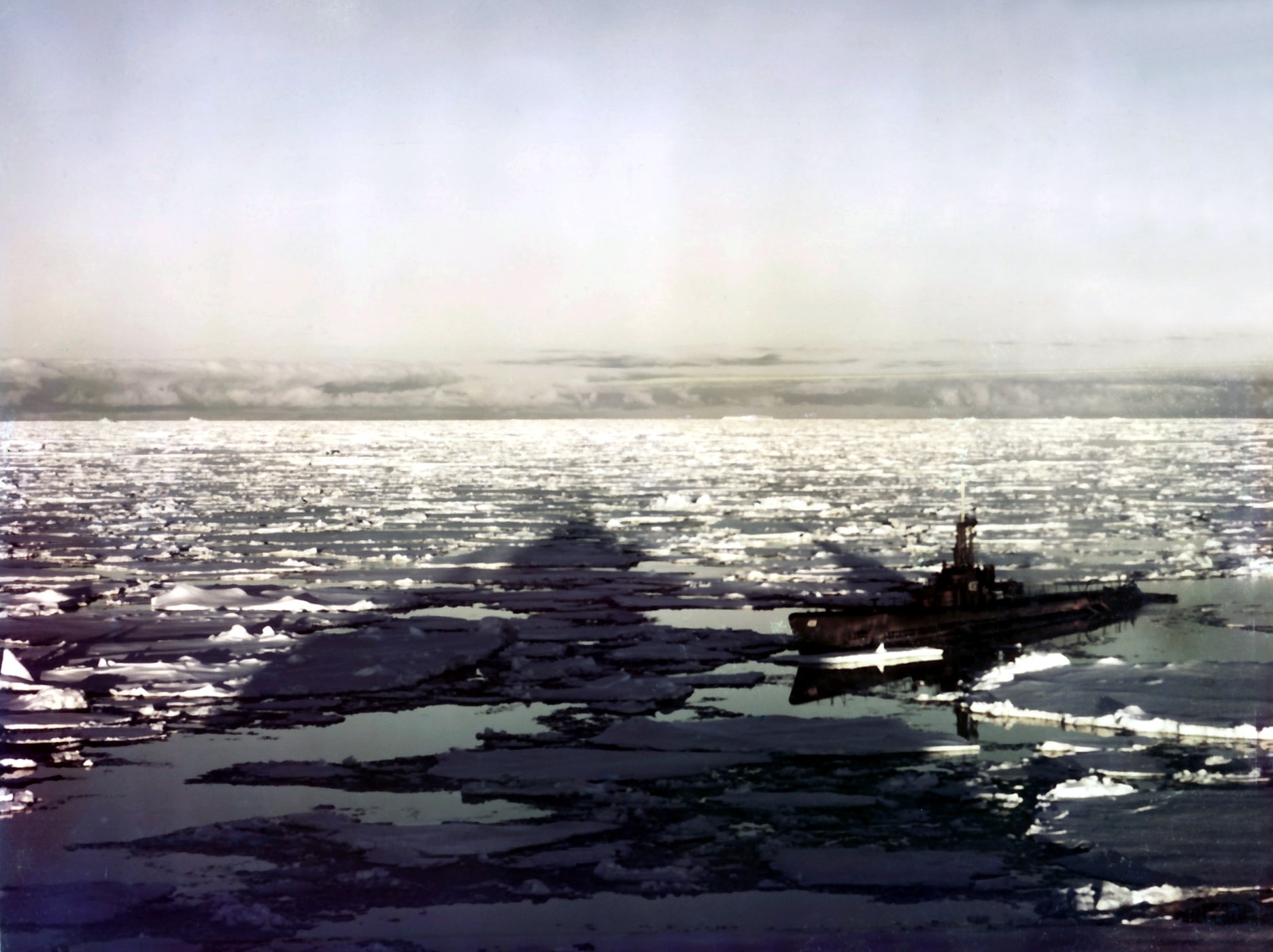

In December 1946, little more than a year after the end of World War Two, the US Navy sent 13 ships and about 4,700 men to Antarctica. They carried seaplanes, ski-equipped transports, helicopters, an icebreaker and a submarine, and the polar explorer Rear Admiral Richard E. Byrd went with them. The official name was the Antarctic Developments Project, 1947, but everyone called it Operation Highjump.
Eight decades of retelling have turned that expedition into something else entirely. In the version that circulates online, the fleet was a battle group sent to destroy a secret Nazi base under the ice, and it limped home early after being mauled by flying saucers. The Navy’s own report, the press coverage of the time and a peer-reviewed study in the journal Polar Record tell a very different story, and they also explain how the myth was built.
What Was Operation Highjump?
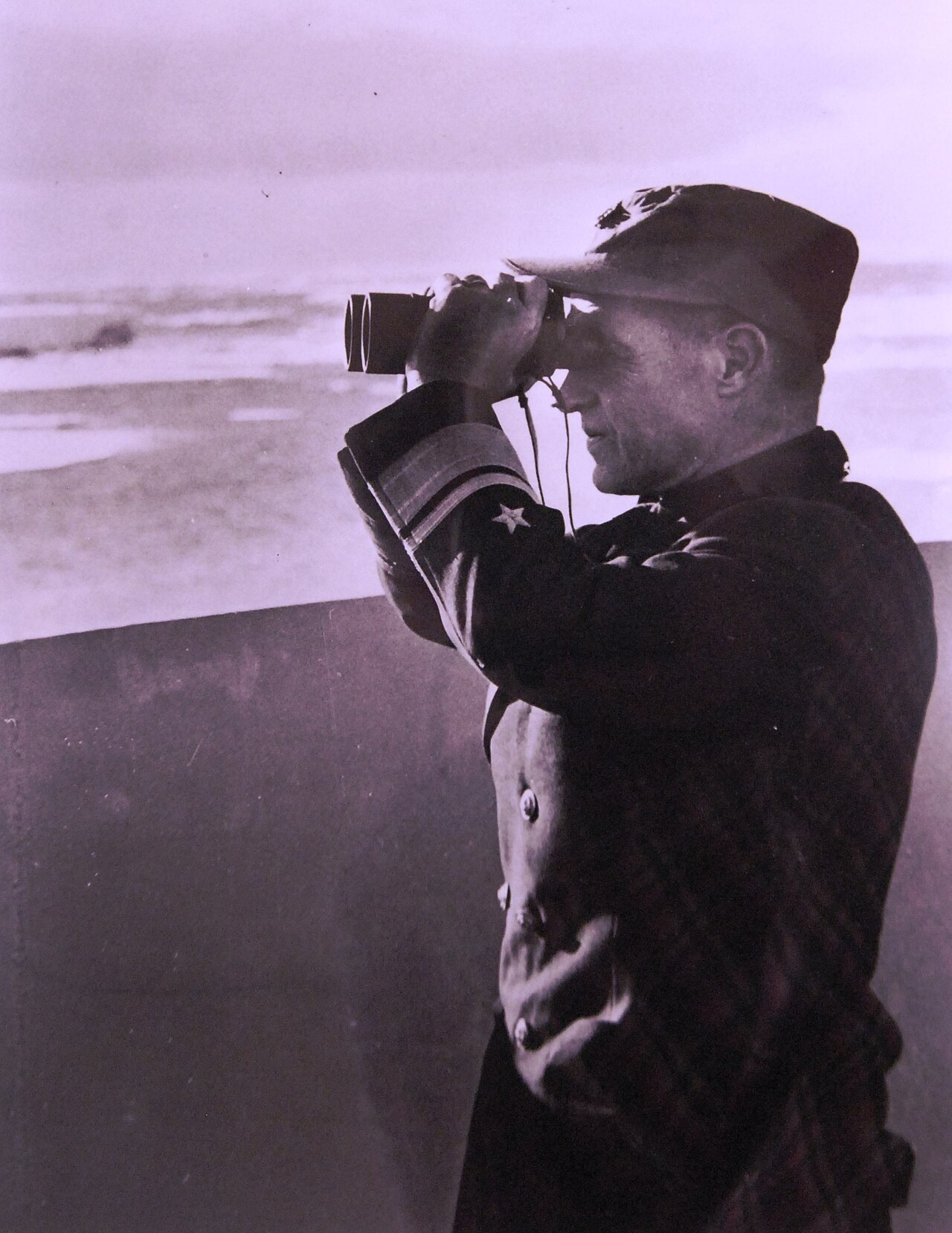
Admiral Chester Nimitz, the chief of naval operations, announced the expedition on August 26, 1946, according to a 2021 account in Aviation History by Jim Trautman. Task Force 68 was commanded by Rear Admiral Richard H. Cruzen, while Byrd went as officer in charge, overseeing the scientific and flying work. The force was split into an Eastern Group, a Western Group and a Central Group, and the Central Group was to build a temporary base called Little America IV on the Ross Ice Shelf at the Bay of Whales.
The task force report, now held by the Defense Technical Information Center, lists the objectives as set by the commander in chief of the Atlantic Fleet. The first was “Training personnel and testing equipment in frigid zonae,” in the report’s own typed and scanned spelling, and the second was “Consolidating and extending United States sovereignty over the largest practicable area of the Antarctic continent.” The rest covered testing whether bases could be built and kept on the ice, developing air base techniques for later use in places like interior Greenland, and gathering hydrographic, geological and weather data.
According to Trautman, Byrd told a press conference on November 12, 1946, that the operation “was primarily a military mission to train naval personnel, test ships, planes and the new helicopters under frigid zone conditions.” That much was public. The sovereignty goal was less so. Historian Dian Olson Belanger told Air & Space magazine in 2007 that the orders were for the Navy “to establish a basis for a [land] claim in Antarctica. That was classified at the time.”
Why Send 4,700 Men to the South Pole?
The answer the documents give is the Soviet Union. “The nuclear age had just begun, and the real fears were that the Soviet Union would attack the United States over the North Pole,” Belanger explained. Cool Antarctica describes Highjump as one of several exercises at the time designed to prepare for cold weather warfare in the Arctic, while staying diplomatically far enough away from the Arctic and Russia.
The task force commander’s own conclusions in the report are blunt about this. “The Antarctic is not now, and probably will not be in the near future, strategically important. However, it does provide a valuable testing ground where naval operations may be carried out with a minimum of international complications.” The Arctic, the same report states, was where naval forces had to be ready to fight, and the expedition left the Navy with “a large reservoir of polar-conditioned personnel.”
Belanger described the whole effort as “so brief and cobbled together,” crewed mostly by men just released from wartime service with almost no polar experience. One pilot, Conrad “Gus” Shinn, who flew a Douglas R4D transport off the carrier USS Philippine Sea, put it more simply to her. “We didn’t really know what we were doing.”
What Did the Expedition Actually Do?
The first ships left Norfolk and San Diego on December 2, 1946, although the carrier Philippine Sea did not leave Norfolk until January 2, 1947. The Central Group fought through some of the heaviest pack ice in decades with the help of the Coast Guard cutter Northwind, and Norwegian trawlers in the area reported the worst ice in more than 40 years. On January 29, 1947, six R4Ds fitted with skis and rocket bottles took off from the deck of the Philippine Sea, about 600 miles from Little America IV, on a one-way flight to the new base.
From there and from seaplane tenders off the coast, the aircraft photographed the continent. By the end, according to Trautman, more than 70,000 photos had been taken. The report itself estimated “that 1.500.000 square miles of the Antarctic continent were sighted, about 700.000 square miles of which were previously unexplored,” in its own punctuation. Byrd flew to the South Pole and back, and pilot David Bunger found an ice-free area of rock and lakes that still bears his name as the Bunger Hills.

It was dangerous work, and the cost is set out plainly in the report. “There were seven deaths during the operation.” Three of them came at the end of December 1946, when the Mariner flying boat George 1 crashed in a fireball on the ice. Radioman Wendell Henderson, flight engineer Frederick Williams and navigator Maxwell Lopez were killed, and the badly burned and frozen legs of the pilot, Ralph LeBlanc, could not be saved. Bad weather kept searchers away for 13 days before a search plane spotted the wreckage and the survivors. On January 22, 1947, 17-year-old Vance Woodall of Louisville, Kentucky, was killed while unloading supplies at the Bay of Whales. The other three deaths happened far from the ice, in a car crash in Sydney and a drowning in Panama.
The expedition did leave earlier than planned, and the report gives the reason in detail, saying that the Central Group withdrew from Little America “two to three weeks earlier than anticipated, due to the unusually heavy pack ice in the Ross Sea,” with the danger that the ships, which had no ice strengthening, would be trapped in an early freeze. The Eastern and Western groups, by contrast, stopped close to the date planned. As the report puts it, “Strictly speaking this was not a cold weather operation for severe temperatures were not encountered.”
Where Did the Nazi Base Story Come From?
The seeds were planted before Highjump ever sailed. Germany had sent its own expedition on the ship Schwabenland between December 1938 and April 1939, surveying part of what is now Dronning Maud Land by flying boat and claiming it as Neuschwabenland, mainly to protect German whaling. According to the Cool Antarctica site’s summary of the evidence, the war stopped two further planned expeditions, and there is no evidence of any German activity in Antarctica during the war itself.
Then, on July 10, 1945, two months after Germany surrendered, the U-boat U-530 sailed into the Argentine naval base at Mar del Plata. U-977 followed on August 17. Rumors spread at once that the submarines had carried Hitler and his circle to Patagonia or Antarctica. A week after U-530 arrived, a Hungarian exile in Argentina named Ladislas Szabo published a newspaper account of Hitler’s supposed escape, and in 1947 he expanded it into a book, Hitler is Alive, that described a submarine convoy and a Nazi Antarctic base he called New Berchtesgaden. Argentine, American and British interrogators questioned both crews and found nothing to support the story, and U-977’s commander, Heinz Schaeffer, denied it.
Highjump arrived in that atmosphere of rumor and suspicion. A huge US fleet heading south, a confidential report and an early withdrawal were easy to connect. So was an interview Byrd gave to the International News Service that appeared in Chile’s El Mercurio on March 5, 1947. Myth writers later quoted him as warning that in a new war the continental United States “would be attacked by flying objects which could fly from pole to pole at incredible speeds.” As the writer Michael Heiser pointed out in a 2015 post on his website, the Spanish original says something far more ordinary. Byrd warned that in a new war the United States could be attacked by hostile planes flying over one or both poles, and that distances, oceans and the poles could no longer be counted on as a guarantee of safety.
More layers were added over the following decades. According to Explorersweb, a writer using the pen name Raymond Bernard, the main driver of the hollow Earth theory, wrote in the 1960s that Byrd had found a way into a hollow Earth, and a so-called secret diary of Byrd’s 1947 polar flight, of unknown origin, has since circulated online. In 1958 the US exploded three nuclear devices at high altitude in Operation Argus, and the story absorbed those too, as the final blows against a Nazi base.
What Does the Record Show?
In 2007 Colin Summerhayes of the Scott Polar Research Institute and Peter Beeching tested each piece of the legend against the published and declassified record in Polar Record. Their conclusions, set out in the paper’s abstract, are that the two U-boats could not have reached Antarctica, that there was no secret wartime German base in Dronning Maud Land, and “that Operation Highjump was designed to train the US Navy for a possible war with the Soviet Union in the Arctic, and not to attack an alleged German base in Antarctica.” Operation Argus, they add, took place over the ocean more than 2,000 kilometers north of Dronning Maud Land.
The geography alone is a problem for the myth. Little America IV sat on the Ross Ice Shelf, on the opposite side of the continent from Dronning Maud Land, which lay at the far edge of the planned exploration area. Highjump was also anything but quiet, carrying 11 journalists, producing books by its own members and appearing in National Geographic in 1947. Its film, The Secret Land, won the Academy Award for best documentary feature in 1948.
Cool Antarctica notes that well over 1,000 scientists have visited the region since the 1950s and that satellites have mapped the whole area, and none of this work has turned up any sign of a wartime base. As Summerhayes and Beeching wrote, classified activities “have subsequently been declassified and it is no longer difficult to separate fact from fancy, despite the fact that many find it attractive not to do so.”
Read next: Shambhala: The Doomed Russian Expedition into the Hollow Earth | Die Glocke: The Nazi Bell Hoax
The real Operation Highjump was a rushed, risky Cold War training exercise that mapped vast stretches of a continent and cost seven men their lives. Its men went south to learn how to fight in the Arctic, and the only enemy the record shows them meeting was the ice.
Established: Operation Highjump sent about 4,700 men and 13 ships to Antarctica in 1946 and 1947 to train in polar conditions, test equipment and support US claims. Seven men died. U-530 and U-977 surrendered in Argentina in 1945.
Unverified: The exact number of aircraft and the full scope of the classified sovereignty orders.
Fringe: A Nazi base in Antarctica, a battle with flying saucers, and Byrd’s supposed journey into a hollow Earth.
By Historic Mystery
Sources
- Colin Summerhayes and Peter Beeching, Hitler’s Antarctic base: the myth and the reality, Polar Record 43(1), 2007, pp. 1 to 21. doi.org
- Commander Task Force 68, Report of Antarctic Developments Project, 1947 (Operation Highjump), Defense Technical Information Center copy, archived as The Operation Highjump Report, 1955. archive.org
- Ohio State University Libraries, Byrd Polar Research Center Archival Program, Operation Highjump, 1946-47 in the Expeditionary Records. library.osu.edu
- Paul Hoversten, Operation Highjump (interview with Dian Olson Belanger), Air & Space Magazine, July 2007. smithsonianmag.com
- Jim Trautman, Operation Highjump: 1946-47 Expedition to Explore Antarctica From the Air, Aviation History, September 2021. historynet.com
- Cool Antarctica, Hitler’s Frozen Base. coolantarctica.com
- Michael S. Heiser, The Admiral Byrd / Operation Highjump Myth, 2015. drmsh.com
- Explorersweb, Exploration Mysteries: Agartha. explorersweb.com
- U-boat Archive, U-530 Naval Attaché Report and U-977 Interrogation Report. uboatarchive.net and uboatarchive.net
