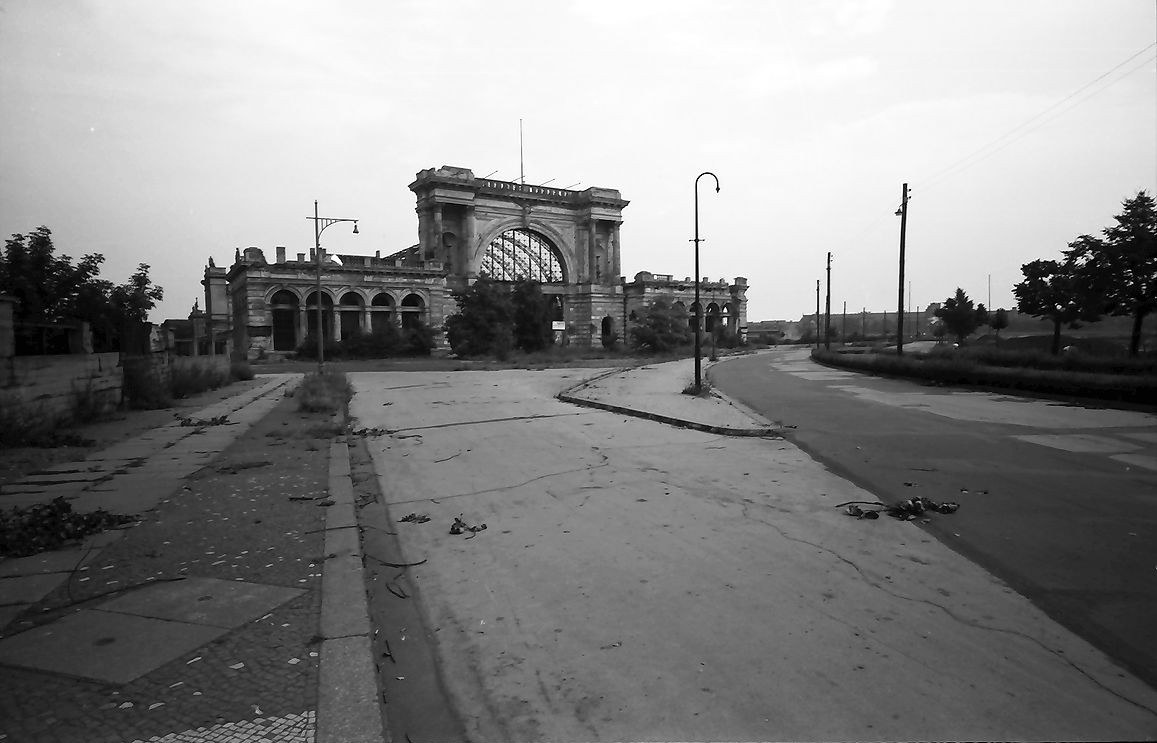

For more than a quarter of a century after the fall of Berlin, Martin Bormann, Hitler’s private secretary and head of the Nazi Party Chancellery, seemed to pop up everywhere from Paraguay to Spain. Then, in December 1972, a crew digging a cable trench in West Berlin unearthed two skeletons near the Lehrter railway station, and in 1998 a DNA test tied one of them to a maternal relative of Bormann. Was his famous escape a postwar fantasy all along, or do a few loose threads, including a coat of red clay on the skull, still leave room for doubt?
According to a 2001 paper in the International Journal of Legal Medicine by Anslinger and colleagues at the Institute of Legal Medicine of Ludwig Maximilian University in Munich, the genetic evidence lined up closely. The team wrote that “The comparison of the sequence of HV1 and HV2 from the skeletal remains and a living maternal relative of Martin Bormann revealed no differences and this sequence was not found in 1,500 Caucasoid reference sequences.” Their conclusion was carefully worded, stating “Based on this investigation, we support the hypothesis that the skeletal remains are those of Martin Bormann.”
The finding matters because Bormann was convicted at Nuremberg without ever appearing in court. The International Military Tribunal at Nuremberg sentenced him to death in absentia in 1946, as reported by the BBC, even though the judges openly admitted they did not know whether he was alive. That uncertainty fed decades of rumors, and it is the backdrop for every claim that he slipped away to South America.
Who Was Martin Bormann?
Bormann rose from minor party official to one of the most powerful men around Hitler. The Nuremberg judgment records that he became head of the Party Chancellery on May 12, 1941, after the flight of Hess to England, and secretary to Hitler in April 1943.
His rise was tied directly to another riddle of the Nazi leadership. The Guardian noted in 1999 that Rudolf Hess’s flight to Britain in 1941 “opened the way for Bormann to step into the position of the Führer’s right-hand man, allowing him to undermine rivals within the Nazi leadership by controlling their access to Hitler.”
The tribunal found him guilty of war crimes and crimes against humanity, citing documents that bore his signature on the persecution of Jews, slave labor and the treatment of prisoners of war. On the question of his fate, the judges were blunt. “But the evidence of death is not conclusive, and the Tribunal, as previously stated, determined to try him in absentia,” the judgment reads.
Why Did the Sightings Last So Long?
The simplest answer is that nobody produced a body in 1945, as the Guardian later noted. The German Historical Museum’s LeMO biography of Bormann adds that former Reich Youth Leader Artur Axmann reported seeing Bormann’s corpse, yet his fate remained uncertain after the Nuremberg verdict.
Into that gap poured a steady stream of stories. The Independent reported in 1998 that “According to one theory, he managed to escape from Berlin and was smuggled to South America on board a U-boat. Over the years, there have been persistent sightings in Paraguay and Brazil.” The same paper counted more than 6,000 reported sightings and dozens of aliases that investigators had to check.
Some of the claims carried a whiff of intrigue that newspapers found hard to resist. As reported by the Guardian, “rumours circulated that he had fled to South America with the help of Vatican officials and had become a millionaire in Argentina,” and the paper added that the Daily Express had once claimed to have found him there.
The BBC noted that “A newspaper in Paraguay reported in 1993 that Bormann had lived in that country for three years, had died in Asuncion on February 15, 1959, and was buried in a nearby town.” Another strand, also reported by the BBC, came from a British book claiming that he had been spirited away by British commandos after the war to help track down looted Nazi gold.
Official searches in postwar Berlin did little to settle things either. The Independent recorded that “In 1965 the West Berlin authorities dug up the ground at the spot where the two bodies were allegedly lying and found nothing.” An empty dig at the place a witness had pointed to gave the escape stories fresh life for another seven years.
What Was Found Near Lehrter Station in 1972?
The breakthrough came by accident during routine building work in West Berlin. An Associated Press report carried by the New York Times on February 9, 1973, said the two skeletons had been “accidentally unearthed by a crew digging a cable trench along a commuter line in West Berlin in December.”
Heinz Spengler, director of the city’s Institute for Forensic Medicine, based his identification on several lines of evidence. The AP listed comparisons of the skull with photographs of Bormann, a healed collarbone break such as Bormann had suffered, measurements of the skeleton and a match between the teeth and a sketch made by his dentist. “There is no longer any doubt,” Spengler told the West German newspaper Bild, adding that the second skeleton belonged to Hitler’s physician, Ludwig Stumpfegger.
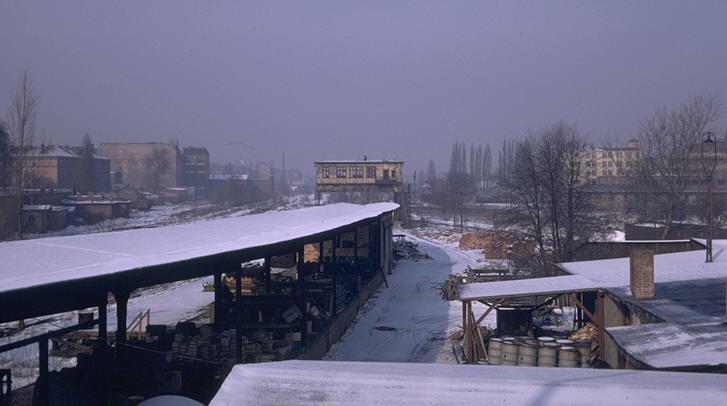

The Frankfurt prosecutor in charge of the Bormann inquiry, Joachim Richter, was a little more cautious. After receiving the institute’s report, he said the remains very probably belonged to Bormann and Stumpfegger, and he added that glass splinters found in the teeth of both skeletons indicated suicide by cyanide.
The dental evidence drew scrutiny from specialists outside Germany too. Writing in the International Dental Journal in 1975, UCLA forensic dental specialist R. F. Sognnaes compared the remains with records prepared by Bormann’s dentist, Hugo Blaschke, in 1945. Sognnaes concluded that “There is adequate qualitative and quantitative concurrence between all available antemortem and postmortem dental data to ascertain that the forensic identification of Martin Bormann can be considered established.”
The location also fit the old witness accounts. Sognnaes placed the find “at a site next to Lehrter RR station where Bormann is known to have been seen alive for the last time on May 2, 1945,” and the Independent later wrote that the skeletons lay “close to the place where the original witness had placed them.”
What Did the 1998 DNA Test Show?
Even with the teeth matched, the rumors kept coming. The BBC explained that “The German authorities ordered genetic tests after a British book asserted that Bormann had been spirited away by British commandos after the war to help them track down looted Nazi gold.”
On May 3, 1998, the BBC reported German media accounts that the genetic tests confirmed the identity of the body. “Bormann’s dental records had already been successfully matched to those of the body at the time of the discovery, but his descendants wanted to quell any doubts,” the report added. A maternal relative supplied the reference sample, and the Munich team compared mitochondrial DNA, which passes down the maternal line, with material from the skeleton.
The Independent‘s Imre Karacs summed up the official mood the next day. “Coupled with eyewitness testimony and dental records, the German authorities are convinced their file on one of the most notorious war criminals can be closed,” he wrote, adding that “Contrary to legend, Hitler’s deputy died in all probability on 2 May 1945.”
The final chapter of the story was kept deliberately quiet by German officials. In August 1999 the Guardian reported that “Last night German officials admitted that they had secretly cremated the remains of Adolf Hitler’s right-hand man and buried them at sea two weeks ago.” Hildegard Becker-Toussaint, the chief investigator on the case at Frankfurt’s prosecutor’s office, told the paper, “We wanted to avoid at all costs that a memorial should be created anywhere.”
What About the Red Clay?
The most persistent objection came from British author Hugh Thomas, who wrote the book Doppelgangers. In a 1995 letter to the Independent, he accepted the identification, writing “There is no doubt that it was Bormann’s skull that was found in Berlin in 1972. My argument is that he did not die in Berlin, and not in 1945.”
Thomas argued that the skull bore dental work done long after the war and that Paraguayan police records placed Bormann’s death in 1959 in the village of Ita, near Asuncion. He believed the bones were then moved to Berlin, adding “This would explain why they were covered with red clay, for which Ita is famous.”
A 1996 letter to the same paper, signed W. H. Thomas, consultant surgeon, pressed the clay point harder, claiming “This clay is totally absent in the Berlin Ulap fairground where the skull was discovered.” The same letter predicted that the coming DNA results would prove the remains were Bormann’s, “which leaves open the question as to when he died.”
That is a fair point in principle, since a DNA match identifies a person without dating a death. Yet the clay argument is indicative rather than conclusive at best, because the letters cite no published soil analysis, and Sognnaes found the remains in agreement with records prepared by Bormann’s dentist in 1945. No peer reviewed study among the sources consulted here supports a 1959 death in Paraguay.
Read next: Did Adolf Hitler Survive World War II?
More than 50 years after the cable trench was dug, the Bormann case remains less a question of whose skeleton lay near Lehrter station than of why so many people wanted him to be somewhere else.
Established: Skeletal remains found near the Lehrter station in Berlin in 1972 were identified as Martin Bormann through dental records and skeletal features, and a 1998 mitochondrial DNA comparison with a maternal relative found no differences. Bormann was sentenced to death in absentia at Nuremberg in 1946, and his remains were cremated and scattered at sea in 1999.
Unverified: claims that Bormann escaped to South America, the thousands of reported sightings, the 1993 Paraguayan report of his death in 1959, and Hugh Thomas’s argument that red clay and late dental work show the bones were moved from Paraguay to Berlin.
Unverified: the story that British commandos spirited Bormann out of Germany after the war to help hunt for looted Nazi gold.
By Historic Mystery
Sources
- Anslinger K, Weichhold G, Keil W, Bayer B, Eisenmenger W. Identification of the skeletal remains of Martin Bormann by mtDNA analysis. International Journal of Legal Medicine 114, no. 3 (2001): 194 to 196. doi.org, abstract via PubMed
- Sognnaes RF. The mystery bridges of Martin Bormann’s alleged Berlin skull: key clues for forensic identification or another Piltdown case? International Dental Journal 25, no. 3 (1975): 184 to 190. Abstract via PubMed
- International Military Tribunal, Judgment: Bormann (1946). The Avalon Project, Yale Law School. avalon.law.yale.edu
- Deutsches Historisches Museum, LeMO biography, Martin Bormann (updated July 20, 2021). dhm.de
- Associated Press, Berlin Doctor Says New Found Skeleton Is That of Bormann, New York Times, February 9, 1973. nytimes.com (read via web.archive.org)
- BBC News, DNA tests prove Bormann died in 1945, May 3, 1998 (archived). web.archive.org
- BBC News, Bormann’s body ‘identified’, May 4, 1998 (archived). web.archive.org
- Imre Karacs, DNA test closes book on mystery of Martin Bormann, The Independent, May 4, 1998. independent.co.uk
- Bormann’s ashes are dumped in the Baltic, The Observer (theguardian.com), August 29, 1999. theguardian.com
- Hugh Thomas, Letter: Travels of Bormann’s skull, The Independent, May 28, 1995. independent.co.uk
- W. H. Thomas, Letter: Hitler, Bormann and me, The Independent, August 11, 1996. independent.co.uk
