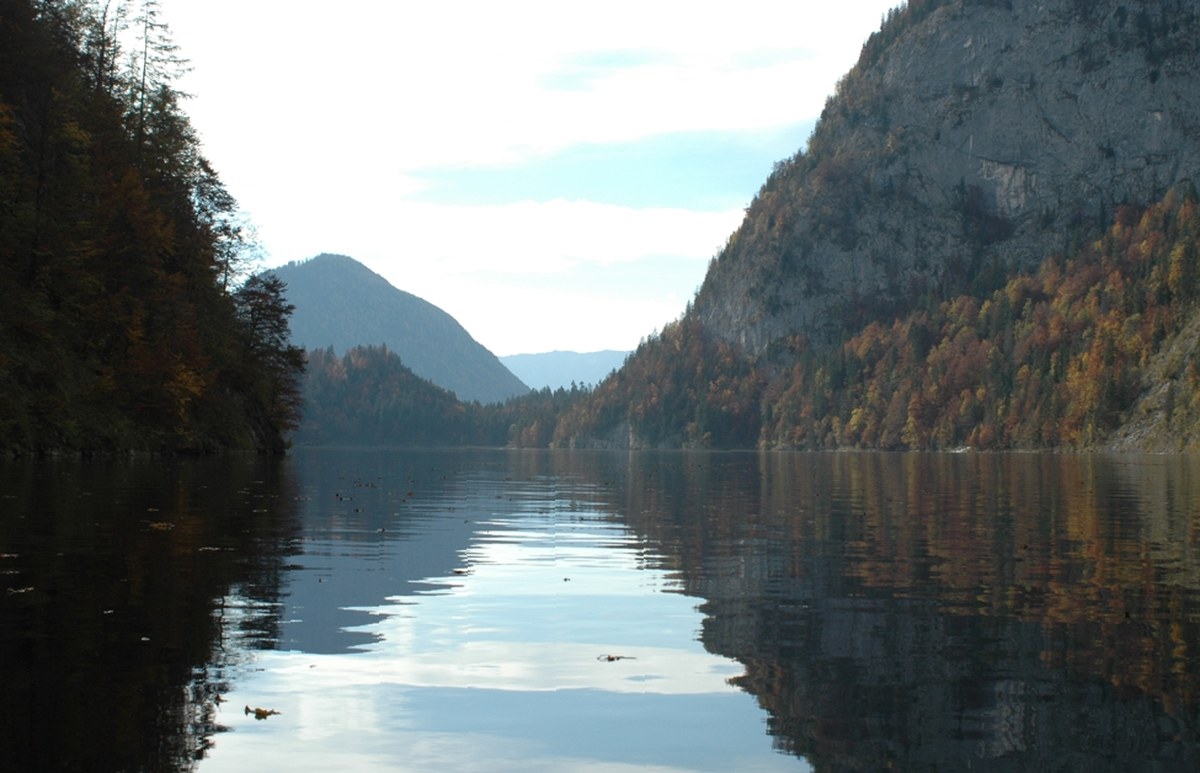
Lake Toplitz is one of the most peculiar treasure stories to come out of the last days of World War II, a dark mountain lake in the Austrian Alps where SS men were seen sinking heavy crates in the spring of 1945. For decades people have claimed that those crates held gold, jewels or secret files that could reveal where the leaders of the Third Reich sent their money. Divers have since raised a remarkable haul from the lake bed, and several people have died searching it.
Most of what has come up has turned out to be forged British banknotes, printed by Jewish prisoners in a concentration camp. Yet rumors of something more valuable on the bottom have never gone away, drawing treasure hunters and television crews for more than 80 years. But did the SS really sink a fortune in Lake Toplitz, or was the only treasure ever there a pile of worthless paper?
The Last Refuge of the Third Reich
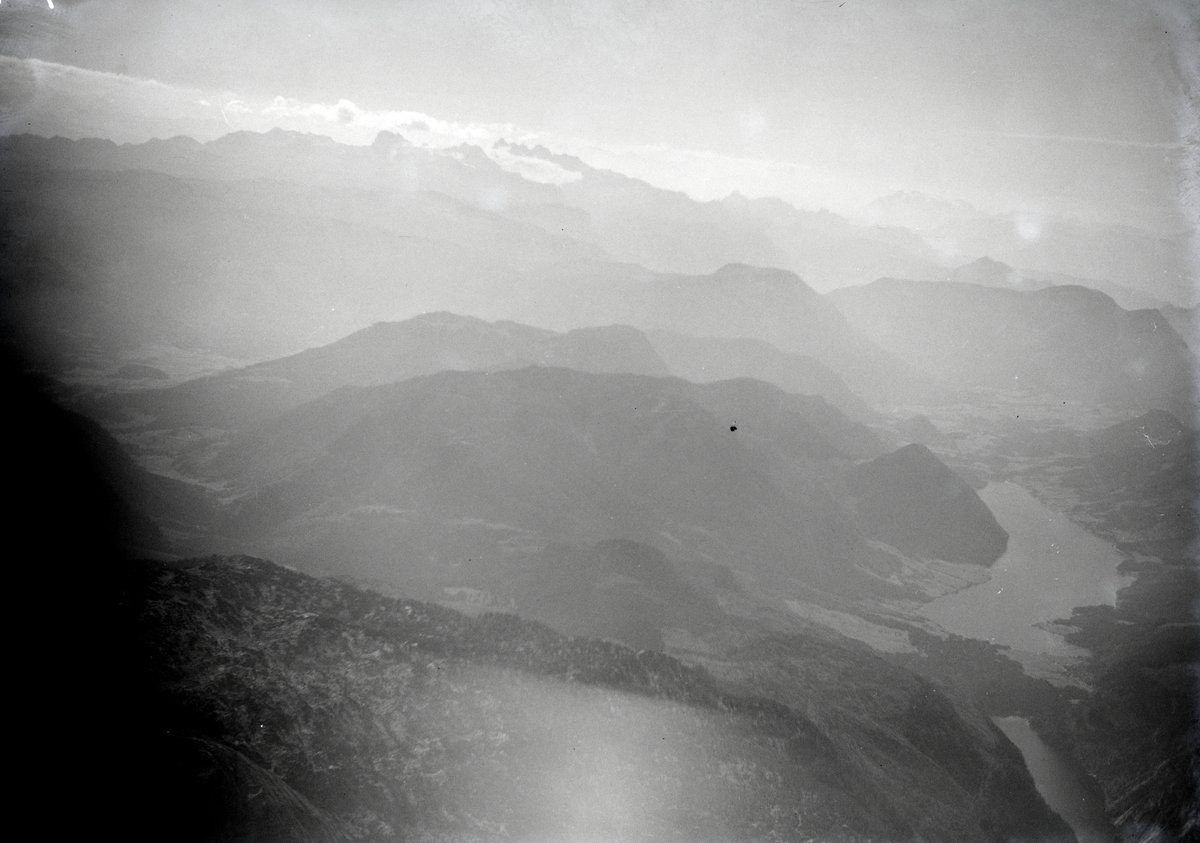
Toplitzsee lies in the Salzkammergut region of central Austria, hemmed in by steep cliffs and dense forest. The German magazine Der Spiegel described it in 1959 as almost 3 kilometers (about 1.9 miles) long and more than 100 meters (328 feet) deep in many places. In winter, the Guardian reported in 2000, its surface lies under an ice sheet 30 centimeters (about a foot) thick.
The lake was part of what the Guardian called the “so-called Alpine fortress in the Salzkammergut region,” the mountain stronghold where the Nazis planned to make a final stand. In 1963 Der Spiegel listed the wealth that had gathered around Bad Aussee by the end of the war, from looted art in the salt mines of Altaussee to gold coins dug up in the garden of the senior SS officer Ernst Kaltenbrunner. According to the BBC, Kaltenbrunner was in hiding nearby as the Allies advanced.
From 1943 the lake itself was closed to the public. The Austrian historian Markus Koeberl told the Guardian that the Nazis used it to test underwater weaponry, and Der Spiegel reported that a chemical and physical institute of the German navy’s test station at Kiel had experimented there with underwater explosives.
Crates in the Night
According to Der Spiegel’s 1963 account, a farmer in the tiny village of Gössl named Hermann Steinegger was woken in the night of April 28 to 29, 1945, by SS men who ordered him to harness his oxcart and head for the lake. His cart made 12 trips with heavy crates unloaded from two trucks, and the men rowed the crates out onto the water and sank them. In 1959 the same magazine reported that the head of the navy’s research institute at the lake had been made to lend his boats to SS officers that night and advise them where to drop crates of top secret material.
Decades later, a local woman named Ida Weisenbacher told the CBS program 60 Minutes II that she too had been made to carry boxes for the SS. Her account was broadcast in 2000:
“He told us to bring these boxes as fast as possible to Lake Toplitz….When I brought the last load, I saw how they went onto the lake and dropped the boxes into the water.”
Others claimed to have seen much the same scene. Patrick Loftus, who had been a prisoner of war and forced laborer at the lake, told the Guardian, “I saw with my own eyes how the Nazis drove to the edge of the lake and threw boxes of treasure into the water.” TIME magazine reported in 1959 that a convoy of Nazi trucks had been abandoned in May 1945 about 60 kilometers (37 miles) east of Berchtesgaden, and that “bank notes tossed overboard from a second truck began to float ashore” at a nearby lake.
The Prisoners of Block 19
Those notes came from one of the most audacious schemes of the war. Known first as Operation Andreas and later as Operation Bernhard, it was an SS plan to forge vast numbers of British banknotes, both to weaken the British economy and to pay spies and buy supplies abroad. The SS officer Bernhard Krüger searched the camps for Jewish prisoners with skills in engraving, printing and banking, and put them to work in an isolated barracks known as Block 19 at Sachsenhausen concentration camp near Berlin.
The Sachsenhausen Memorial and the Bank of England Museum both put the size of the forgery squad at 142 Jewish prisoners. The men had single beds and civilian clothes, which set them apart from the rest of the camp. Still, the memorial notes that “they also lived with the knowledge that illness, failure or termination of the operation would mean their death.” According to the memorial, they produced notes worth over 135 million pounds. The Bank of England Museum says the finished product was “indistinguishable to the eye from a genuine note.”
One of the prisoners was Adolf Burger, whom the Bank of England Museum describes as a “Jewish Slovak printer-turned-unwilling counterfeiter.” Burger told CBS that the workshop also copied the American $100 bill. “The first 200 bills were finished on February 22, 1945,” he recalled. In February 1945 the squad was moved to Mauthausen and then to the Redl-Zipf subcamp in Austria, and the prisoners were finally liberated by American troops at Ebensee in early May 1945. Burger survived and published a memoir of the operation, The Devil’s Workshop, in 1983.
Fishing for Forgeries
According to Der Spiegel, American military divers tried to raise the crates in the summer of 1945 and again in 1946 without success. The first real breakthrough came in July 1959, when a team financed by the German magazine Stern sent a seven-man group of frogmen down with an underwater television camera. TIME reported that they brought up 300,000 forged pounds “in good condition, the first of an estimated £16 million believed” to be down there.
Those figures have grown considerably in the retelling over the years. History.com puts the 1959 haul at £700 million, and the Bank of England Museum says this was the figure first reported in the press. However, the museum adds that newspapers later reported that the notes had a face value of only £9 million and had been destroyed at the Austrian National Bank. In October 1963 a young sports diver from Munich died during a secret night dive in the lake. Soon afterward the Austrian government launched a large official search of its own, guarded by 200 police officers.
The 1963 search brought up more forged money, weapons and explosives. The Austrian newspaper Die Presse later recalled that it found no gold, and none of the secret paperwork on Jewish assets moved abroad that mattered so much for restitution. The interior minister, Franz Olah, summed up the result in four words: “Der See ist leer” (the lake is empty). That same year a former Nazi officer, Maximilian Gruber, told police he had seen medals and diamonds thrown into the lake, then admitted, “I lied because I hoped that if anything was found during a search they would give me a reward.” He was later convicted of fraud.
Submarines, Sea Worms and Beer Caps
In 1984 the German marine biologist Hans Fricke explored the lake in a mini submarine, and according to UPI he brought up a rare worm from about 59 meters (195 feet) down, where there was no light or oxygen. The most ambitious search of all followed in 2000, when the American firm Oceaneering, the company that had found the Titanic, spent several weeks sweeping the lake with sonar, cameras and a one-man submarine for CBS and the Simon Wiesenthal Center.
The supporters of the expedition had high hopes for it. Simon Wiesenthal told the Guardian that he hoped for “name lists or registers, which indicate where the Third Reich chiefs hid their money,” and the BBC reported that Kaltenbrunner was believed to have sunk top secret files from Berlin in the water. CBS reported that the searchers had to deal with silt that “blew like a blizzard” and fallen trees “stacked 50 feet high” before they finally found a field of debris about 61 meters (200 feet) down.
What they found there was more forged pounds. Adolf Burger was there when the team found them, 55 years after he had been forced to print them. When he saw the notes, he told CBS: “Yes, these are the ones I was printing.” The search also turned up one promising box. However, ABC News reported that it held “nothing but old beer-bottle caps” and a note that read “Sorry, not this time.” Die Presse later blamed pranksters.
Is Anything Left Down There?
The lake has come at a high cost. TIME counted at least three treasure hunters dead by 1959, Die Presse put the toll at four, and History.com says at least five divers have died trying to find the treasure. The gold that drew so many of them there has never been found.
Some of those who know the lake best believe it has already given up its secrets. “I think anything the lake was hiding has already been discovered,” Koeberl told the Guardian in 2000. The former SS officer Wilhelm Höttl, who wrote a book on the forgery operation, told Der Spiegel in 1963 that nobody would be foolish enough to throw gold into a bottomless lake when it could simply be buried. On the other hand, the bottom of Toplitzsee is cold, dark and choked with layers of logs, and CBS guarded the full results of its 2000 search closely. Whether the SS crates held only forged paper or something far more valuable, what was dropped into Lake Toplitz in the spring of 1945 remains a mystery.
Read next: Buried Treasure? The Nazi Gold Train and Project Riese
Established: In the last days of World War II, SS men sank crates in Lake Toplitz, and divers in 1959, 1963 and 2000 raised forged British banknotes made by Jewish prisoners at Sachsenhausen under Operation Bernhard.
Unverified: That Nazi gold, jewels or other valuables were sunk in the lake and remain on the bottom. No search has ever recovered any.
Unverified: That secret SS files, including lists of foreign bank accounts or assets moved abroad, were sunk in the lake.
Unverified: That Ernst Kaltenbrunner personally had top secret files from Berlin dropped into the lake, as the BBC reported was believed in 2000.
By Historic Mystery
Sources
- Der Spiegel, Tod nach Mitternacht (1963)
- Der Spiegel, Blüten-Lese (1959)
- TIME, Austria: Loot from the Lake (August 10, 1959)
- Die Presse, 1959 NS-Relikte: Legende ohne Ende
- Scott Pelley, Hitler’s Lake, 60 Minutes II, CBS News (2000)
- Nigel Glass, Divers Seek Nazi’s Last Secrets, BBC News (January 17, 2000)
- Kate Connolly, Submarines to Dredge Lake for Nazi Gold, The Guardian (January 25, 2000)
- Sue Masterman, Lake Explorers Take Secrets Home With Them, ABC News (July 10, 2000)
- UPI, A West German Marine Biologist Has Captured a Rare Worm (November 22, 1984)
- Sachsenhausen Memorial, A Genuine Forgery
- Alison Cook, Operation Bernhard, Bank of England Museum
- Eudie Pak, Sunken Nazi Gold and 4 Other Never-Found Treasures, History.com
- Wikimedia Commons, Toplitzsee, de:User:Blueangel (2005)
- Wikimedia Commons, Toplitzsee, Grundlsee, Walter Mittelholzer (1933), ETH-Bibliothek

