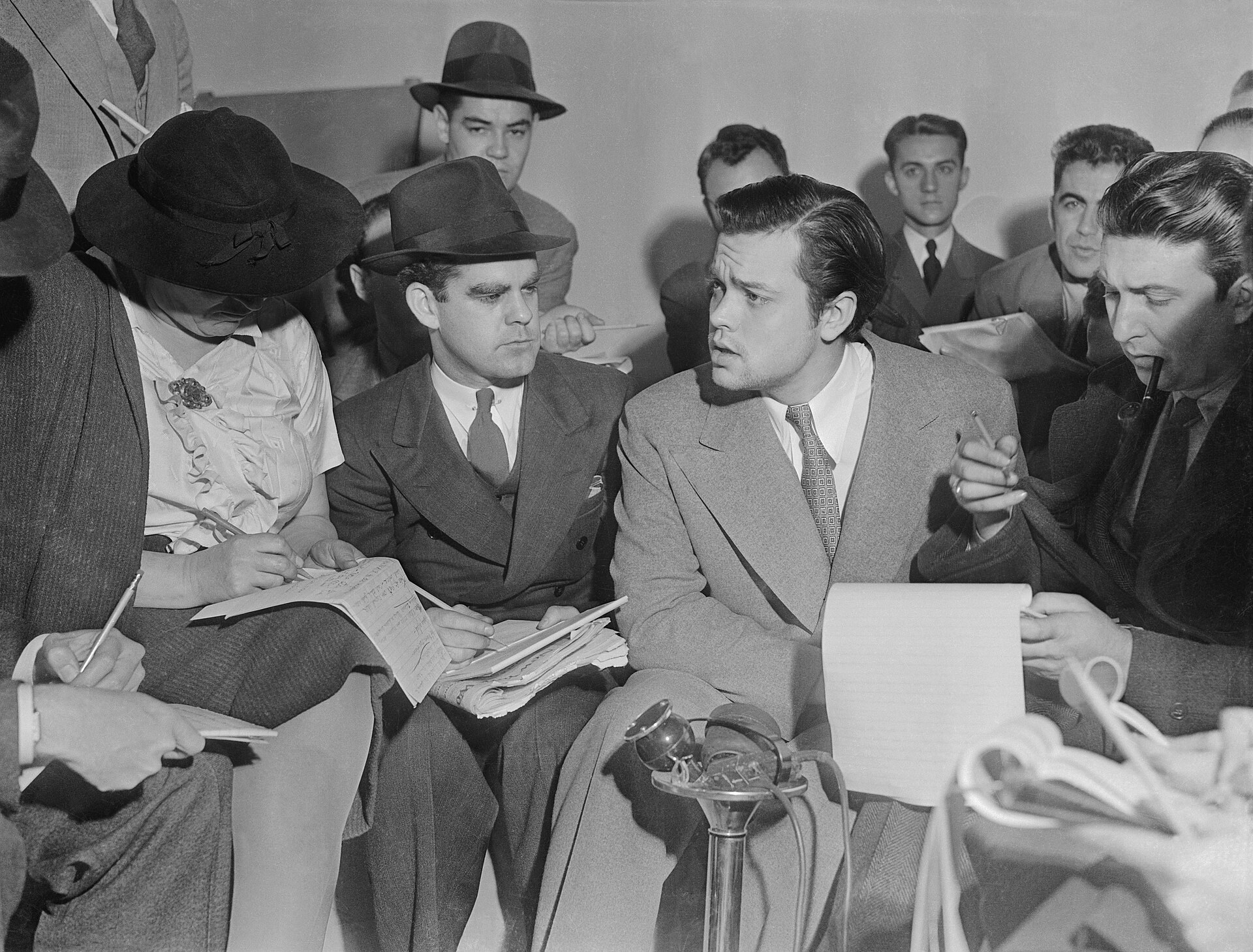

On the evening of October 30, 1938, the Mercury Theatre on the Air performed a radio version of the 1898 novel by Wells, The War of the Worlds, as a string of fake news bulletins describing a Martian landing in New Jersey. By the next morning the 23-year-old director and star, Orson Welles, was on front pages across the United States beside stories of a nationwide panic.
That panic became one of the most retold stories in American media history, repeated in textbooks and documentaries for more than eighty years. Historians who have gone back to the ratings, the hospital records and the newspapers themselves now argue that the scale of the fear was greatly inflated. The question is how much of the famous night really happened.
How did the broadcast come together?
The writer Brad Schwartz, who has written a book on the broadcast, describes in Smithsonian a show that nearly fell apart. The writer Howard Koch was given less than a week to turn the novel into news bulletins, and after three days he called the producer John Houseman to say the project was hopeless.
Houseman could not reach Welles, who was rehearsing a stage play, so he told Koch that Welles insisted on the Martian story. A recording of the first rehearsal was, according to Schwartz, judged by everyone who heard it to be “an unmitigated disaster.” An actor told the radio critic Ben Gross that week, “Just between us, it’s lousy,” and a technician told Welles the show was “Very dull.”
The novel’s premise had once seemed plausible to readers. Schwartz explains that the Italian astronomer Giovanni Schiaparelli described dark lines on Mars in 1877 that were mistranslated into English as canals, and that Percival Lowell built on this to describe a canal-building civilization. That idea fed decades of speculation about life on Mars, although by the 1930s, as Schwartz notes, the idea of intelligent Martians “had largely been discredited.”
The changes that made the show convincing came late. Schwartz writes that the actor playing the reporter at the landing site studied a recording of the Hindenburg disaster broadcast. Welles slowed the opening scenes so that the invasion would seem to build, and he had the actor Kenneth Delmar play a Cabinet official in a voice that echoed President Franklin Roosevelt. The result, in Schwartz’s words, was a show that “frankly terrified many of its listeners,” including some who knew it was a play.
How many people actually heard it?
The media scholars Jefferson Pooley and Michael Socolow examined the audience in a 2013 article for Slate. They point to the Hooper ratings service, which telephoned 5,000 households on the night of the broadcast and asked what they were listening to.
According to Pooley and Socolow, only 2 percent of those households named a radio play, the Orson Welles program or something else that pointed to CBS, and none said they were hearing a news broadcast. Welles was up against one of the most popular programs of the time, the Chase and Sanborn Hour with the ventriloquist Edgar Bergen, and several CBS stations, including WEEI in Boston, did not carry the Mercury program at all.
CBS ran its own survey the day after. Frank Stanton of CBS later recalled, “In the first place, most people didn’t hear it.” He went on, “But those who did hear it, looked at it is as a prank and accepted it that way.”
The popular claim that millions of listeners turned the dial to CBS during a musical break on the rival show cannot be checked. Pooley and Socolow write that “No scholar, however, has ever isolated or extrapolated an actual number of dial twirlers.”
Where did the story of a mass panic come from?
Pooley and Socolow lay much of the blame on the newspapers. Radio had taken advertising money from print during the Depression, and they argue that papers used the broadcast to show that radio could not be trusted with the news. The New York Times ran an editorial titled Terror by Radio that criticized officials for allowing “blood-curdling fiction” to be “offered in exactly the manner that real news would have been given.”
The coverage did not always match what reporters saw. Gross, the radio editor of the New York Daily News, later wrote in a memoir that the streets of Manhattan were deserted as his taxi raced to CBS near the end of the show. His paper still put the panic on its front page within hours.
The story then grew over the following years, and in 1940 the Princeton psychologist Hadley Cantril published The Invasion From Mars, which, as reported by Pooley and Socolow, estimated that about 1 million people were “frightened” by the play. Pooley and Socolow note that the survey he relied on gave an audience rating “over 100 per cent higher than any other known measure of this audience,” as Cantril himself admitted, and that it was compiled six weeks after the broadcast, when the newspaper stories had already spread.
They also argue that Cantril treated being frightened or excited by a drama as if it were the same as panic. The modern retellings, among them the 2013 PBS documentary and an episode of NPR’s Radiolab, lean on his numbers. In the Radiolab episode, the night was described as one in which the country “experienced a kind of mass hysteria that we’ve never seen before.”
Were there deaths, riots or suicides?
Contemporary reports did include alarming claims about listeners who were hurt or nearly hurt. Pooley and Socolow write that wire services spread stories of panicked listeners saved by neighbors, “but not one newspaper reported a verified suicide connected to the broadcast.”
Cantril’s own researchers checked a rumor that several people were treated for shock at a hospital in Newark. “The rumor was checked and found to be inaccurate,” Cantril’s study reported, as quoted by Pooley and Socolow. A survey of six New York City hospitals found that “none of them had any record of any cases brought in specifically on account of the broadcast.”
The Washington Post reported that a Baltimore listener died of a heart attack during the show, but no one followed up to confirm it. Four days after its first report, the same paper printed a letter from a reader who had walked down F Street in Washington during the broadcast and saw “nothing approximating mass hysteria.”
The official response from Washington was mild compared with the headlines. The chairman of the Federal Communications Commission secured an informal promise from the networks to drop fictional news flashes. According to Pooley and Socolow, “Nor were CBS or Welles sanctioned in any manner.” They add that the press moved on fast, citing the historian W. Joseph Campbell, who found that coverage faded from front pages “in most cases after just a day or two.”
Did Welles mean to fool his audience?
At a press conference the morning after, Welles denied any plan to deceive. Schwartz writes that he had heard reports of stampedes and suicides, and that he told several people, “If I’d planned to wreck my career,” then added, “I couldn’t have gone about it better.”
His account of what he intended changed over the following decades. In a 1960 court deposition he said he had “conceived the idea of doing a radio broadcast in such a manner that a crisis would actually seem to be happening.” In later interviews he went further and suggested the Mercury had hoped to fool listeners to teach them a lesson.
Schwartz points out that none of his collaborators backed this up, Houseman and Koch included, and he writes that they “denied it over and over again.” In his view the realism that fooled part of the audience “crept in almost accidentally.”
Why does the legend survive?
Pooley and Socolow suggest several reasons why the panic story has lasted so long. Broadcasters have an interest in showing advertisers how much power they hold over listeners, and CBS itself celebrated the broadcast for decades. Regulators also benefit from a story that shows the airwaves need watching.
They give Cantril the largest share of credit for the myth, since “He remains the only source with academic legitimacy who claims there was a sizable panic.” They also quote the scholar Jeffrey Sconce, who argues that “The ‘panic broadcast’ may be as much a function of fantasy as fact.”
None of this research claims that every listener stayed calm that night. Phone calls did flood police stations and newspaper offices that night, and some listeners clearly believed what they heard. The open question is the size of that fear, and the best surviving evidence points to thousands of anxious listeners rather than a nation in the streets.
Established: The Mercury Theatre broadcast a fictional Martian invasion as fake news bulletins on October 30, 1938, some listeners were alarmed and called police and newspapers, and newspapers reported a nationwide panic the next day.
Disputed: How many people actually panicked on the night of the broadcast. Cantril estimated about 1 million were frightened, while Pooley, Socolow and Campbell argue the audience was small and the panic was inflated by the press.
Unverified: Deaths caused by the broadcast, including a reported Baltimore heart attack, and Welles’s later claim that he set out to fool his audience.
Sources
- Brad Schwartz, The Infamous War of the Worlds Radio Broadcast Was a Magnificent Fluke, Smithsonian, May 6, 2015. smithsonianmag.com
- Jefferson Pooley and Michael Socolow, The Myth of the War of the Worlds Panic, Slate, October 28, 2013. slate.com
