
In the first days of January 1954 the small town of Bladenboro in North Carolina woke up to a run of dead dogs and a story that spread faster than any animal could run. Local newspapers spoke of a killer beast with “vampire” habits, and soon hundreds of armed men were tramping through the swamps around a town of about 1,000 people. The panic ended almost as suddenly as it began, with a trapped bobcat and a mayor who was not entirely sure he had his culprit.
How did the killings begin?
According to a 2006 retrospective for the StarNews of Wilmington by the reporter Amy Hotz, the newspaper stories start on January 4, 1954, with the deaths of three dogs. Tater Shaw, who owned a gas station in the town at the time, remembered it differently. He told Hotz that it began with a goat killed on a farm on the edge of town, and that he had been told there was something mighty odd about how it died.
Shaw also said the beast killed small cows and “two or three” hogs, although Hotz noted that those details are missing from the newspaper accounts of the time. What made the reports stand out was the unusual way the animals were said to have died, which the local papers described in detail. By January 6 the count was at least six dogs, including one that was dragged into the swamp and never seen again, and the next day it rose to seven.
The detail that turned a string of animal deaths into a legend came from the town’s own police chief. Hotz wrote that Chief Roy Fores spoke of the “vampire aspect of the animal.” Quoting the Wilmington Morning Star of January 5, 1954, she recorded Fores saying that a dog found dead the night before had almost no blood left in its body.
Why did the town become so frightened?
The Morning Star story of January 5 opened by describing how “This nervous town chewed its collective nails today, dreading the pitch of night that might bring a return visit by a mystery killer-beast with vampire lust.” Other local headlines kept up the same breathless tone, including one that read “Guns, Dogs Circle Blood-Lusty Beast.” Hotz found that the Morning Star, the Wilmington News and other papers “thrived off the story for a good part of January 1954.”
People who lived through it remembered the fear more than any single fact, and Shaw was 87 and living in a nursing home near Town Hall when Hotz met him. “Everybody was scared,” he said. “Everybody, near ’bout, that had a gun was carrying it.” Another gas station owner, Jabe Frink, told her that “It kept snowballing and snowballing. It got so nobody would walk out on the street at night.”
The descriptions of the animal did little to calm anyone, since witness accounts gave its weight as anything from about 90 to 150 pounds, and its color as black, brown, tabby or just “dark in color.” One account, in a summary of the witness descriptions that the StarNews put together, had it at four and a half feet long, bushy and resembling either a bear or a panther. People described its cry as like a baby or a woman crying, only louder, and Hotz wrote that the sound was “about the only thing people halfway agreed on.”
The scare also produced its share of accidents, and Hotz described a resident who heard his dogs barking, saw a shadow through a window and ran outside firing his shotgun. When he looked closer he found his child’s bicycle “crumpled to the ground with the tires in shreds and the seat ripped with buckshot.” On the evening of January 6 a young mother told the Morning Star that she had seen the beast stalking toward her on her front porch, and her husband found only cat-like paw prints when he ran out with his gun. Frink, recalling the scare more than 50 years later, told Hotz that it was a dog that had frightened her.
How big was the hunt for the beast?
The hunt began with Chief Fores, who went out after the killer with three coonhounds, but the “dogs refused to follow the trail.” As word spread the search grew far beyond the town. “Anyhow, it was getting so bad, it was getting in the newspapers and the radio,” Shaw said. “There came hunters from all over, I mean big hunters.” S.W. Garrett, an experienced hunter from Wilmington, warned women and children to stay indoors.
At the peak, according to the newspaper accounts Hotz reviewed, about 1,000 men armed with pistols, shotguns and rifles split into posses and searched around 400 acres of swamp. Some were fraternity students from the University of North Carolina at Chapel Hill looking for a good time, and others were professional hunters. Shaw recalled that many of them stopped at his gas station on the way to the swamp to boast that they would be the ones to kill the beast, and came back empty-handed, while Frink remembered one group that brought trained “bear dogs” to the swamp. “They said they gonna ‘catch that vampire,’ but they never did,” he said.
As the hunt went on, Chief Fores considered tying a few dogs up in the woods as bait. However, Mayor W.G. Fussell called the plan off, and he later stopped the hunt itself. According to Hotz, Fussell said the reason was safety, since with so many hunters in the swamp “someone was liable to mistake a man for a beast.”
What did the mayor’s movie theater have to do with it?
Fussell had an unusual position in the story, since his day job was running a local movie theater, and Hotz wrote that he found a way to capitalize on the beast. She quoted his flyer: “Now you can see the cat. We’ve got him on our screen! And in Technicolor too! The Big Cat, all day Saturday, January 9.” The hunt was called off on the day the film ran, and the Morning Star headline that day read “Vampire Beast Wins Battle of Bladenboro.” Hotz suggested that the mayor may not have had his heart in the hunt in the first place.
Was the Beast of Bladenboro ever caught?
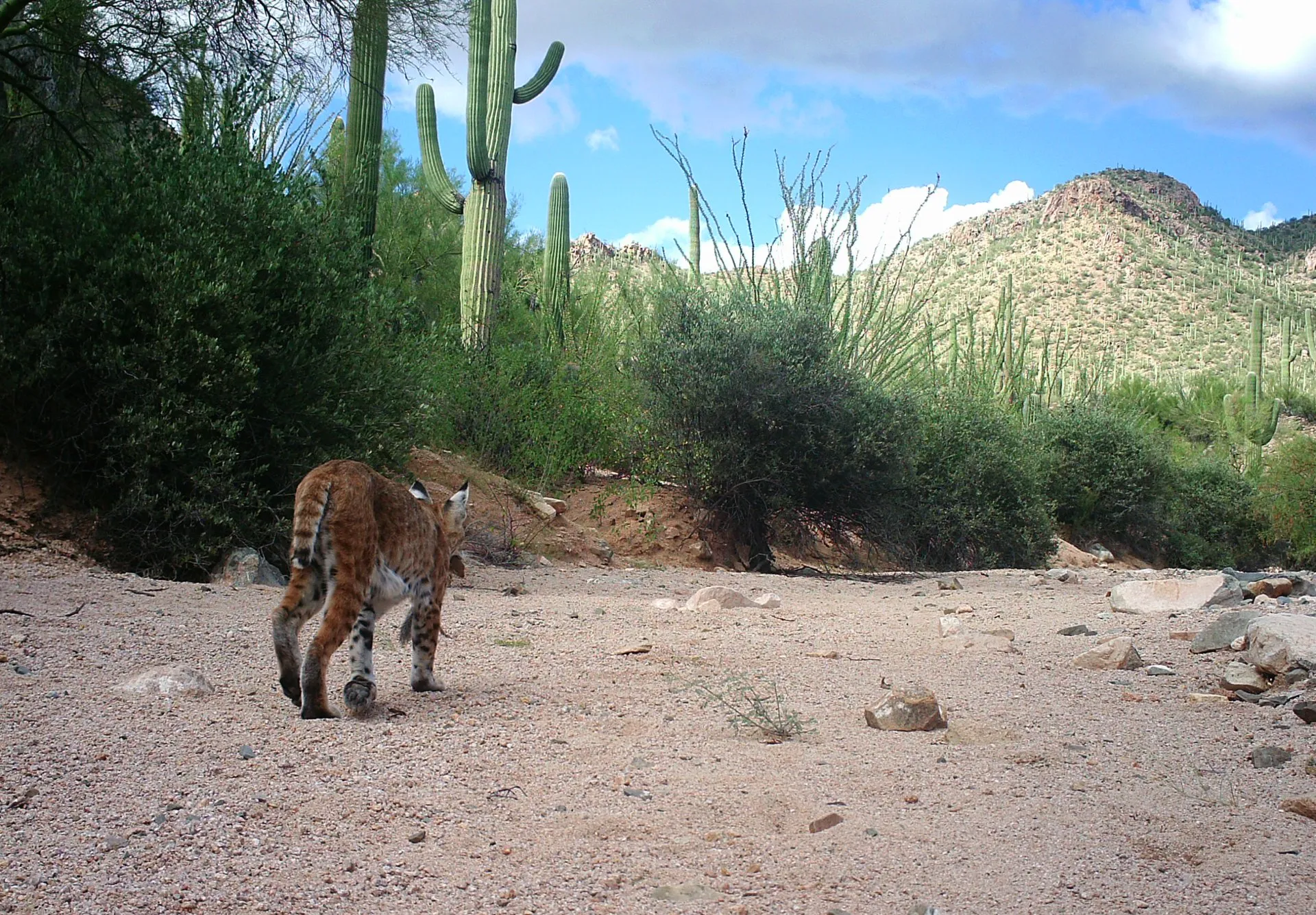
On January 13 a bobcat was caught in a steel trap and then shot, and for a moment it seemed the mystery was over. Frink kept photographs of the dead cat at the gas station he ran with his business partner, Bunny Prevatt, and in one of them the animal held up by its front legs reaches only to a man’s waist. “Cars were lined up around the block wanting to see the bobcat,” Frink said. However, no one was certain this was the beast, and the mayor himself sounded doubtful in the Morning Star. “I just hope this is it,” he said. “If not, I just hope the other one starts down the road and keeps going.”
Even in 1954 there was no agreement on what kind of animal the town was hunting. Most people agreed it was a cat, Hotz found, but one veterinarian said it could be a big dog, and some witnesses described their sightings and then took them back.
Why does the legend still matter in Bladenboro?
The beast did not quite go away after the bobcat was shot, and Hotz found that soon afterwards a headline ran announcing “Bladenboro ‘Beast’ Returns from Hiding.” Frink remembered seeing a dead hog and told Hotz that “That was about the last thing that happened.”
By 2006 only a few people who had lived through the scare were still around Bladenboro, and if you asked at Town Hall about anyone who remembered it, Hotz wrote, you would get a chuckle and a file of old newspaper stories kept in the town vault, while two butchers at a grocery store in nearby Dublin were not sure what the beast had been at all. No animal was ever proven to be the killer, and the reports of drained blood rest on a few newspaper quotes. What killed the animals of Bladenboro in the winter of 1954 has never been established.
Read next: The Beast of Gevaudan: Monstrous Wolf or Something Else?
Established: Dogs and other animals were reported killed around Bladenboro in January 1954, crowds of armed hunters searched the swamps, and a bobcat trapped on January 13 was widely taken to be the beast, according to contemporary newspaper reports summarized by the StarNews in 2006.
Unverified: That the trapped bobcat, or any single animal, was the killer. The mayor himself doubted it, and one veterinarian said the killer could have been a big dog.
Unverified: That the dogs were drained of blood. The claim rests largely on the police chief’s quoted remark about one dog.
By Historic Mystery
Sources
- Amy Hotz, The Beast of Bladenboro, StarNews (Wilmington), October 29, 2006. Quotes from the 1954 Wilmington Morning Star are as cited by Hotz. starnewsonline.com (read via the Internet Archive copy)
