
In the summer of 1934 the seaside town of Brighton gained a nickname it did not want. Its promoters had long called it the Queen of Watering Places, and within a few weeks the newspapers were calling it the Queen of Slaughtering Places. Two women had been found dead inside trunks, one at the railway station and one in a terraced house a short walk away. The cases were unrelated, yet the second was uncovered only because police were hunting for the killer in the first.
The two investigations that followed ended in very different places. A man was tried for the second death, acquitted after a celebrated defense and then, more than four decades later, told a Sunday newspaper that he had killed her. The first woman was never named, and nobody was ever charged with her murder. This article follows both cases date by date, using the surviving catalogue record at The National Archives and the accounts of local historians.
What Was Found at Brighton Station in June 1934?
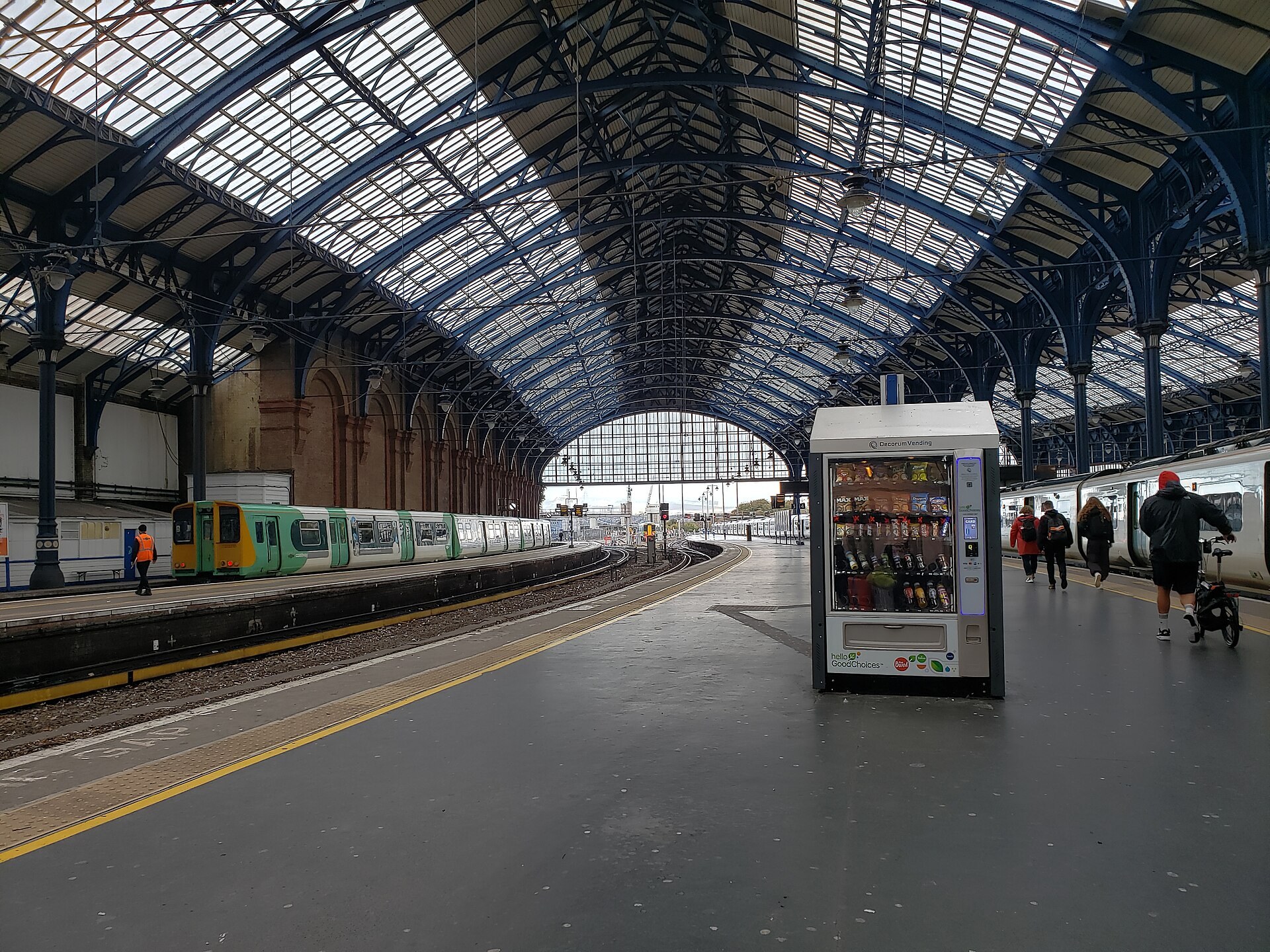
On June 17, 1934, staff at Brighton station traced an “offensive smell” to a plywood trunk in the left luggage office, according to the local history site My Brighton and Hove. The Old Police Cells Museum in Brighton names the cloakroom attendant as William Joseph Vinnicombe of the Southern Railway. Inside the trunk, wrapped in brown paper, were the partial remains of a woman. Cloakroom attendants around the country were told to check their unclaimed luggage, and on the following day a suitcase at King’s Cross station in London was found to hold further remains of the same woman.
Her head was never recovered, despite the national alert to railway staff. Sir Bernard Spilsbury, the Home Office pathologist, examined the remains and concluded that the woman had been healthy and about 25 years old, and that she was between four and five months pregnant. He estimated that she had died around June 4. One of the few physical clues was a sheet of wrapping paper bearing a word, written in blue pencil and partly obscured, that ended in the letters “ford.”
Because she could not be identified, the press gave her a nickname instead. As the former Evening Standard courts correspondent Paul Cheston wrote for North Laine History, she became known as “the girl with pretty feet”. Brighton police called in Scotland Yard, and the museum states that detectives went through about 700 cases of missing women, while officers began house to house inquiries in the streets around the station.
Trunk murders were not new to British newspaper readers, because a London case only seven years earlier had followed a similar pattern. In May 1927 a trunk left at Charing Cross station was found to contain the body of Minnie Bonati, a domestic servant in her mid 30s. Crime+Investigation records that John Robinson was convicted of her murder after Spilsbury gave evidence, and Robinson was hanged at Pentonville Prison on August 12, 1927. That case had ended with a name for the victim and a conviction for the killer, and the Brighton detectives in 1934 would get neither for the woman at the station.
How Did the Search Lead to Kemp Street?
One of the addresses visited was 52 Kemp Street, a terraced house just off Trafalgar Street near the station. On the first call both the owner and the tenant were away, so the police moved on to their list of missing persons and planned to come back later. One name on it was Violet Saunders, a dancer who worked under the name Violette Kaye. She had come to Brighton from London in September 1933 with her partner, a former Soho bouncer, much younger than her, who called himself Toni Mancini.
Later accounts of the case describe Kaye as a sex worker, and the defense would make much of her way of life at the trial. In May 1934 the couple quarreled at the Skylark café on the seafront, after Kaye accused Mancini of making a pass at a waitress, and shortly afterward she disappeared. Mancini told acquaintances that she had left him for a job in Paris, and her sister-in-law received a telegram signed “Vi” that seemed to confirm the story.
The police questioned Mancini at Brighton police station on July 14. He was able to show that Kaye was at least 40, far older than the woman in the station trunk, and the police released him without charge. On July 15, according to My Brighton and Hove, the Old Police Cells Museum and Crime+Investigation, the police returned to 52 Kemp Street and found Kaye’s body inside a trunk. She had been killed by a blow to the head, according to My Brighton and Hove. Cheston’s account places the discovery a day later, on July 16.
By the time the trunk was opened, Mancini had already fled Brighton. Cheston records that he was picked up outside London and gave his real name, Cecil Louis England. Crime+Investigation dates the murder charge to July 17, two days after the discovery. The National Archives holds the Metropolitan Police file on the case under reference MEPO 3/1692, and its catalogue entry gives yet another of his names, describing him as “Jack Notyre alias Toni Mancini”. The same entry dates Kaye’s death to May 10, 1934.

How Was Toni Mancini Acquitted?
The trial opened at Lewes Assizes on December 10, 1934. On paper the prosecution case looked strong, and Cheston summarizes it from the trial reports, recording that the telegram from “Vi” had been written on a form in Mancini’s handwriting and sent after her death, that one witness said he had asked her for a false alibi, and that colleagues said he had boasted of beating Kaye. Mancini’s answer was that he had come home to their flat in Park Crescent, found Kaye already dead and panicked, sure that a man with a record for petty theft would be blamed. He said he had then moved her body to Kemp Street in a trunk on a handcart when he changed lodgings. “I loved her,” he said.
His barrister was the young defense lawyer Norman Birkett, and The Argus writes that the case made his reputation. Crime+Investigation notes that Birkett later served as the alternate British judge at the Nuremberg trials after the Second World War. Birkett suggested that Kaye might have been killed by a client or might have fallen downstairs, and Crime+Investigation notes that he produced evidence that she used morphine and drank heavily. Accounts of the trial single out his cross examination of Spilsbury, whose evidence on the fatal blow and the bloodstains came apart in front of the jury. The Argus records that Birkett urged the jurors to set aside the grim world in which Kaye and Mancini had lived and ended his closing speech with two words, Stand Firm.
On December 14, 1934, after a five day trial, the jury found Mancini not guilty. Accounts of how long the jurors deliberated vary from just over two hours to two and a half hours, and Crime+Investigation gives the most precise figure of 2 hours and 18 minutes. The Argus reports that the verdict gave Birkett little pleasure. His private view of his client was that he was “a despicable and worthless creature”.
What Did Mancini Claim in 1976?
In 1976, according to Crime+Investigation, Mancini told the News of the World that he had murdered Kaye. He was then 68 years old, and Cheston writes that in this account Mancini said Kaye had attacked him with a hammer used for breaking coal, and that he had grabbed it and thrown it at her, striking her on the left temple. The Director of Public Prosecutions ruled that he could not be tried again, as the double jeopardy rule then barred a second trial for a crime that had already ended in acquittal.
Several of the accounts used here describe this as a confession, though it was never tested in court. By his own account at the trial, Mancini had concealed Kaye’s body for two months, and this later story was sold to a popular newspaper more than 40 years after his acquittal. It cannot be checked against any evidence, and readers should weigh it as Mancini’s own claim and no more.
Read next: The Thames Torso Murders: Victorian London’s Other Ripper
Who Was the Woman in the Station Trunk?
No source links Mancini to the first victim, and the police found nothing to connect the two deaths beyond the trunks. Cheston notes that a local abortionist had been suspected, which fitted the pregnancy, though he was never charged. The museum states that the police checked hospitals and known abortionists, investigated one abortionist in Brighton and cleared him of the murder.
The other leads in the station case went nowhere over the months that followed. The word ending in “ford” was never matched to a person or a place, and the head was never found. More than 90 years later the woman left at Brighton station still has no name and no known killer, and she is remembered chiefly by a newspaper nickname. Kaye’s name at least survives in the court records and the police file, which is more than the station victim has ever had.
Established: Toni Mancini was tried at Lewes Assizes and acquitted of the murder of Violette Kaye on December 14, 1934. The woman found at Brighton station in June 1934 has never been identified.
Unverified: Mancini’s 1976 newspaper account of how Kaye died, which was never tested in court. The identity of whoever killed the woman in the station trunk.
By Historic Mystery
Sources
- The National Archives, MEPO 3/1692, Jack Notyre alias Toni Mancini acquitted of the murder of Violet Kaye or Saunders at Brighton on 10 May, 1934. discovery.nationalarchives.gov.uk
- Crime+Investigation UK, The Brighton Trunk Murders. crimeandinvestigation.co.uk
- Lucy Pearce, NOSTALGIA: A murder case which was the making of a barrister, The Argus. theargus.co.uk
- Paul Cheston, The Murder of Violet Kaye, North Laine History (from The Runner, Nov/Dec 2016). northlainehistory.me.uk
- My Brighton and Hove, The Second and Third Brighton Trunk Murders (Part I). mybrightonandhove.org.uk
- My Brighton and Hove, The murders re-visited. mybrightonandhove.org.uk
- Hollie Whitehead, The Brighton Trunk Murders, Old Police Cells Museum. oldpolicecellsmuseum.com
