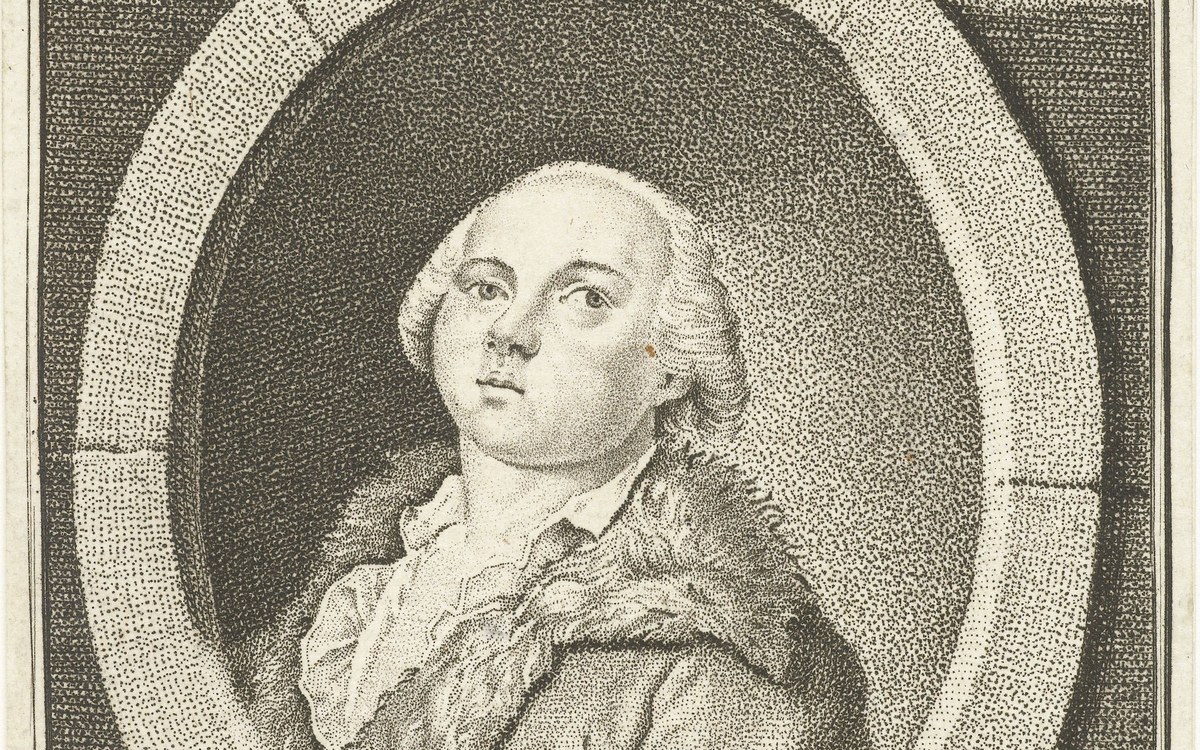

In 1786 a large crowd followed a stout, dark-eyed man from the Bastille to his home in Paris, celebrating his release. He had just been acquitted in the most notorious trial of the age, the scandal of the queen’s diamond necklace. He called himself Count Alessandro di Cagliostro, and to his admirers he was a healer, a seer and the founder of a secret Egyptian wisdom. Within five years the same man would be serving a life sentence in a remote papal fortress, and the story of who he really was had become a battle of rival accounts.
Separating the man from the legend is difficult because so much of the evidence comes from people with strong reasons to praise or condemn him. The Dizionario Biografico degli Italiani, the standard Italian biographical dictionary, notes in its 1963 entry that the main sources on his early life are an account published in 1791 by an official of the court that tried him, written, the entry says, to justify the trial and its severe sentence to European opinion, and, on the other side, the count’s own extravagant statements. His detractors and his defenders, the entry observes, have each leaned on one of the two.
From Palermo to London
The Dizionario records that Giuseppe Balsamo was born in Palermo on June 2, 1743, to a merchant family of modest means. His father died days after his birth, and the boy was eventually placed as a novice with the Brothers Hospitallers at Caltagirone, where he was entrusted to the friar who ran the pharmacy and probably picked up some chemistry and medicine. The 1911 Encyclopaedia Britannica, written in a far less sympathetic spirit, says he was expelled for misconduct.
His own version of these years was quite different, and far more exotic. At the necklace trial in 1786, the Dizionario notes, he claimed that he did not know who his parents were or where he was born, that he had spent his childhood in Mecca, and that under a learned teacher called Althotas he had traveled through Egypt learning the secret knowledge of its priests.
The years that followed his time with the friars are poorly documented, and the Dizionario says there is no documented information on Balsamo between 1756 and 1768, when he married Lorenza Feliciani in Rome. According to that 1791 account, the couple then traveled through Spain, Portugal and beyond living on swindles and forgeries. The Britannica entry, which was written by Luigi Villari, describes him visiting London and Paris in 1771, “selling love-philtres, elixirs of youth, mixtures for making ugly women beautiful, alchemistic powders, &c.”
The Count Is Born
The name that made him famous appears in 1776. After using a string of invented titles, the Dizionario says, Balsamo returned to London and became Count Alessandro di Cagliostro, an officer in the service of the King of Prussia, while Lorenza took the name Serafina. During that stay both were admitted to a small Masonic lodge called La Speranza.
From this point, the Dizionario argues, his life can be followed through official records and the memoirs of people who knew him. Drawing, it seems, on an old manuscript he claimed to have found at a London bookseller, he founded an Egyptian rite of Freemasonry that promised its followers the regeneration of body and soul after a series of initiations. Cagliostro led it as the Grand Copt, and women were admitted to their own lodges under Serafina.
Healer or Charlatan?
Between 1777 and 1780 he traveled from The Hague to Berlin, St. Petersburg and Warsaw, where the king himself received him in May 1780. His reputation rested above all on medicine. The Dizionario, while keeping its distance from his admirers, judges it probable that he had some knowledge of medicine and pharmacy. It lists his best-known remedies as an Egyptian wine, which was a stimulant, and refreshing powders made from medicinal herbs, along with a rarely given elixir of long life. The same entry says that when he arrived in Strasbourg in January 1781, he achieved some genuine cures, treating the crowds of sick people in his waiting room without charge.
However, the legend was something Cagliostro himself took care to encourage. Like the Count of Saint Germain, the Dizionario notes, he let people believe that he had lived in remote ages, and when he was pressed about his origins he would reply only “ego sum, qui sum!” Asked by his friend and admirer Lavater, a philosopher and mystic, what his medicine was based on, he answered “in verbis, in herbis, in lapidibus,” in words, herbs and stones. As this site’s account of the Count of Saint Germain describes, that earlier adventurer was said to be an alchemist holding the secret of eternal life who never seemed to age. The promise of an elixir of life, which this site’s account traces through alchemy’s long association with the search for immortality, was an old one long before Cagliostro offered his own.
Strasbourg also brought him his most important patron and unconditional admirer, according to the Dizionario, Cardinal Louis de Rohan, the Grand Almoner of France.
The Queen’s Necklace
The affair itself is set out by the Palace of Versailles. Rohan had fallen out of favor with Marie Antoinette and wanted to win her back. A self-styled countess, Jeanne de La Motte, who in the palace’s words “was above all else a confidence trickster,” convinced him that the queen secretly wanted an enormous necklace of nearly 650 diamonds that the crown jewelers had failed to sell. Rohan agreed to buy it on her behalf in installments, collected it on February 1, 1785, and handed it to La Motte, who promptly disappeared with her accomplices. When the jewelers went unpaid, the fraud came out, and Rohan was arrested at Versailles on August 15, 1785.
Cagliostro’s part in this is far from clear. The palace’s account of the affair does not mention him at all. The Dizionario says La Motte threw the blame onto him, and argues that all he could be charged with was giving the cardinal sensible advice once the fraud came to light, which was to confess everything to the king. Cagliostro and Serafina were both locked up in the Bastille.
At the trial before the Parlement of Paris in May 1786, the cardinal, “contrary to all expectations, was declared innocent,” according to the Palace of Versailles. Cagliostro was acquitted too. Elizabeth Montagu Correspondence Online, a project of Swansea University, says he spent nine months in the Bastille and was acquitted for lack of evidence. The Britannica entry is more grudging and says he “escaped conviction by the matchless impudence of his defence.” Despite the verdict, the king’s minister, the Baron de Breteuil, ordered him out of France.
Exposed in London
From London, the Dizionario relates, Cagliostro published an open letter to the French people attacking his persecutors and predicting the fall of the Bastille. The French government responded by setting a well-known pamphleteer, Théveneau de Morande, on his trail. With help from the police and French diplomats, Morande established that the count and Giuseppe Balsamo were the same man, and that Serafina was Lorenza Feliciani. The Swansea record adds that he toured the courts of Europe promoting his skills in alchemy and psychic healing, and was highly successful for a time, but “came to be regarded as a charlatan and impostor.”
Arrest in Rome
After further wandering through Switzerland and northern Italy, Cagliostro arrived in Rome in May 1789, his reputation much diminished. Freemasonry had been condemned by Popes Clement XII and Benedict XIV, and the Dizionario says the papal police regarded him as an active Freemason and a possible political agitator. In September 1789 he tried to found a lodge of his Egyptian rite in the city, but only two men joined. Lorenza, meanwhile, had reconciled with her family, and she gave a priest information against her husband.
On December 27, 1789, after receiving a report from the Holy Office, Pope Pius VI ordered the arrest of Cagliostro, his wife and a Capuchin friar who had joined his lodge. Cagliostro was held in Castel Sant’Angelo. The tribunal was led by Cardinal Zelada, the secretary of state, and the defense was entrusted to the court’s regular advocate for the accused and its advocate for the poor. However, the Dizionario judges that his own conduct in court was contradictory, as he went as far as claiming to have been an agent of the Illuminati, a claim the entry considers unlikely to be true.
The sentence was pronounced on April 7, 1791. It found that Cagliostro had incurred the death penalty laid down in canon and civil law against formal heretics, magicians and Freemasons, and the pope commuted it to life imprisonment. The Britannica entry says he was condemned for being a heretic, and the Swansea record names the charge as being a Freemason.
The Fortress of San Leo
On April 21, 1791, Cagliostro was taken to the fortress of San Leo in the hills of central Italy. According to the Dizionario, which draws on the governor’s regular reports to Rome, he was kept under constant watch in a cell without light or fresh air, and over time his mind gave way. He died there on August 26, 1795, apparently of a stroke, a few months before French troops reached the fortress. He was buried in unconsecrated ground, and his body was never recovered.
Even his death in custody did not put an end to the stories about him. The Dizionario notes that as soon as news of it spread, a rumor arose that he had escaped and was still wandering the world, and the disappearance of his body probably helped the story along. Writers including Goethe and Alexandre Dumas later turned him into a literary figure.
Cagliostro was not the last person to dazzle the public with an exotic invented past. In 1817, as this site’s account of Princess Caraboo describes, a servant named Mary Baker convinced the people around Bristol that she was a princess from a faraway island who had been seized by pirates.
So was Cagliostro a healer, an alchemist or a con man? The documents suggest a forger and swindler in his youth, a talented self-promoter who gave real help to some of the sick, and a man acquitted of the crime that made him famous. His own colorful accounts of his past cannot be trusted, and neither can every story his enemies told.
Get the Historic Mysteries newsletter, free
Unsolved cases, strange sightings and hidden history, straight to your inbox.
Sources
- Francovich, Carlo. Balsamo, Giuseppe, alias Alessandro Cagliostro. Dizionario Biografico degli Italiani, vol. 5 (1963). Treccani (in Italian).
- The affair of the diamond necklace, 1784-1785. Château de Versailles.
- Alessandro di Cagliostro. Elizabeth Montagu Correspondence Online, Swansea University.
- Villari, Luigi. Cagliostro, Alessandro, Count. Encyclopaedia Britannica, 11th ed. (1911), via Wikisource.
