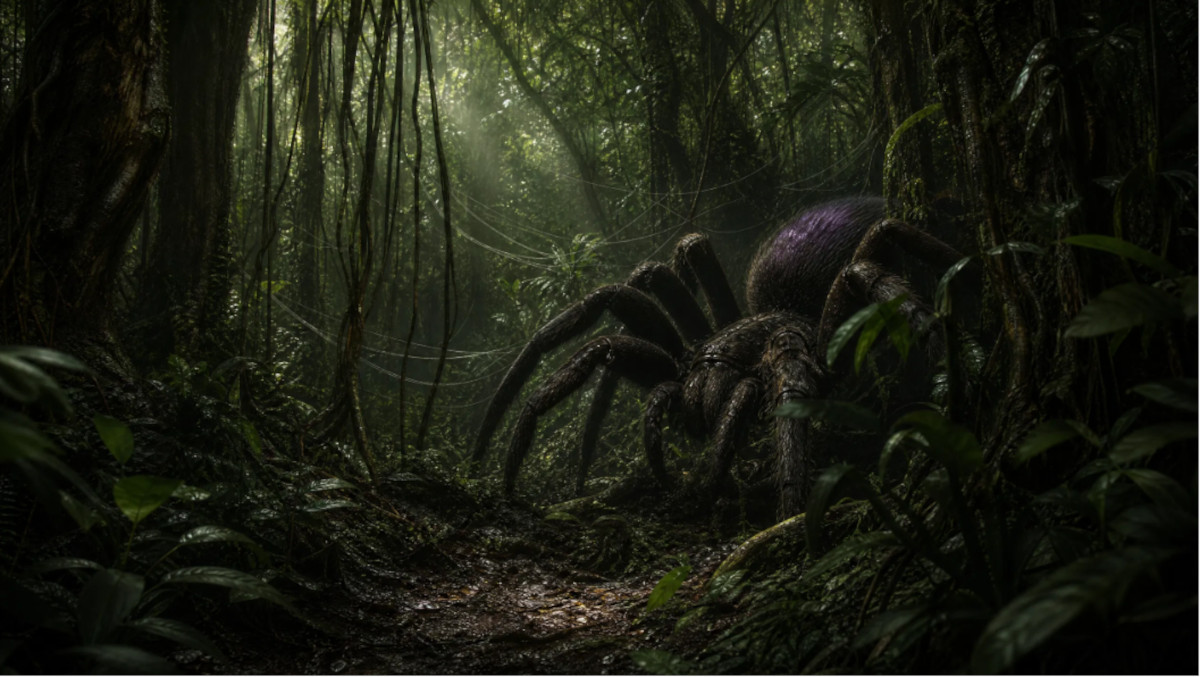
The dense, uncharted rainforests of the Congo Basin have long been a fertile ground for tales of the unknown. Among the most chilling of these legends is that of the J’ba Fofi, a massive arachnid said to lurks in the shadows. Known to the indigenous Baka pygmies as the “giant spider” or “great spider,” this terrifying cryptid is described as having a leg span of four to six feet. While spiders of such colossal size seem confined to the realm of nightmares or science fiction, persistent accounts from both locals and Western explorers have kept the mystery of the J’ba Fofi alive for decades.
The legend is deeply ingrained in the oral traditions of the Congo Basin. According to native lore, the J’ba Fofi resembles a massive tarantula, typically brown in color, with a distinctive purple mark on its abdomen when young. Unlike typical spiders, the J’ba Fofi is said to be an aggressive ambush predator. It constructs shallow burrows beneath tree roots, concealing them with leaves, and spins nearly invisible trip-lines across game trails. When an unsuspecting animal—such as a small forest antelope or bird—trips the line, the giant spider erupts from its lair to envenomate and devour its prey. The Baka people claim these spiders were once common but have grown rare, possibly due to deforestation and human encroachment.
- The Mapinguari: Amazon Cyclops of Brazilian Folklore
- Mokele-Mbembe: A Dinosaur Hidden in the Jungles of Africa?
Eyewitness Accounts of the Giant Arachnid
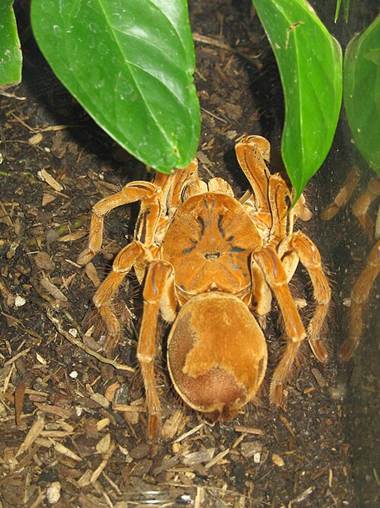
One of the most famous Western accounts of the J’ba Fofi dates back to 1938. British explorers Reginald and Margurite Lloyd were driving along a jungle trail in the Belgian Congo when a massive brown shape darted across the road ahead of them. Initially mistaking it for a monkey or a small cat, the couple was horrified to realize it was a spider with a leg span of nearly three feet. The creature quickly vanished into the dense undergrowth, leaving the Lloyds in shock. This encounter, later popularized by cryptozoologist George Eberhart, remains a cornerstone of the J’ba Fofi legend.
In the early 2000s, cryptozoologist William Gibbons traveled to the Congo in search of the legendary dinosaur Mokele-mbembe. During his expedition, he interviewed Baka pygmies who shared detailed descriptions of the J’ba Fofi. Their accounts were remarkably consistent, describing the spider’s trap-door hunting methods, its peanut-shaped white eggs, and its potent venom. The pygmies noted that while they generally gave the spiders a wide berth, they would occasionally kill them if they posed a threat to their settlements.
Scientific Theories and Skepticism
From a scientific perspective, the existence of a spider the size of a dog is highly improbable. The primary limitation is physiological: arachnids rely on a tracheal respiratory system and book lungs, which are inefficient at delivering oxygen to a massive body. During the Carboniferous period, higher atmospheric oxygen levels allowed for gigantic arthropods, but modern oxygen levels restrict their size. The current record holder, the Goliath birdeater (Theraphosa blondi), has a leg span of about 11 inches – impressive, but far smaller than the reported size of the J’ba Fofi.
- The Mongolian Death Worm: Nightmare Cryptid of the Gobi Desert?
- Rock Apes of Vietnam: Jungle Cryptid of the Vietnam War?
Skeptics suggest that sightings of the J’ba Fofi might be misidentifications of large land crabs or unusually large specimens of known tarantulas, distorted by fear and the dim light of the jungle. Others propose that the legend could stem from the communal webs spun by thousands of smaller spiders, which might appear as the work of a single giant entity. Despite the lack of physical evidence, the consistency of the native reports keeps the possibility of an undiscovered, albeit smaller, species alive in the minds of cryptozoologists.
A Lingering Mystery of the Congo
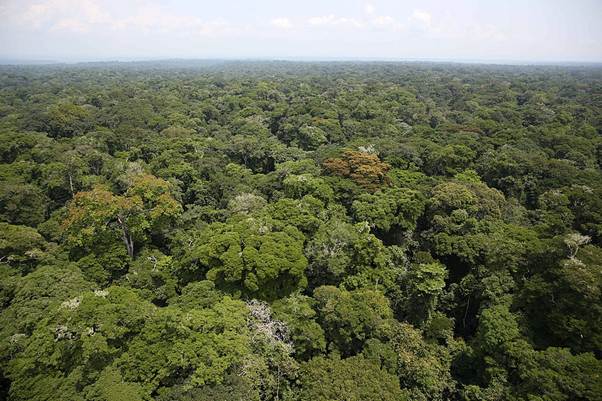
The Congo Basin remains one of the most underexplored regions on Earth, a vast wilderness where new species are still being discovered. Whether the J’ba Fofi is a surviving prehistoric relic, an undiscovered species of large tarantula, or simply a terrifying myth born from the shadows of the jungle, its legend continues to captivate. As deforestation threatens the region, the secrets of the Congo, including the truth behind the giant spider, may be lost before they are ever truly understood.
Top image: Representation of the J’ba Fofi spider in a rainforest. Source: AI Generated
By Gary Manners
References