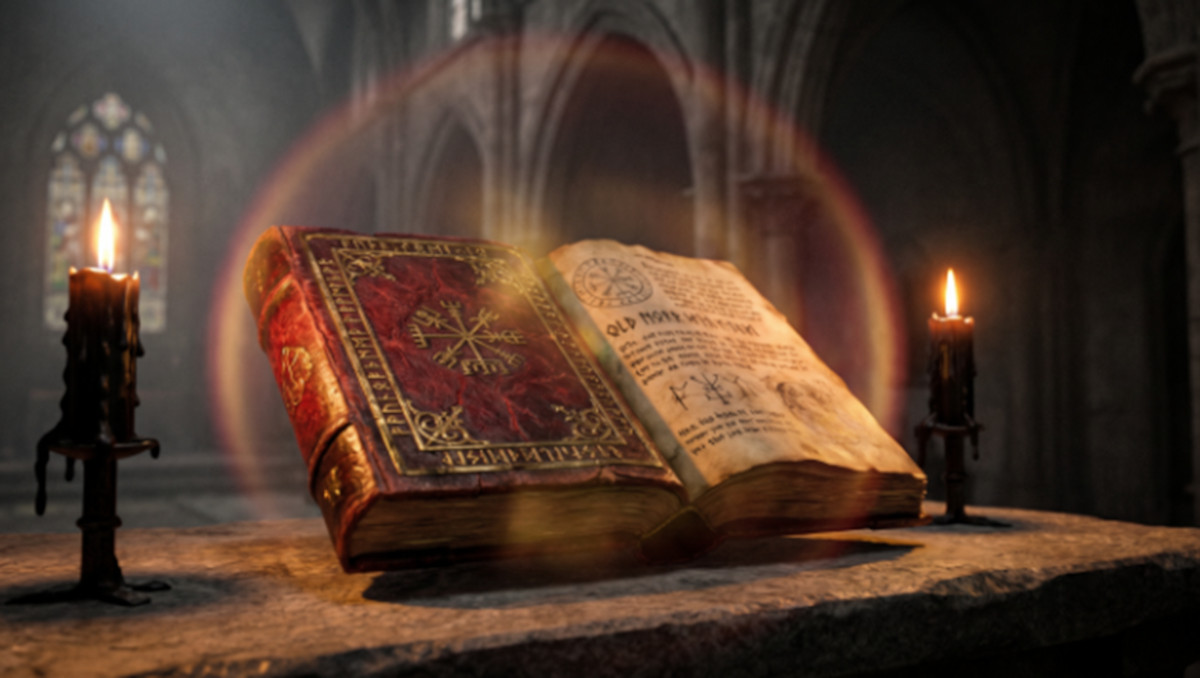
In the annals of history, few grimoires command as much fear and fascination as Rauðskinna — the legendary Icelandic “Book of Power.” Its very existence challenges the boundaries between faith and sorcery, light and darkness. What makes this tome so terrifying, and why did a Christian bishop devote his life to mastering its forbidden spells? The story of Rauðskinna is a chilling journey into ambition, madness, and the supernatural.
The origins of Rauðskinna are inseparable from the life of Gottskálk grimmi Nikulásson, the Bishop of Hólar from 1497 to 1520. Born in Iceland in 1469, Gottskálk was a man of the cloth who harbored a dark obsession. Despite his position as a senior clergyman, he was notorious for his cruelty and ruthless ambition, earning the epithet grimmi — “the cruel” – from those who knew him. Historical records describe him as manipulative, more interested in personal power than in the duties of his faith. His true passion lay not in the teachings of the Church, but in the darkest traditions of Icelandic sorcery.
The Bishop and His Forbidden Grimoire
Gottskálk’s obsession led him to compile Rauðskinna — a name meaning “Red Skin” in Icelandic — a grimoire bound in red leather and inscribed with golden runes. According to Natalia Klimczak writing for Ancient Origins, the book’s primary objective was unprecedented in its audacity: to master magic to such a degree that the practitioner could control Satan himself. The grimoire is also known as the “bible of all wizards,” and its reputation as the most powerful and dangerous book of black magic ever written in Iceland has endured for centuries.
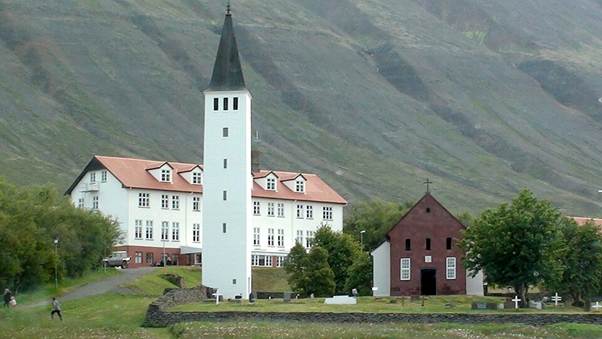
Gottskálk spent years delving into ancient witchcraft, compiling the darkest spells known to man. Supposedly his ultimate goal was to enslave Satan, using the devil’s power to rule the world. This audacious ambition set him apart from other practitioners of Icelandic magic, who typically employed their skills for practical, everyday purposes such as healing the sick or warding off enemies. Gottskálk’s singular focus on demonic magic made him a feared figure throughout Iceland, and his reputation as a master sorcerer grew alongside his ecclesiastical authority.
Despite his dark pursuits, Gottskálk remained the Bishop of Hólar until his death on December 8, 1520. It is widely believed that he took Rauðskinna to his grave, ensuring that its terrifying secrets would be buried with him. Oral tradition surrounding the grimoire claims the book was stolen from a chief and wizard named Jon from Svalbard, whose grandfather Thorkell had originally written it.
The Tragic Tale of Galdra-Loftur
The legend of Rauðskinna did not end with Gottskálk’s death. Two centuries later, another ambitious student of magic, Loftur Þorsteinsson, sought to claim the book’s power for himself. Known as Galdra-Loftur (Loftur the Magician), he was a student at the Hólar cathedral school in the early 18th century, where he became obsessed with mastering the dark arts. For nine summers and nine winters, he feverishly studied every banned verse of every forbidden book in the library.
Loftur had already mastered the Graskinna (“Grey Skin”), another grimoire containing lesser spells. However, his thirst for power led him to seek out Rauðskinna. He devised a plan to raise the dead bishops of Hólar, including Gottskálk, to force them to hand over the book. According to the folklore account retold by Shaun D. L. Brassfield-Thorpe and cited by Ancient Origins, Loftur performed a dark ritual in the cathedral, chanting spells that turned psalms into praises for the devil:
“Despite all this, Gottskalk still did not come from his grave — so Loftur started chanting as never before. He turned the words of the Psalms into prayers for the Devil and made a sorry confession of all his good deeds… At last a heavy sound was heard, and a dead man arose bearing a staff in his left hand and a red book under his right arm.” Shaun D. L. Brassfield-Thorpe
So the folklore says Loftur succeeded in summoning Gottskálk, who appeared bearing a staff and the red book. However, the bishop refused to yield Rauðskinna. As Loftur’s chants grew more frantic, the cathedral shook. A terrified student watching the ritual from the belfry rang the church bell, breaking the spell and sending the spirits back to their graves. The moment the bell tolled, everything vanished “into the floor with a whispering sound”.
- Practical Magic: The Summoning Spells of The Book of Abramelin
- Important Norse Symbols and Their Meaning
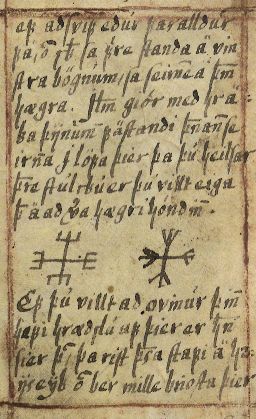
The Legacy of a Lost Grimoire
Loftur’s failure to obtain Rauðskinna marked the beginning of his descent into madness. According to Guide to Iceland, the failed project “rendered Loftur a halfwit,” and he was eventually placed in the care of a priest in a remote province. He later escaped out to sea, where, according to legend, a furry black claw emerged from the waters and dragged him into the abyss below. He was never seen again.
The tragic tale of Galdra-Loftur serves as a cautionary reminder of the dangers of unchecked ambition and the seductive allure of dark magic. It also speaks to the enduring power of Rauðskinna as a cultural symbol in Iceland. The story has been passed down through generations, and the Icelandic Museum of Sorcery and Witchcraft in Hólmavík preserves many of the traditions and artifacts associated with Iceland’s rich history of sorcery.
Today, the true fate of Rauðskinna remains a mystery. Whether it lies buried beneath the grounds of Hólar Cathedral, was destroyed in secret, or never actually existed, its legend endures as one of the most chilling chapters in the history of Icelandic witchcraft. The book’s promise of ultimate power, and the devastating consequences of seeking it, continue to captivate the imagination, ensuring that the legacy of Rauðskinna will never be forgotten.
Top image: A representation of the legendary Icelandic grimoire Rauðskinna. Source: AI generated.
By Gary Manners
References